Office of Industrial Relations (OIR) and QIRC – Collusion, Evidence Suppression, and Procedural Abuse
The conduct of the Office of Industrial Relations Queensland (OIR) and the Queensland Industrial Relations Commission (QIRC) demonstrates a sustained pattern of evidence suppression, improper interference, and retaliation, operating to the benefit of the Butler network and to my severe detriment as a whistleblower.
OIR Involvement and Political Oversight
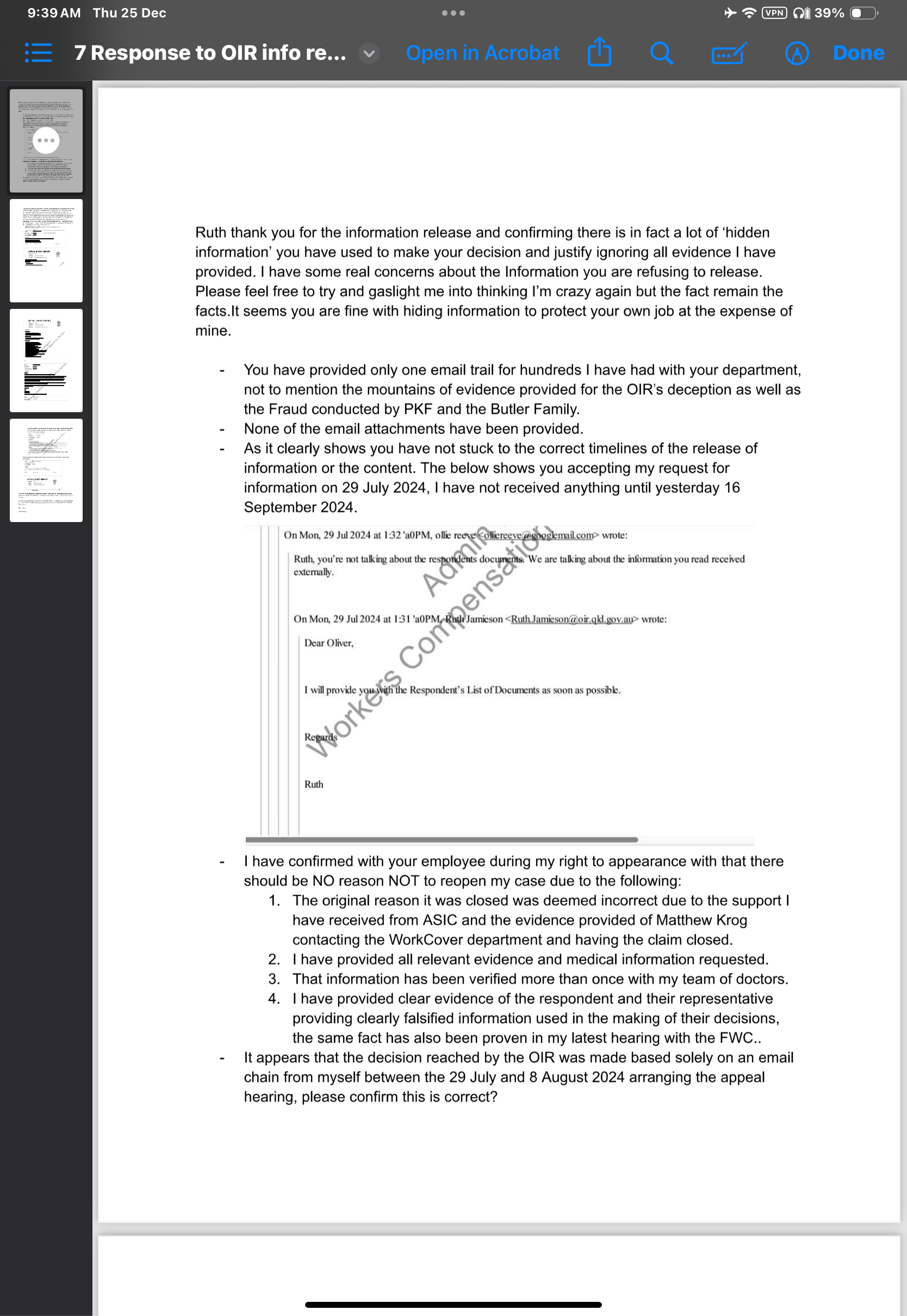
Senior figures within the OIR, including Ruth Jamison, acted in ways that departed fundamentally from the OIR’s obligation to act impartially and lawfully. Evidence shows the OIR:
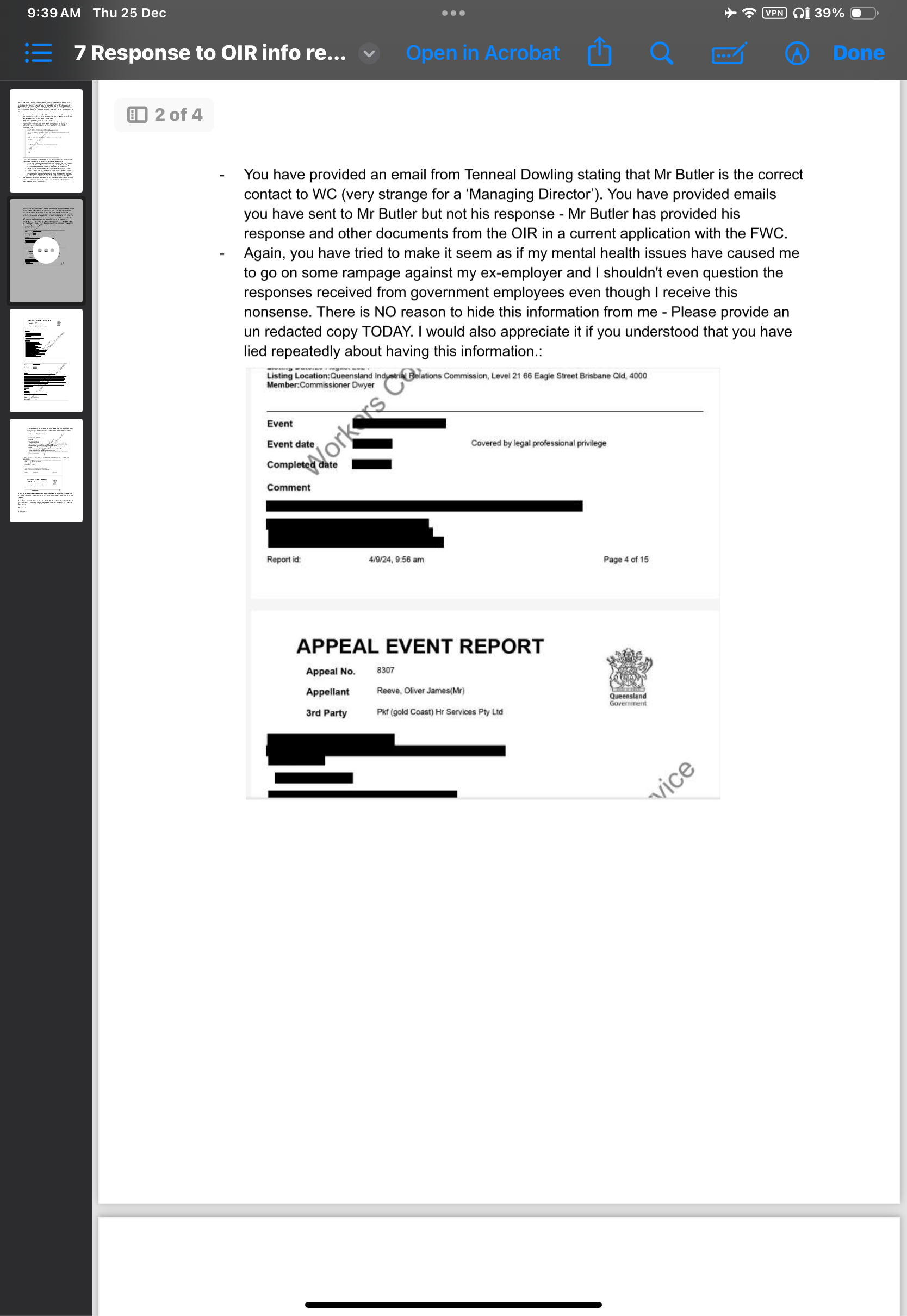
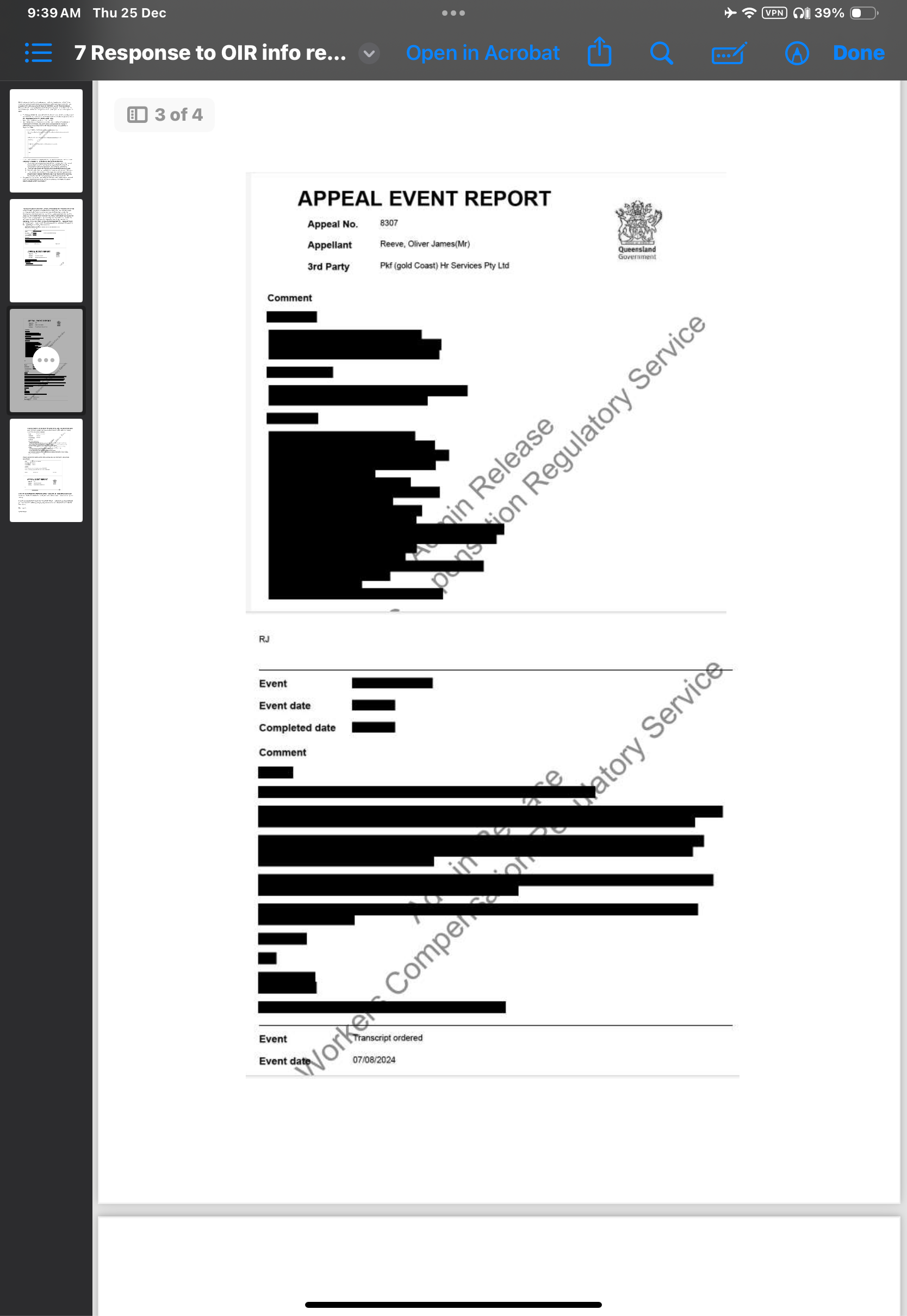
Suppressed and concealed material evidence relevant to proceedings before the QIRC and related bodies;
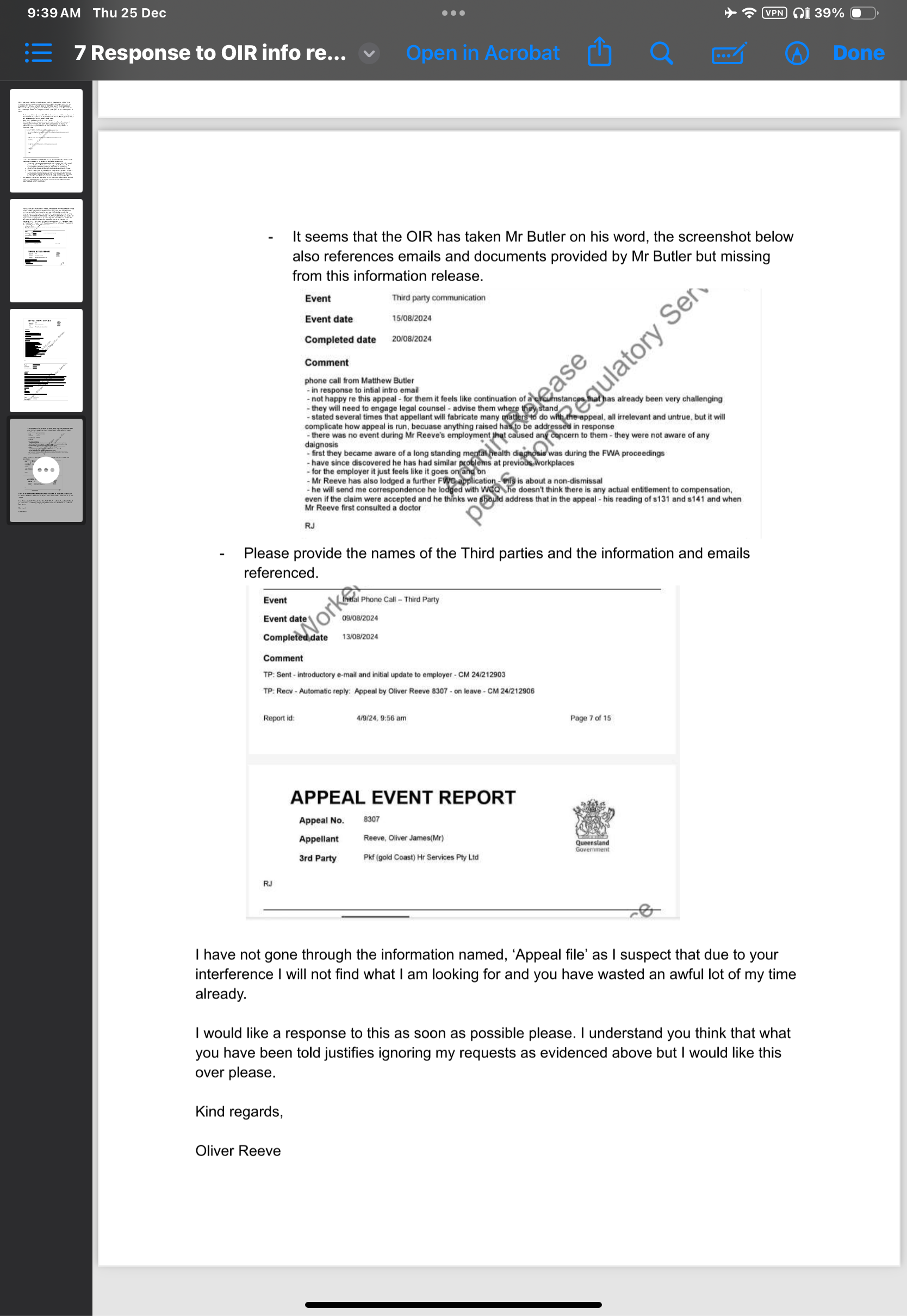
Failed to disclose documents and communications it held or relied upon;
Provided or facilitated undisclosed adverse information, consistent with the pattern seen across other agencies;
Actively participated in shaping procedural outcomes rather than ensuring fairness.
The OIR’s conduct occurred within a broader political context in which Jarrod Bleijie, as a senior political figure with responsibility for industrial relations portfolios during relevant periods, was repeatedly placed on notice of these issues. No corrective action followed, reinforcing concerns of institutional protection and political acquiescence.
Interference With Medical Evidence – Dr Jha
A particularly serious aspect of the OIR’s conduct involved attempted interference with the independent medical report of Dr Jha, which was commissioned and paid for as part of the tribunal process. Rather than respecting the integrity of that report:
The OIR sought to undermine, discredit, or neutralise its findings;
No legitimate evidentiary basis was advanced to justify doing so;
The interference served to weaken material evidence supportive of my position.
This conduct undermines not only procedural fairness but the integrity of expert evidence relied upon by tribunals.
Collusion With QIRC and Commissioner Dwyer
The OIR’s actions cannot be viewed in isolation. Evidence indicates collusion with the QIRC, particularly with Dwyer, to engineer a narrative that I was “dangerous” or a security risk.
As a result:
I was labelled as “dangerous” without evidence;
Security guards were insisted upon at hearings, despite no factual basis;
This portrayal was used to intimidate, stigmatise, and prejudice proceedings.
This tactic mirrors behaviour seen in other jurisdictions, where unfounded characterisations are deployed to discredit whistleblowers and justify extraordinary procedural measures.
Failures of the QIRC
The QIRC failed in its core obligations to act independently, transparently, and according to law. Its failures include:
Refusal to admit or address documented wrongdoing, even when supported by evidence;
Failure to properly investigate complaints concerning its own conduct;
Reliance on undisclosed material while excluding first-hand evidence;
Misuse of administrative powers to obstruct rather than facilitate justice.
When formal complaints were lodged concerning Commissioner Dwyer’s conduct and the Commission’s handling of evidence, the QIRC refused to properly document, investigate, or determine those complaints, thereby insulating itself from accountability.
Why This Is a Serious Public Concern
The combined conduct of the OIR and QIRC represents a collapse of industrial justice safeguards. When:
A government department suppresses evidence,
A tribunal colludes with that department,
Medical evidence is interfered with, and
A whistleblower is falsely portrayed as a threat,
the system ceases to function as a forum for justice and instead becomes a mechanism of retaliation.
This behaviour is not merely unfair. It is dangerous to the public, because it demonstrates how industrial tribunals can be weaponised to silence legitimate complaints and protect powerful networks from scrutiny.
Why This Is Documented Here
This website records the conduct of the OIR and QIRC because no internal accountability mechanisms were allowed to operate. Complaints were refused, evidence was hidden, and wrongdoing was denied rather than addressed.
When institutions refuse to document their own misconduct, the public record must do so instead.