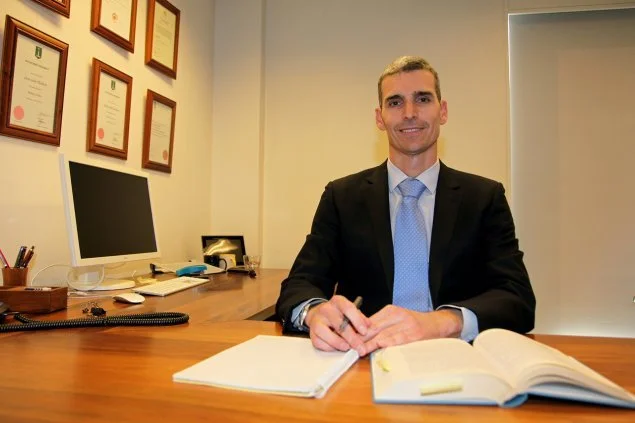
Glenn Theakston, weak and corrupt.
FORMAL COMPLAINT AND REQUEST FOR INDEPENDENT INVESTIGATION
Conduct of Magistrate Theakston, Registrar Helen Banks and Caitlin Christie
From: Oliver James Reeve
Proceeding: Phillip William Miller v Oliver James Reeve – PPO69/2026
Related complaint: ACT Judicial Council JC102/2026
I make this formal complaint concerning the cumulative conduct of Magistrate Theakston, Registrar Helen Banks and Caitlin Christie in connection with PPO69/2026 and the subsequent handling of my complaints.
The events culminating in the final Personal Protection Order made against me on 8 September 2026 have caused me to lose confidence in the fairness, independence and administrative integrity of the process.
I regard what has occurred as extraordinarily serious.
I have previously used terms including corruption, criminality and fraud because that reflects the seriousness with which I regard what has happened. For the purposes of this complaint, however, I make a more precise request:
I want the conduct independently investigated, the documentary and electronic record preserved, the relevant individuals required to account for their decisions, and any evidence of misconduct, abuse of office, dishonesty or other unlawful conduct referred to the body legally competent to investigate it.
I am not asking the recipient to assume criminality.
I am asking the recipient to stop assuming regularity and investigate the evidence.
1. MAGISTRATE THEAKSTON
My concerns regarding Magistrate Theakston are the most serious because he exercised judicial power directly affecting my rights.
Conduct on 28 August 2026
During the hearing on 28 August, I was attempting to make submissions as an unrepresented litigant.
Magistrate Theakston told me:
“I’m going to place you on mute next time you talk over the top of me.”
He subsequently stated:
“This is not a place for you to grandstand or quote AI quotes or any other material you’ve prepared before.”
I responded:
“Don’t mute me. I am not grandstanding. I am making a submission.”
I also said:
“Perhaps if you would let me speak as somebody who is not able to be represented. Perhaps I could speak.”
When attempting to explain the importance of evidence from Jonathan Dooley, I stated:
“Jonathan Dooley is not a peripheral witness.”
I also asked:
“I am reading my evidence. Why are you interrupting me?”
Magistrate Theakston subsequently directed:
“Place the defendant on mute again, please.”
These are not impressions reconstructed months later. They are statements from the proceeding capable of being tested against the Court’s own audio recording and transcript.
A judicial officer is entitled to control proceedings. That does not answer the question whether the manner in which that power was exercised provided an unrepresented party with a meaningful opportunity to present his case.
I contend that it did not.
Treatment of my prepared submissions
I am particularly disturbed by the reference to “AI quotes or any other material you’ve prepared before.”
The relevant question should have been whether my submission was legally and factually correct.
Whether a self-represented litigant uses research software, textbooks, legislation, case databases, precedents, notes or technological assistance to prepare a submission does not determine whether that submission is valid.
I considered the remark dismissive and prejudicial.
Muting an unrepresented litigant
The disabling of my microphone is particularly serious.
Remote participation already places an overseas self-represented litigant at a disadvantage compared with somebody physically present in the courtroom.
Once the Court controls whether that person’s microphone operates, the judicial officer exercises literal technological control over whether that person can be heard.
That power must be exercised with considerable restraint.
I contend that my microphone was disabled while I was attempting to advance matters I regarded as directly relevant to my defence.
Recusal
Following these events, I sought Magistrate Theakston’s recusal.
My position was not simply:
“I received an adverse ruling, therefore the Magistrate is biased.”
I relied upon the cumulative circumstances and the objective appearance created by what had occurred.
I subsequently lodged Judicial Council complaint JC102/2026.
Despite those circumstances, Magistrate Theakston remained responsible for determining matters affecting whether he would continue hearing the proceeding.
The final PPO was ultimately made by Magistrate Theakston himself on 8 September 2026.
I intend to challenge that decision in the ACT Supreme Court.
Final determination in my absence
Before 8 September I expressly notified the Court that I did not regard it as fair or appropriate for the substantive final hearing to proceed before Magistrate Theakston in the circumstances.
I did not silently disappear.
I communicated my objections.
I sought recusal.
I sought an adjournment.
I explained my circumstances.
I sought answers concerning the evidentiary case against me.
I sought preservation of the record.
Nevertheless, the proceeding culminated in a final PPO.
The resulting order imposes substantial restraints upon me for 12 months and proposes that I pay $13,000 in costs.
I regard the decision to proceed in these cumulative circumstances as requiring independent scrutiny.
Evidence and procedural fairness
Throughout the proceeding I repeatedly sought to understand exactly what evidence Mr Miller had supplied against me.
I sought answers concerning whether he had supplied an affidavit or other adverse material.
I remain concerned about whether all materially adverse information considered in the proceeding was disclosed to me.
I do not assert in this complaint that a particular undisclosed document has been proven to exist when I have not yet obtained evidence establishing that fact.
My complaint is that I repeatedly sought sufficient information to identify and answer the evidentiary case against me and do not consider those concerns to have been satisfactorily resolved before final determination.
That distinction is important.
If everything was properly disclosed, the records should establish that easily.
If it was not, the records should establish that too.
Evidence OR1–OR25
I attempted to provide approximately 1,068 pages of supporting evidence, identified as OR1–OR25.
There were substantial difficulties concerning acceptance and retention of that evidence.
Ultimately, Magistrate Theakston directed on or about 28 August that the electronic supporting material be retained.
I acknowledge that decision because this complaint should include decisions favourable to me as well as those I challenge.
However, retention of the documents does not answer whether I was afforded an adequate opportunity to explain their significance before the proceeding was finally determined.
Subpoenas and witnesses
I also attempted to obtain evidence involving witnesses including Jonathan Dooley, Josie Lopez and Timothy Cronin.
I specifically told the Court:
“Jonathan Dooley is not a peripheral witness.”
My position was that evidence concerning these individuals was relevant to the provenance, context and accuracy of allegations concerning me.
The treatment of those attempts should be examined as part of the overall question of whether I received a genuine opportunity to present my defence.
Why I consider continued judicial involvement inappropriate
I have now lost confidence in Magistrate Theakston’s ability to deal with matters involving me in a way that objectively appears impartial.
I therefore request that the appropriate authority consider whether, pending proper examination of JC102/2026 and the relevant recordings, Magistrate Theakston should have any further involvement in proceedings concerning me, subject of course to the lawful powers of the authority receiving this complaint.
I am not asking an administrative officer to unlawfully remove a Magistrate from office.
I am asking the competent authorities to examine whether the conduct meets the standards required of somebody entrusted with judicial power.
2. REGISTRAR HELEN BANKS
My complaint concerning Registrar Helen Banks is administrative rather than judicial, but it is nevertheless serious.
I repeatedly sought direct answers about the administration of PPO69/2026.
In particular, I sought information concerning:
what evidence Mr Miller had supplied;
whether an affidavit had been supplied;
whether there was adverse information before the Court that I had not received;
the status of my evidence;
the status and sequencing of my recusal application;
the adjournment application;
the final hearing;
Court records and transcripts;
and the administrative handling of the proceeding.
I did not consider that I received adequate direct answers to fundamental questions.
The second listing
Registrar Banks advised me:
“The second listing notice for 8 September 2026 is the listing for your application in proceedings seeking Magistrate Theakston to recuse himself from hearing the application for final personal protection orders and for an adjournment. The matter will then proceed to final hearing on that day if an adjournment is not granted.”
That arrangement was deeply concerning to me.
It contemplated Magistrate Theakston dealing with the application concerning his own recusal and then, if the matter was not adjourned, proceeding into the substantive final proceeding.
I repeatedly raised the practical and fairness implications of that arrangement.
Failure to answer the evidence question
I repeatedly sought a straightforward answer:
What evidence from Mr Miller is actually before the Court?
A response telling me that my own application and affidavit were on file and had been provided to the Applicant’s representative did not answer that question.
I was asking about the Applicant’s evidence against me.
That distinction could not reasonably have been clearer.
I therefore request an audit of the Registry’s handling of those requests.
The investigation should identify:
each question I asked;
who received it;
who decided whether and how it would be answered;
what records were checked;
whether Court staff knew what Applicant material existed;
whether any material had been restricted from access;
who authorised any restriction;
and the legal or judicial authority relied upon.
Previous complaint concerning Registrar Banks
I had already raised concerns regarding Registrar Banks.
Despite this, she continued to be involved in correspondence concerning a proceeding in which her own administrative conduct had become part of my complaint.
I request examination of whether that was appropriate and whether the correspondence should instead have been handled by an independent senior Registry officer.
What I seek concerning Registrar Banks
I request an independent investigation of her administrative involvement in PPO69/2026.
I specifically request examination of whether communications to me were complete and accurate, whether material questions were left unanswered, whether appropriate records were consulted before responses were provided, and whether any information concerning evidence or Court administration was withheld without an adequate basis.
If the investigation establishes serious administrative misconduct, I request appropriate employment or disciplinary action.
If it does not, I request a reasoned explanation supported by the records.
3. CAITLIN CHRISTIE – JC102/2026
My concerns regarding Caitlin Christie arise principally from the handling of Judicial Council complaint JC102/2026.
Ms Christie has advised me that:
Chief Magistrate Taylor would be informed of my complaint;
Magistrate Theakston would subsequently be informed;
information would be sought from the Courts;
she would review the audio and transcript;
the Council would be made aware of the complaint at its October 2026 meeting; but
substantive preliminary examination may not occur until December 2026 or early 2027 because of a backlog.
I regard that delay as profoundly inadequate given the circumstances.
A complaint concerning current judicial conduct cannot simply disappear into a backlog
The subject of my complaint was a serving Magistrate exercising judicial power in an active proceeding involving me.
The central evidence includes an existing Court audio recording.
This is not a complaint requiring years of historical reconstruction before anything can be checked.
The recording exists.
The transcript can be obtained.
The Judicial Council has already recognised their relevance.
Yet I have been told that meaningful preliminary examination may not occur for months.
A complaints system must be judged partly by whether it can respond meaningfully while the conduct complained about remains relevant.
I request investigation of whether the handling and prioritisation of JC102/2026 is consistent with the Council’s statutory responsibilities.
Response from Magistrate Theakston
I was also informed that complainants are not ordinarily given an opportunity to respond to submissions provided by the judicial officer during preliminary examination.
I have raised a specific fairness concern about this.
If Magistrate Theakston merely responds to allegations already particularised, I understand the Council’s stated procedure.
But if his response introduces new factual propositions, documents or an account materially inconsistent with the objective record, fairness may require that I have an opportunity to correct demonstrable inaccuracies before those matters are relied upon.
I request that this issue be considered rather than mechanically dismissed by reference to procedure.
What I seek concerning Ms Christie
I request examination of whether JC102/2026 has been handled with sufficient urgency, whether all relevant evidence has been promptly secured, whether appropriate prioritisation has occurred given the live proceeding, and whether communications to me accurately and completely explain the Council’s position.
I do not suggest that Ms Christie personally created the Judicial Council backlog.
I do contend that simply explaining the backlog does not resolve the consequences it creates.
4. THE CUMULATIVE PROBLEM
These matters cannot sensibly be examined entirely in isolation.
My concern is about a sequence in which:
I attempted to defend serious allegations.
I encountered substantial disputes concerning evidence and subpoenas.
I attempted to place more than 1,000 pages of material before the Court.
I was interrupted and ultimately muted during a hearing.
I sought recusal.
I complained to the Judicial Council.
I repeatedly sought clarity concerning the evidence against me.
I complained about Registry administration.
I was informed that substantive consideration of the judicial complaint could take months.
The same Magistrate remained involved.
The proceeding then culminated in a final PPO and a proposed $13,000 costs liability.
I am now required to appeal to the Supreme Court to challenge that outcome.
That cumulative history warrants independent examination.
5. I WANT FACTS, NOT INSTITUTIONAL ASSURANCES
I do not want another response merely stating that officers acted appropriately.
I want the underlying records examined.
If Magistrate Theakston acted entirely properly, the audio, transcript and Court record should demonstrate it.
If Registrar Banks administered every request correctly, the Registry records and audit trail should demonstrate it.
If JC102/2026 has been handled appropriately, the Council’s records should demonstrate that.
That is why preservation and independent examination of the primary evidence are essential.
6. PRESERVATION NOTICE
I formally request preservation of all potentially relevant records, including:
complete audio recordings;
transcripts;
Registry emails;
internal emails;
case-management records;
document-access records;
filing records;
audit logs;
document metadata;
listing and allocation records;
communications concerning my recusal application;
communications concerning my adjournment application;
communications concerning OR1–OR25;
subpoena records;
communications involving Magistrate Theakston;
communications involving Registrar Banks;
communications concerning JC102/2026;
requests for and receipt of Court recordings by the Judicial Council;
and records identifying who made relevant administrative decisions.
I request that ordinary destruction or deletion processes be suspended to the extent necessary and lawful to preserve evidence relevant to existing and anticipated proceedings and complaints.
7. INDEPENDENT INVESTIGATION
I request that this complaint not be referred back to any of the three individuals complained about for substantive determination of the complaint concerning themselves.
Each person should of course be afforded an opportunity to respond.
They should not, however, determine whether their own conduct was appropriate.
I request allocation to an officer or authority institutionally independent of the conduct complained about.
8. POSSIBLE UNLAWFUL CONDUCT
I have described aspects of what has occurred as potentially criminal and corrupt.
I recognise that those are serious allegations requiring evidence.
I therefore ask the investigating authority to determine whether any evidence disclosed by the investigation provides a reasonable basis for referral to:
police;
an integrity body;
a judicial oversight body;
a disciplinary authority;
or another competent investigative authority.
If no such basis exists, say so and explain why.
But the question should be determined after examination of the records, not avoided because the allegation is uncomfortable.
9. EMPLOYMENT AND PUBLIC RESPONSIBILITY
The positions occupied by these individuals carry substantial public responsibility.
A Magistrate exercises coercive judicial power.
A Registrar controls important aspects of access to and administration of the Court.
An officer assisting the Judicial Council participates in a statutory mechanism intended to provide accountability for judicial conduct.
The standards expected in those positions are correspondingly high.
I therefore request that the competent authority consider whether any substantiated conduct identified through this investigation raises questions concerning:
fitness to continue performing the relevant functions;
disciplinary action;
supervision;
reassignment;
conflict management;
training;
or any other employment or statutory consequence available according to law.
I am not demanding predetermined dismissal.
I am demanding an investigation serious enough that dismissal or other consequences remain available if the evidence ultimately warrants them.
10. ACTION REQUIRED
I request:
immediate acknowledgment of this complaint;
allocation to an independent decision-maker;
preservation of the complete evidentiary and administrative record;
examination of the complete audio and transcript of the 28 August hearing;
examination of the complete record of 8 September 2026;
examination of Magistrate Theakston’s conduct and the handling of the recusal application;
an audit of Registrar Banks’ involvement and communications;
examination of the handling and prioritisation of JC102/2026;
identification of every person responsible for material administrative decisions concerning my access to evidence and Court records;
identification of any adverse material concerning me that was before the Court but not supplied to me, if such material exists;
examination of the handling of OR1–OR25 and my subpoena applications;
preservation of records required for my Supreme Court appeal;
referral of any evidence reasonably indicating unlawful conduct to the appropriate independent authority;
consideration of employment, disciplinary or statutory consequences if misconduct is established; and
a detailed written outcome addressing the allegations individually rather than a generic institutional response.
CONCLUSION
I have lost confidence in the way PPO69/2026 has been administered and determined.
That conclusion has not arisen from one adverse decision.
It arises from the cumulative history: difficulties presenting evidence, subpoena disputes, unanswered questions concerning the evidentiary case, the events of 28 August, my microphone being disabled, the subsequent recusal application, the Judicial Council complaint, administrative concerns, delay in meaningful examination of that complaint, and finally the making of a 12-month PPO with a proposed $13,000 costs liability.
The final order confirms that Magistrate Theakston made the PPO on 8 September 2026, imposing 12 months of restrictions and proposing $13,000 in costs.
I intend to challenge that order through lawful appellate processes.
Separately, I demand that the conduct giving rise to this complaint be independently and transparently investigated.
I do not accept that another generic response, another referral, another recommendation that I obtain legal advice, or another unexplained delay of several months is an adequate answer.
If the conduct was proper, demonstrate that from the primary records.
If mistakes occurred, identify them.
If misconduct occurred, address it.
If evidence of unlawful conduct emerges, refer it.
And if the evidence demonstrates that any individual entrusted with judicial or administrative authority is not fit to exercise that authority, the appropriate statutory or employment consequences should follow.
That is the accountability I am seeking.
Oliver James Reeve
Christchurch, New Zealand
Respondent – PPO69/2026
Complainant – JC102/2026FORMAL COMPLAINT AND REQUEST FOR INDEPENDENT INVESTIGATION
Conduct of Magistrate Theakston, Registrar Helen Banks and Caitlin Christie
From: Oliver James Reeve
Proceeding: Phillip William Miller v Oliver James Reeve – PPO69/2026
Related complaint: ACT Judicial Council JC102/2026
I make this formal complaint concerning the cumulative conduct of Magistrate Theakston, Registrar Helen Banks and Caitlin Christie in connection with PPO69/2026 and the subsequent handling of my complaints.
The events culminating in the final Personal Protection Order made against me on 8 September 2026 have caused me to lose confidence in the fairness, independence and administrative integrity of the process.
I regard what has occurred as extraordinarily serious.
I have previously used terms including corruption, criminality and fraud because that reflects the seriousness with which I regard what has happened. For the purposes of this complaint, however, I make a more precise request:
I want the conduct independently investigated, the documentary and electronic record preserved, the relevant individuals required to account for their decisions, and any evidence of misconduct, abuse of office, dishonesty or other unlawful conduct referred to the body legally competent to investigate it.
I am not asking the recipient to assume criminality.
I am asking the recipient to stop assuming regularity and investigate the evidence.
1. MAGISTRATE THEAKSTON
My concerns regarding Magistrate Theakston are the most serious because he exercised judicial power directly affecting my rights.
Conduct on 28 August 2026
During the hearing on 28 August, I was attempting to make submissions as an unrepresented litigant.
Magistrate Theakston told me:
“I’m going to place you on mute next time you talk over the top of me.”
He subsequently stated:
“This is not a place for you to grandstand or quote AI quotes or any other material you’ve prepared before.”
I responded:
“Don’t mute me. I am not grandstanding. I am making a submission.”
I also said:
“Perhaps if you would let me speak as somebody who is not able to be represented. Perhaps I could speak.”
When attempting to explain the importance of evidence from Jonathan Dooley, I stated:
“Jonathan Dooley is not a peripheral witness.”
I also asked:
“I am reading my evidence. Why are you interrupting me?”
Magistrate Theakston subsequently directed:
“Place the defendant on mute again, please.”
These are not impressions reconstructed months later. They are statements from the proceeding capable of being tested against the Court’s own audio recording and transcript.
A judicial officer is entitled to control proceedings. That does not answer the question whether the manner in which that power was exercised provided an unrepresented party with a meaningful opportunity to present his case.
I contend that it did not.
Treatment of my prepared submissions
I am particularly disturbed by the reference to “AI quotes or any other material you’ve prepared before.”
The relevant question should have been whether my submission was legally and factually correct.
Whether a self-represented litigant uses research software, textbooks, legislation, case databases, precedents, notes or technological assistance to prepare a submission does not determine whether that submission is valid.
I considered the remark dismissive and prejudicial.
Muting an unrepresented litigant
The disabling of my microphone is particularly serious.
Remote participation already places an overseas self-represented litigant at a disadvantage compared with somebody physically present in the courtroom.
Once the Court controls whether that person’s microphone operates, the judicial officer exercises literal technological control over whether that person can be heard.
That power must be exercised with considerable restraint.
I contend that my microphone was disabled while I was attempting to advance matters I regarded as directly relevant to my defence.
Recusal
Following these events, I sought Magistrate Theakston’s recusal.
My position was not simply:
“I received an adverse ruling, therefore the Magistrate is biased.”
I relied upon the cumulative circumstances and the objective appearance created by what had occurred.
I subsequently lodged Judicial Council complaint JC102/2026.
Despite those circumstances, Magistrate Theakston remained responsible for determining matters affecting whether he would continue hearing the proceeding.
The final PPO was ultimately made by Magistrate Theakston himself on 8 September 2026.
I intend to challenge that decision in the ACT Supreme Court.
Final determination in my absence
Before 8 September I expressly notified the Court that I did not regard it as fair or appropriate for the substantive final hearing to proceed before Magistrate Theakston in the circumstances.
I did not silently disappear.
I communicated my objections.
I sought recusal.
I sought an adjournment.
I explained my circumstances.
I sought answers concerning the evidentiary case against me.
I sought preservation of the record.
Nevertheless, the proceeding culminated in a final PPO.
The resulting order imposes substantial restraints upon me for 12 months and proposes that I pay $13,000 in costs.
I regard the decision to proceed in these cumulative circumstances as requiring independent scrutiny.
Evidence and procedural fairness
Throughout the proceeding I repeatedly sought to understand exactly what evidence Mr Miller had supplied against me.
I sought answers concerning whether he had supplied an affidavit or other adverse material.
I remain concerned about whether all materially adverse information considered in the proceeding was disclosed to me.
I do not assert in this complaint that a particular undisclosed document has been proven to exist when I have not yet obtained evidence establishing that fact.
My complaint is that I repeatedly sought sufficient information to identify and answer the evidentiary case against me and do not consider those concerns to have been satisfactorily resolved before final determination.
That distinction is important.
If everything was properly disclosed, the records should establish that easily.
If it was not, the records should establish that too.
Evidence OR1–OR25
I attempted to provide approximately 1,068 pages of supporting evidence, identified as OR1–OR25.
There were substantial difficulties concerning acceptance and retention of that evidence.
Ultimately, Magistrate Theakston directed on or about 28 August that the electronic supporting material be retained.
I acknowledge that decision because this complaint should include decisions favourable to me as well as those I challenge.
However, retention of the documents does not answer whether I was afforded an adequate opportunity to explain their significance before the proceeding was finally determined.
Subpoenas and witnesses
I also attempted to obtain evidence involving witnesses including Jonathan Dooley, Josie Lopez and Timothy Cronin.
I specifically told the Court:
“Jonathan Dooley is not a peripheral witness.”
My position was that evidence concerning these individuals was relevant to the provenance, context and accuracy of allegations concerning me.
The treatment of those attempts should be examined as part of the overall question of whether I received a genuine opportunity to present my defence.
Why I consider continued judicial involvement inappropriate
I have now lost confidence in Magistrate Theakston’s ability to deal with matters involving me in a way that objectively appears impartial.
I therefore request that the appropriate authority consider whether, pending proper examination of JC102/2026 and the relevant recordings, Magistrate Theakston should have any further involvement in proceedings concerning me, subject of course to the lawful powers of the authority receiving this complaint.
I am not asking an administrative officer to unlawfully remove a Magistrate from office.
I am asking the competent authorities to examine whether the conduct meets the standards required of somebody entrusted with judicial power.
2. REGISTRAR HELEN BANKS
My complaint concerning Registrar Helen Banks is administrative rather than judicial, but it is nevertheless serious.
I repeatedly sought direct answers about the administration of PPO69/2026.
In particular, I sought information concerning:
what evidence Mr Miller had supplied;
whether an affidavit had been supplied;
whether there was adverse information before the Court that I had not received;
the status of my evidence;
the status and sequencing of my recusal application;
the adjournment application;
the final hearing;
Court records and transcripts;
and the administrative handling of the proceeding.
I did not consider that I received adequate direct answers to fundamental questions.
The second listing
Registrar Banks advised me:
“The second listing notice for 8 September 2026 is the listing for your application in proceedings seeking Magistrate Theakston to recuse himself from hearing the application for final personal protection orders and for an adjournment. The matter will then proceed to final hearing on that day if an adjournment is not granted.”
That arrangement was deeply concerning to me.
It contemplated Magistrate Theakston dealing with the application concerning his own recusal and then, if the matter was not adjourned, proceeding into the substantive final proceeding.
I repeatedly raised the practical and fairness implications of that arrangement.
Failure to answer the evidence question
I repeatedly sought a straightforward answer:
What evidence from Mr Miller is actually before the Court?
A response telling me that my own application and affidavit were on file and had been provided to the Applicant’s representative did not answer that question.
I was asking about the Applicant’s evidence against me.
That distinction could not reasonably have been clearer.
I therefore request an audit of the Registry’s handling of those requests.
The investigation should identify:
each question I asked;
who received it;
who decided whether and how it would be answered;
what records were checked;
whether Court staff knew what Applicant material existed;
whether any material had been restricted from access;
who authorised any restriction;
and the legal or judicial authority relied upon.
Previous complaint concerning Registrar Banks
I had already raised concerns regarding Registrar Banks.
Despite this, she continued to be involved in correspondence concerning a proceeding in which her own administrative conduct had become part of my complaint.
I request examination of whether that was appropriate and whether the correspondence should instead have been handled by an independent senior Registry officer.
What I seek concerning Registrar Banks
I request an independent investigation of her administrative involvement in PPO69/2026.
I specifically request examination of whether communications to me were complete and accurate, whether material questions were left unanswered, whether appropriate records were consulted before responses were provided, and whether any information concerning evidence or Court administration was withheld without an adequate basis.
If the investigation establishes serious administrative misconduct, I request appropriate employment or disciplinary action.
If it does not, I request a reasoned explanation supported by the records.
3. CAITLIN CHRISTIE – JC102/2026
My concerns regarding Caitlin Christie arise principally from the handling of Judicial Council complaint JC102/2026.
Ms Christie has advised me that:
Chief Magistrate Taylor would be informed of my complaint;
Magistrate Theakston would subsequently be informed;
information would be sought from the Courts;
she would review the audio and transcript;
the Council would be made aware of the complaint at its October 2026 meeting; but
substantive preliminary examination may not occur until December 2026 or early 2027 because of a backlog.
I regard that delay as profoundly inadequate given the circumstances.
A complaint concerning current judicial conduct cannot simply disappear into a backlog
The subject of my complaint was a serving Magistrate exercising judicial power in an active proceeding involving me.
The central evidence includes an existing Court audio recording.
This is not a complaint requiring years of historical reconstruction before anything can be checked.
The recording exists.
The transcript can be obtained.
The Judicial Council has already recognised their relevance.
Yet I have been told that meaningful preliminary examination may not occur for months.
A complaints system must be judged partly by whether it can respond meaningfully while the conduct complained about remains relevant.
I request investigation of whether the handling and prioritisation of JC102/2026 is consistent with the Council’s statutory responsibilities.
Response from Magistrate Theakston
I was also informed that complainants are not ordinarily given an opportunity to respond to submissions provided by the judicial officer during preliminary examination.
I have raised a specific fairness concern about this.
If Magistrate Theakston merely responds to allegations already particularised, I understand the Council’s stated procedure.
But if his response introduces new factual propositions, documents or an account materially inconsistent with the objective record, fairness may require that I have an opportunity to correct demonstrable inaccuracies before those matters are relied upon.
I request that this issue be considered rather than mechanically dismissed by reference to procedure.
What I seek concerning Ms Christie
I request examination of whether JC102/2026 has been handled with sufficient urgency, whether all relevant evidence has been promptly secured, whether appropriate prioritisation has occurred given the live proceeding, and whether communications to me accurately and completely explain the Council’s position.
I do not suggest that Ms Christie personally created the Judicial Council backlog.
I do contend that simply explaining the backlog does not resolve the consequences it creates.
4. THE CUMULATIVE PROBLEM
These matters cannot sensibly be examined entirely in isolation.
My concern is about a sequence in which:
I attempted to defend serious allegations.
I encountered substantial disputes concerning evidence and subpoenas.
I attempted to place more than 1,000 pages of material before the Court.
I was interrupted and ultimately muted during a hearing.
I sought recusal.
I complained to the Judicial Council.
I repeatedly sought clarity concerning the evidence against me.
I complained about Registry administration.
I was informed that substantive consideration of the judicial complaint could take months.
The same Magistrate remained involved.
The proceeding then culminated in a final PPO and a proposed $13,000 costs liability.
I am now required to appeal to the Supreme Court to challenge that outcome.
That cumulative history warrants independent examination.
5. I WANT FACTS, NOT INSTITUTIONAL ASSURANCES
I do not want another response merely stating that officers acted appropriately.
I want the underlying records examined.
If Magistrate Theakston acted entirely properly, the audio, transcript and Court record should demonstrate it.
If Registrar Banks administered every request correctly, the Registry records and audit trail should demonstrate it.
If JC102/2026 has been handled appropriately, the Council’s records should demonstrate that.
That is why preservation and independent examination of the primary evidence are essential.
6. PRESERVATION NOTICE
I formally request preservation of all potentially relevant records, including:
complete audio recordings;
transcripts;
Registry emails;
internal emails;
case-management records;
document-access records;
filing records;
audit logs;
document metadata;
listing and allocation records;
communications concerning my recusal application;
communications concerning my adjournment application;
communications concerning OR1–OR25;
subpoena records;
communications involving Magistrate Theakston;
communications involving Registrar Banks;
communications concerning JC102/2026;
requests for and receipt of Court recordings by the Judicial Council;
and records identifying who made relevant administrative decisions.
I request that ordinary destruction or deletion processes be suspended to the extent necessary and lawful to preserve evidence relevant to existing and anticipated proceedings and complaints.
7. INDEPENDENT INVESTIGATION
I request that this complaint not be referred back to any of the three individuals complained about for substantive determination of the complaint concerning themselves.
Each person should of course be afforded an opportunity to respond.
They should not, however, determine whether their own conduct was appropriate.
I request allocation to an officer or authority institutionally independent of the conduct complained about.
8. POSSIBLE UNLAWFUL CONDUCT
I have described aspects of what has occurred as potentially criminal and corrupt.
I recognise that those are serious allegations requiring evidence.
I therefore ask the investigating authority to determine whether any evidence disclosed by the investigation provides a reasonable basis for referral to:
police;
an integrity body;
a judicial oversight body;
a disciplinary authority;
or another competent investigative authority.
If no such basis exists, say so and explain why.
But the question should be determined after examination of the records, not avoided because the allegation is uncomfortable.
9. EMPLOYMENT AND PUBLIC RESPONSIBILITY
The positions occupied by these individuals carry substantial public responsibility.
A Magistrate exercises coercive judicial power.
A Registrar controls important aspects of access to and administration of the Court.
An officer assisting the Judicial Council participates in a statutory mechanism intended to provide accountability for judicial conduct.
The standards expected in those positions are correspondingly high.
I therefore request that the competent authority consider whether any substantiated conduct identified through this investigation raises questions concerning:
fitness to continue performing the relevant functions;
disciplinary action;
supervision;
reassignment;
conflict management;
training;
or any other employment or statutory consequence available according to law.
I am not demanding predetermined dismissal.
I am demanding an investigation serious enough that dismissal or other consequences remain available if the evidence ultimately warrants them.
10. ACTION REQUIRED
I request:
immediate acknowledgment of this complaint;
allocation to an independent decision-maker;
preservation of the complete evidentiary and administrative record;
examination of the complete audio and transcript of the 28 August hearing;
examination of the complete record of 8 September 2026;
examination of Magistrate Theakston’s conduct and the handling of the recusal application;
an audit of Registrar Banks’ involvement and communications;
examination of the handling and prioritisation of JC102/2026;
identification of every person responsible for material administrative decisions concerning my access to evidence and Court records;
identification of any adverse material concerning me that was before the Court but not supplied to me, if such material exists;
examination of the handling of OR1–OR25 and my subpoena applications;
preservation of records required for my Supreme Court appeal;
referral of any evidence reasonably indicating unlawful conduct to the appropriate independent authority;
consideration of employment, disciplinary or statutory consequences if misconduct is established; and
a detailed written outcome addressing the allegations individually rather than a generic institutional response.
CONCLUSION
I have lost confidence in the way PPO69/2026 has been administered and determined.
That conclusion has not arisen from one adverse decision.
It arises from the cumulative history: difficulties presenting evidence, subpoena disputes, unanswered questions concerning the evidentiary case, the events of 28 August, my microphone being disabled, the subsequent recusal application, the Judicial Council complaint, administrative concerns, delay in meaningful examination of that complaint, and finally the making of a 12-month PPO with a proposed $13,000 costs liability.
The final order confirms that Magistrate Theakston made the PPO on 8 September 2026, imposing 12 months of restrictions and proposing $13,000 in costs.
I intend to challenge that order through lawful appellate processes.
Separately, I demand that the conduct giving rise to this complaint be independently and transparently investigated.
I do not accept that another generic response, another referral, another recommendation that I obtain legal advice, or another unexplained delay of several months is an adequate answer.
If the conduct was proper, demonstrate that from the primary records.
If mistakes occurred, identify them.
If misconduct occurred, address it.
If evidence of unlawful conduct emerges, refer it.
And if the evidence demonstrates that any individual entrusted with judicial or administrative authority is not fit to exercise that authority, the appropriate statutory or employment consequences should follow.
That is the accountability I am seeking.
Oliver James Reeve
Christchurch, New Zealand
Respondent – PPO69/2026
Complainant – JC102/2026
RECORDINGS OF THE CRIMINAL THEAKSTON
https://drive.google.com/file/d/1Ptor13AWCT1ovDBfQrs36iZLXAhIDdcw/view?usp=sharing - Fraudulent PPO hearing 5th August 2026
https://drive.google.com/file/d/1c7f6WtCpoEwHQ8icmwjWuW-u5vMjdQRH/view?usp=sharing - Fraudulent application hearing
https://drive.google.com/file/d/17GUStuCULFl19PqYBX1FGrAymWpfTB5q/view?usp=sharing - Fraudulent PPO hearing 28th August 2026
https://drive.google.com/file/d/1zb_nKxptBebd7voqEH58z1F75U_AO5LQ/view?usp=sharing - Fraudulent PPO hearing 21 May 2026