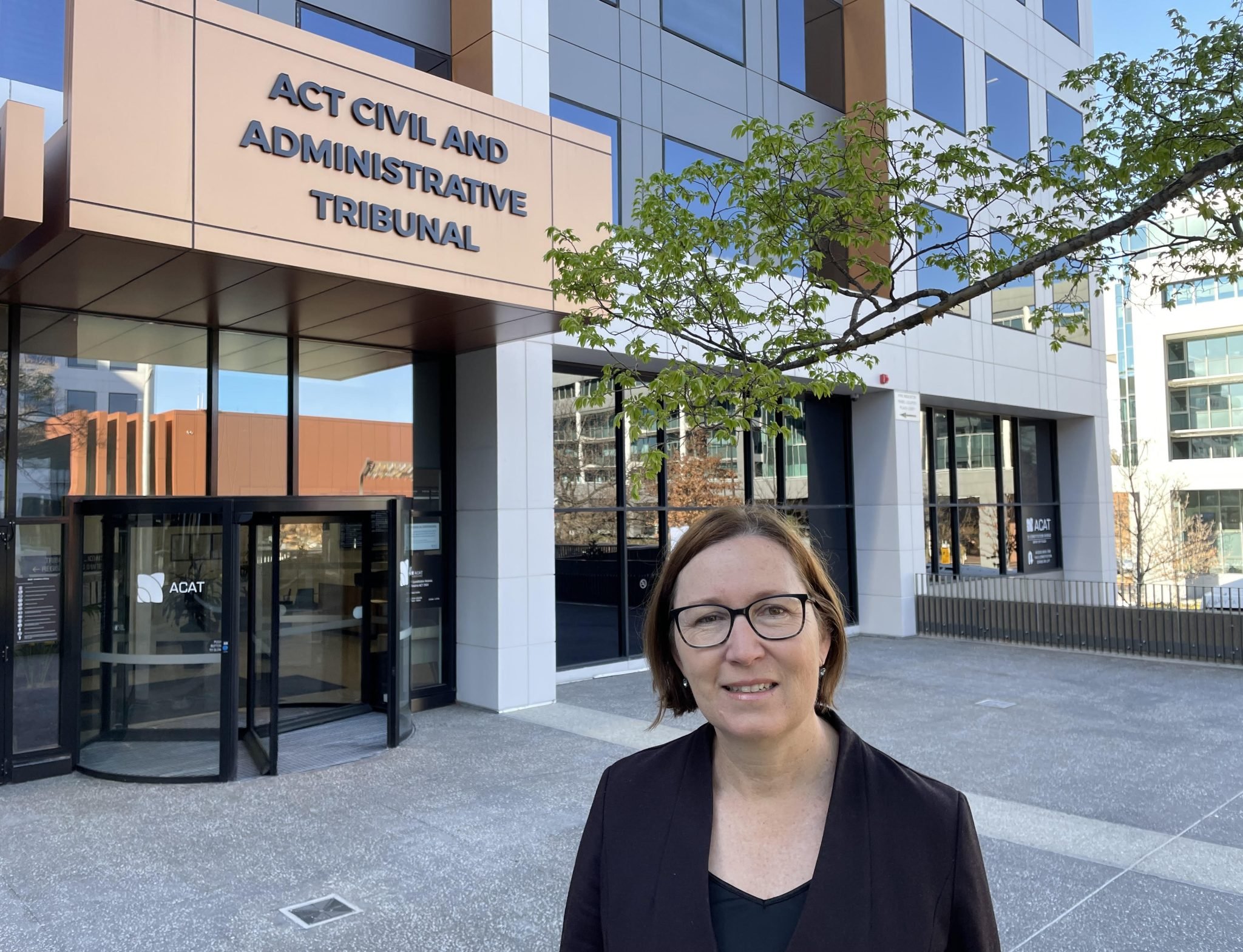
https://drive.google.com/file/d/1EPYq0usM4iUs1etvwsMpXF80Dm0HiO2X/view?usp=sharing - recording of fraudulent ACAT hearing
Mary-Therese Daniel, corrupt thief.
PUBLIC WARNING – SERIOUS CONCERNS ABOUT EVIDENCE HANDLING AND PROCEDURAL FAIRNESS AT ACAT
I am issuing this statement to place on the public record my serious concerns about the treatment I have experienced at the ACT Civil and Administrative Tribunal (ACAT) and the response of its administration to repeated requests for evidence, disclosure and procedural transparency.
These are allegations and concerns arising from my own proceedings. I am not asking the public to assume misconduct has occurred merely because I allege it.
I am asking something much simpler:
Look at the records.
I have repeatedly demanded the evidence
For months I have sought clear answers about material concerning me that has been received, retained, filed, provided to decision-makers or communicated between parties and institutions.
I have repeatedly asked ACAT to identify:
what evidence concerning me it holds;
what evidence I supplied is actually on the Tribunal record;
what happened to substantial material I provided electronically;
what material has been retained separately, including material ACAT previously indicated had been downloaded to USB;
what material is actually available to the Member hearing my matter;
what adverse information has been supplied concerning me;
the source and provenance of that information;
what has been disclosed to me;
what has not been disclosed to me; and
whether there have been substantive communications concerning me outside my knowledge.
I have not received the complete documentary accounting I have repeatedly requested.
I dispute the truth and provenance of adverse material
I have particularly serious concerns about information that I believe is false, misleading, hearsay, fabricated or otherwise unreliable.
I have repeatedly sought the underlying material so that its provenance can be tested.
If I am wrong about that material, disclosure provides the obvious means of demonstrating it.
Produce the document.
Identify its author.
Identify when it was created.
Identify who supplied it.
Identify who received it.
Identify the underlying evidence.
Identify whether it was tested.
Identify whether contradictory evidence was considered.
That is how disputed evidence should be dealt with.
With evidence—not secrecy.
My own evidence must also be accounted for
There is another side to this problem.
I have supplied substantial evidence of my own.
I want to know precisely what has happened to it.
I do not consider “it is on a USB” an adequate answer if I cannot establish whether the material forms part of the record actually available to the decision-maker.
There is an enormous difference between a document:
being received by an institution;
being stored somewhere by Registry staff;
and being properly available to the person determining the proceeding.
I have asked ACAT to provide an index identifying what was received, what was filed, what was rejected or excluded and what is actually before the decision-maker.
That request should not be controversial.
I escalated these concerns to ACAT’s President
Because these issues remained unresolved, I attempted to raise them with ACAT President Mary-Therese Daniel.
I subsequently received a response telling me:
“It is not appropriate for you to email the ACAT President directly about your matter. Emails sent directly to the ACAT President will not be acknowledged or actioned.”
I was then told that my matter was listed before the Tribunal and that I could “raise [my] queries at this time.”
That response is itself part of my concern.
These are not merely questions about what submission I want to make at a hearing.
They include administrative questions about what the Tribunal possesses, what is on its file, what has been retained, what has been disclosed and what has happened to evidence I supplied.
I do not accept that the adequate institutional response to repeated written requests for an evidentiary audit trail is simply:
turn up at another hearing and ask again.
My criticism of the President must be understood accurately
I am publicly criticising the institutional response under President Daniel’s leadership.
I am not claiming that President Daniel personally removed or concealed a particular document unless evidence establishes that.
My criticism is that serious concerns about the administration and transparency of evidence within a Tribunal ultimately require institutional accountability.
When I attempted to escalate those concerns to the President, I was expressly told that correspondence sent directly to her would “not be acknowledged or actioned.”
The public can form its own view about whether that is an adequate response to a self-represented litigant repeatedly raising concerns about the integrity and completeness of the evidentiary record.
I am also seeking answers concerning the ACT Human Rights Commission material
There is now an additional issue.
I have established a documented professional overlap between Dr Penelope Mathew, President and Human Rights Commissioner of the ACT Human Rights Commission, and Dr Chris Butler at Griffith Law School.
Dr Mathew formerly headed Griffith Law School, while Dr Butler was an academic within that Law School.
That fact does not by itself establish collusion, friendship or improper influence.
It does, however, provide a legitimate basis for asking what their relationship was and whether any conflict existed in relation to matters subsequently involving me.
I have requested disclosure and an independent conflict assessment.
The Human Rights Commission has separately told me categorically that nobody communicated with the Commission about me.
I am seeking preservation and examination of the records capable of testing that representation.
As my HRC complaint CT26080076 has been referred to ACAT, I also want to know exactly what material accompanied that referral and what ACAT has received concerning me.
I am not asking anybody to take my word for this
That is perhaps the most important point.
Do not accept my allegations merely because I make them.
Do not accept ACAT’s position merely because it is a government institution.
Obtain the records.
That is precisely what I have been trying to do.
If ACAT has disclosed everything, an indexed record can demonstrate that.
If all of my evidence is properly on file, identify it.
If no undisclosed adverse material exists, confirm that after checking the complete record.
If there have been no substantive communications outside my knowledge, the records should establish that.
If disputed material has a legitimate provenance, disclose that provenance through the appropriate legal process.
And if evidence has been excluded, identify who excluded it, when, and under what authority.
This is a warning about process, not a declaration of guilt
I am publishing this because other self-represented litigants should understand the importance of maintaining their own complete documentary records.
Keep every email.
Keep every attachment.
Keep every filing receipt.
Record exactly what you submit.
Ask what has been placed on the formal file.
Request reasons for rejected material.
Ask for the provenance of adverse evidence where legally available.
Preserve listing notices and orders.
And distinguish carefully between what you submitted and what the decision-maker actually had before them.
Those distinctions can become enormously important.
ACAT can answer my criticism very easily
I invite ACAT to respond substantively.
Provide the evidentiary audit trail I have requested.
Identify my evidence.
Identify the status of the electronically supplied material.
Identify what the decision-maker can access.
Identify any excluded material and the basis for exclusion.
Identify adverse material received concerning me to which I am legally entitled.
Identify what the HRC supplied with CT26080076.
Correct anything I have stated publicly that the objective record demonstrates is wrong.
I will correct my position where the evidence requires it.
I expect the same standard from the institutions involved.
My proceedings remain active
Nothing in this statement abandons, withdraws or concedes any proceeding, appeal, complaint or application.
Nor should this statement be understood as encouraging anybody to contact, harass or target any individual involved.
My response will be through evidence, lawful disclosure processes, appeals, review mechanisms and institutional accountability.
I have asked for the evidence repeatedly.
I will continue asking until I receive a proper answer.
If the process is sound, disclose the record and let the record demonstrate it.
