Queensland Human Rights Commission (QHRC) – Investigation Failure, Misrepresentation, and Evidence Concealment
The Queensland Human Rights Commission was established to protect individuals from discrimination, victimisation, and abuse of power—particularly where state institutions are involved. In my case, the QHRC failed entirely in that mandate. Instead of acting as an independent safeguard, it became another participant in a broader pattern of dismissal, misrepresentation, and unlawful withholding of evidence.
Failure to Investigate
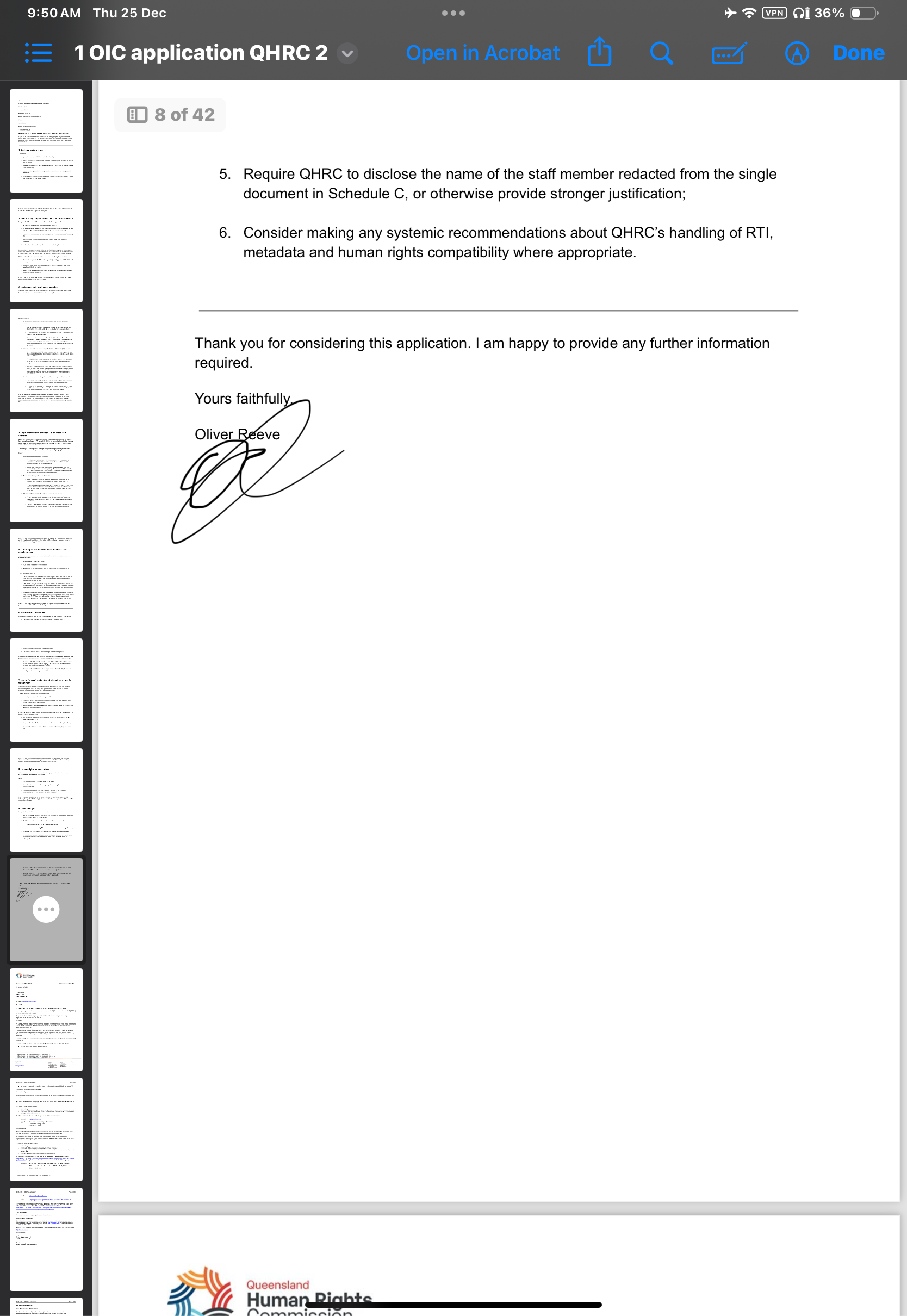
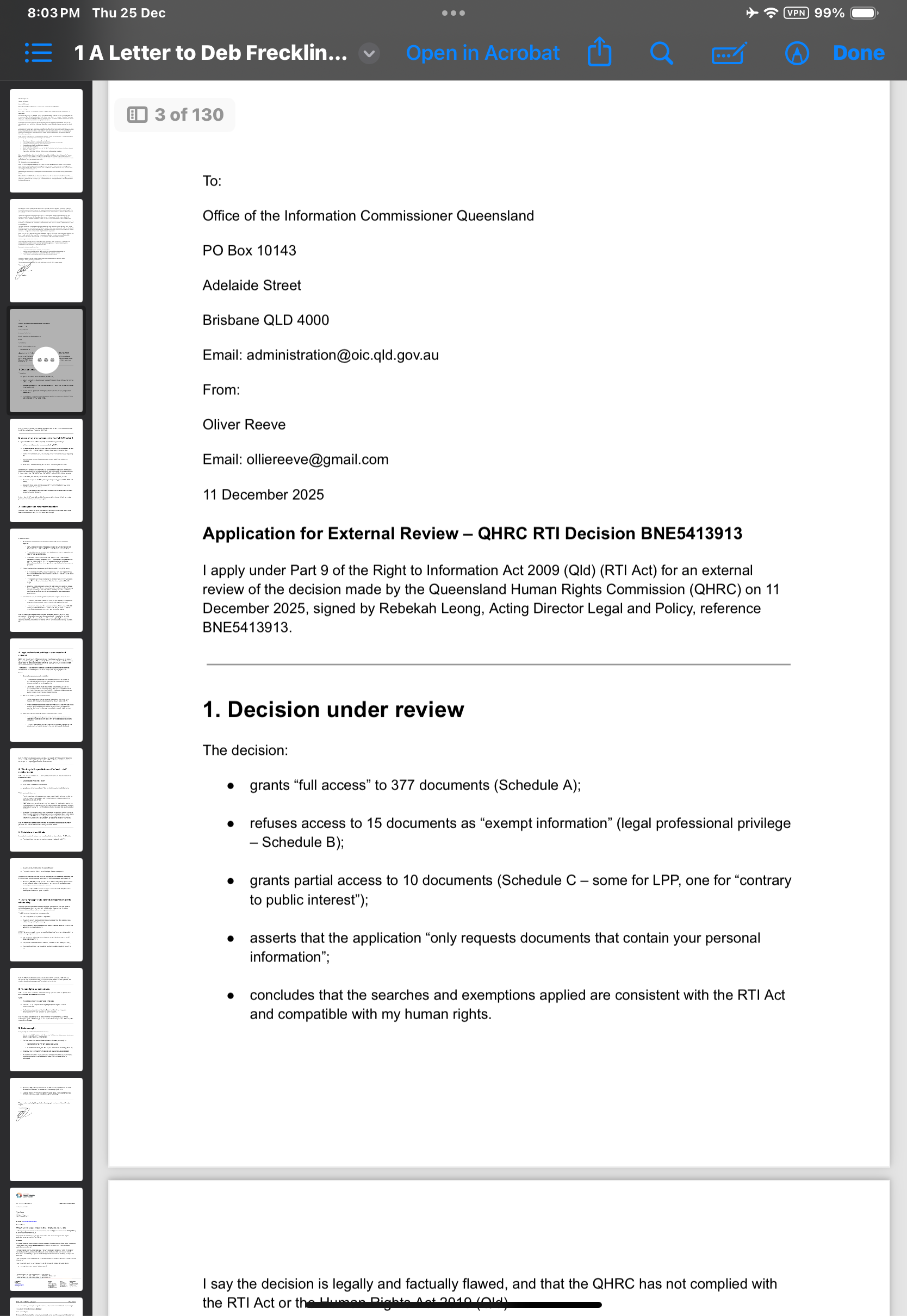
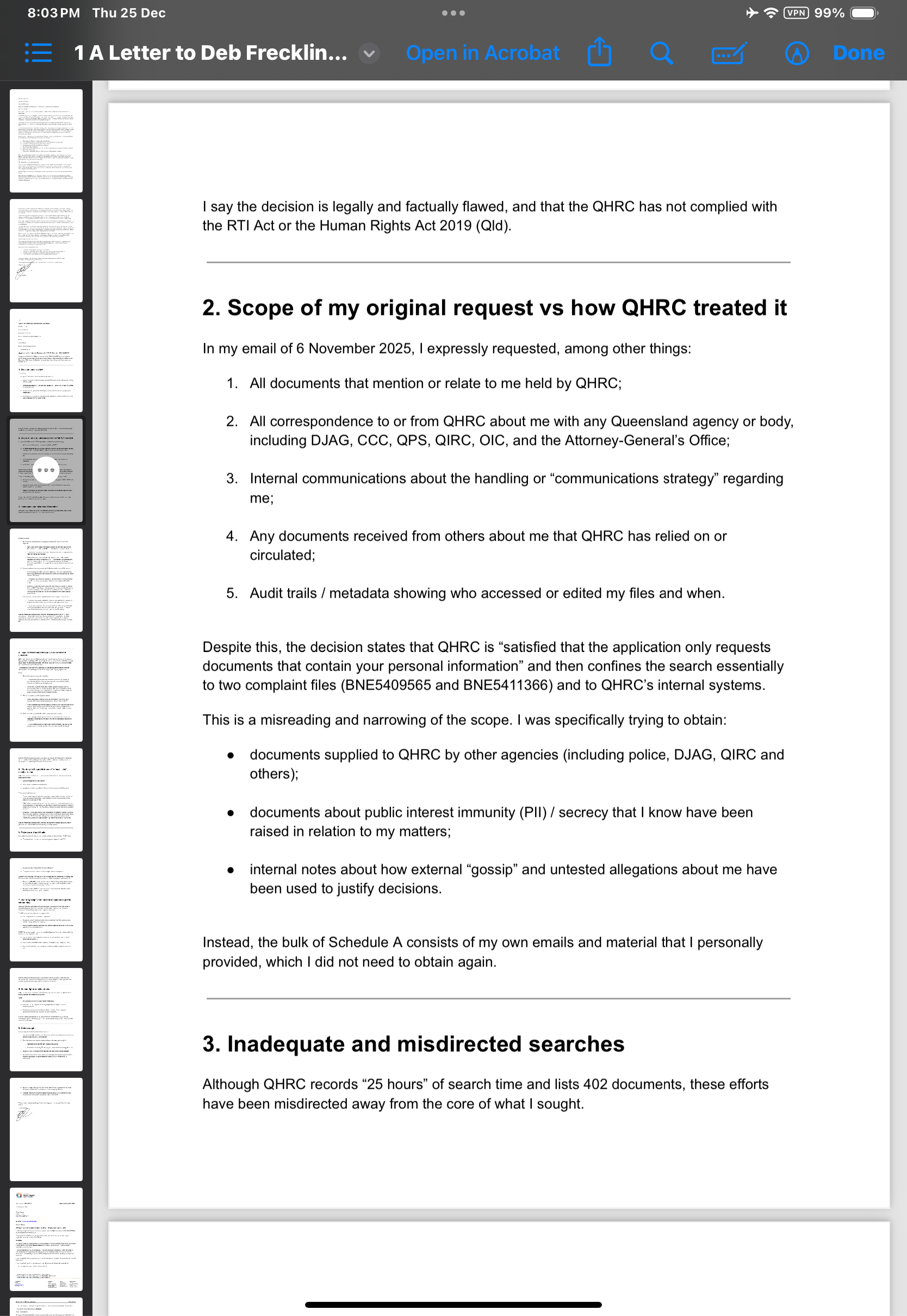
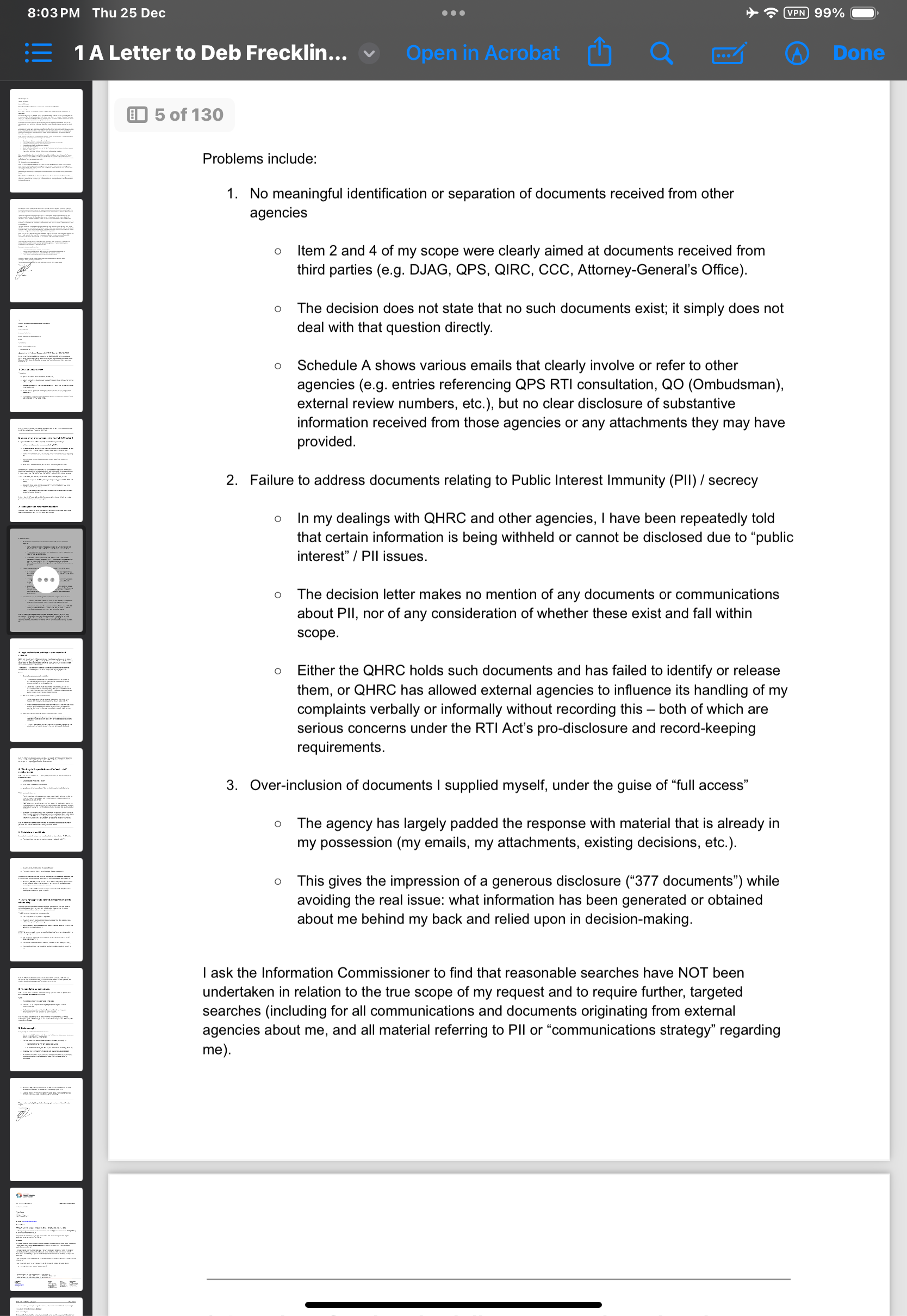
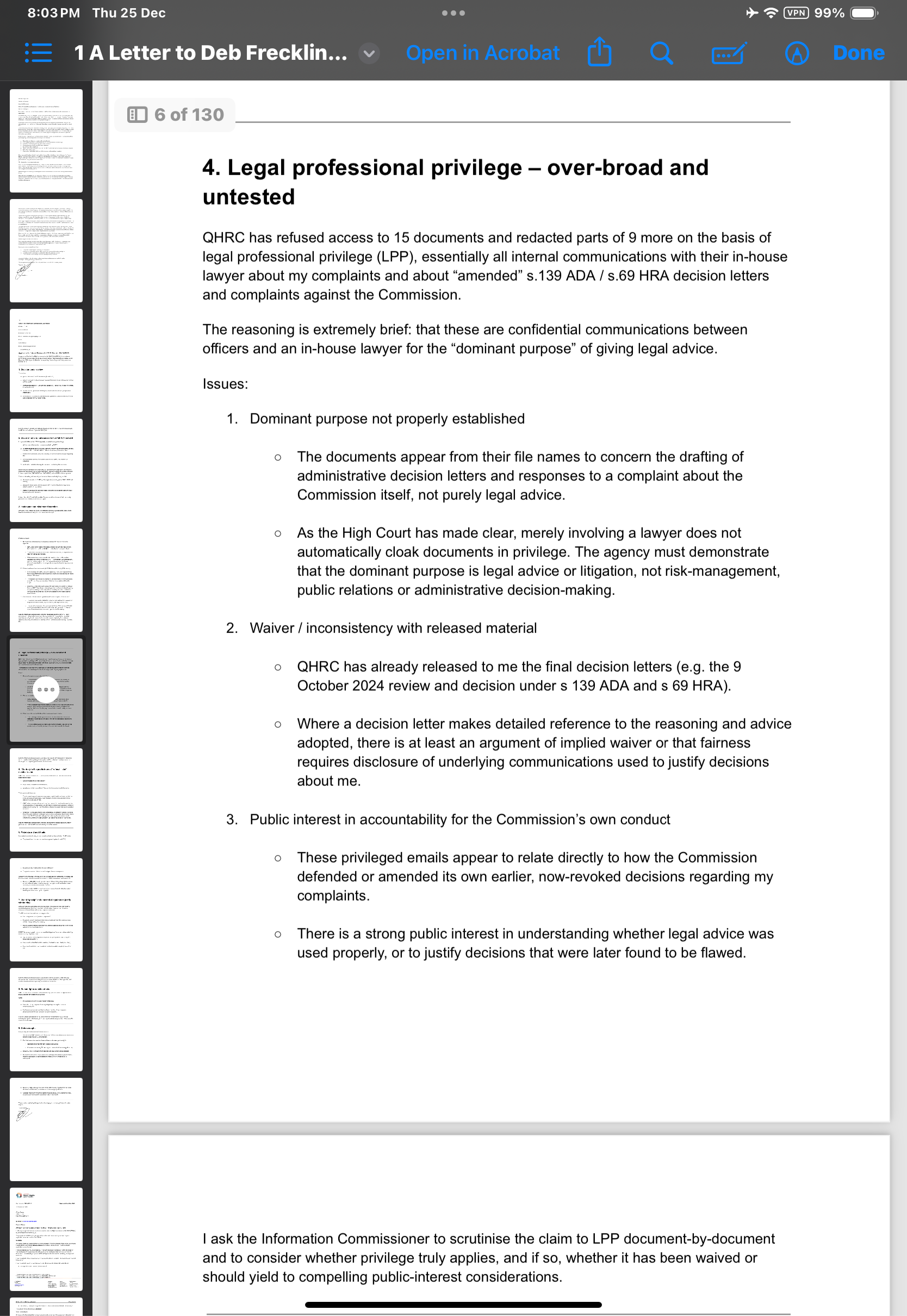
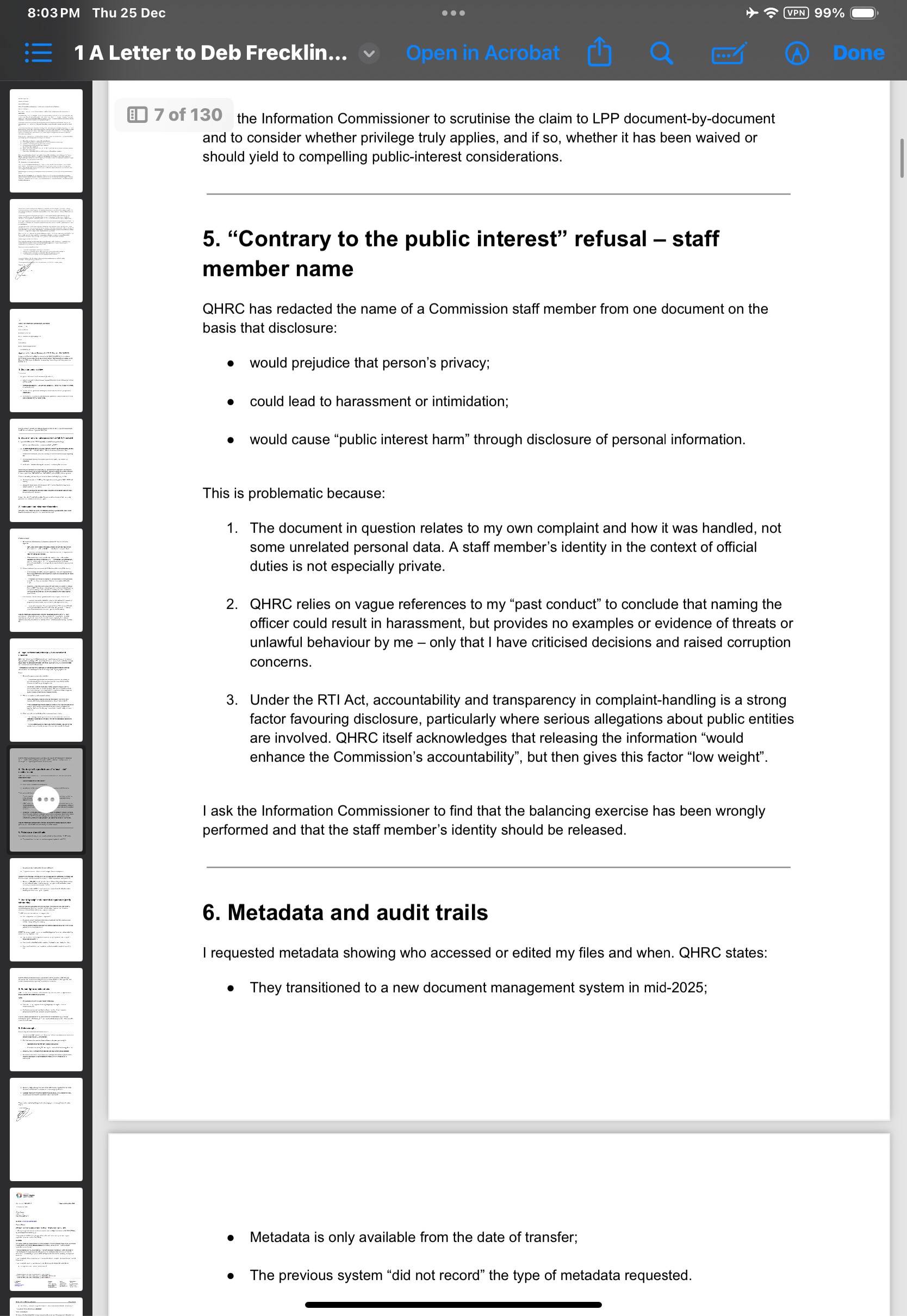
My application to the QHRC was comprehensive, detailed, and supported by volumes of first-hand documentary evidence, including sworn material, regulator correspondence, medical evidence, contemporaneous records, and cross-agency disclosures. The issues raised went directly to victimisation, retaliation, denial of procedural fairness, and abuse of public power.
Despite this, QHRC investigators Ruth Venables and Phoebe Stuart:
Failed to meaningfully engage with the substance of the application;
Ignored or dismissed extensive primary evidence without explanation;
Did not conduct any genuine investigative steps consistent with their statutory role;
Treated serious allegations as administrative inconveniences rather than human rights breaches.
No proper assessment was undertaken. No balancing of evidence occurred. No transparent reasoning was provided.
False Claims of External Evidence
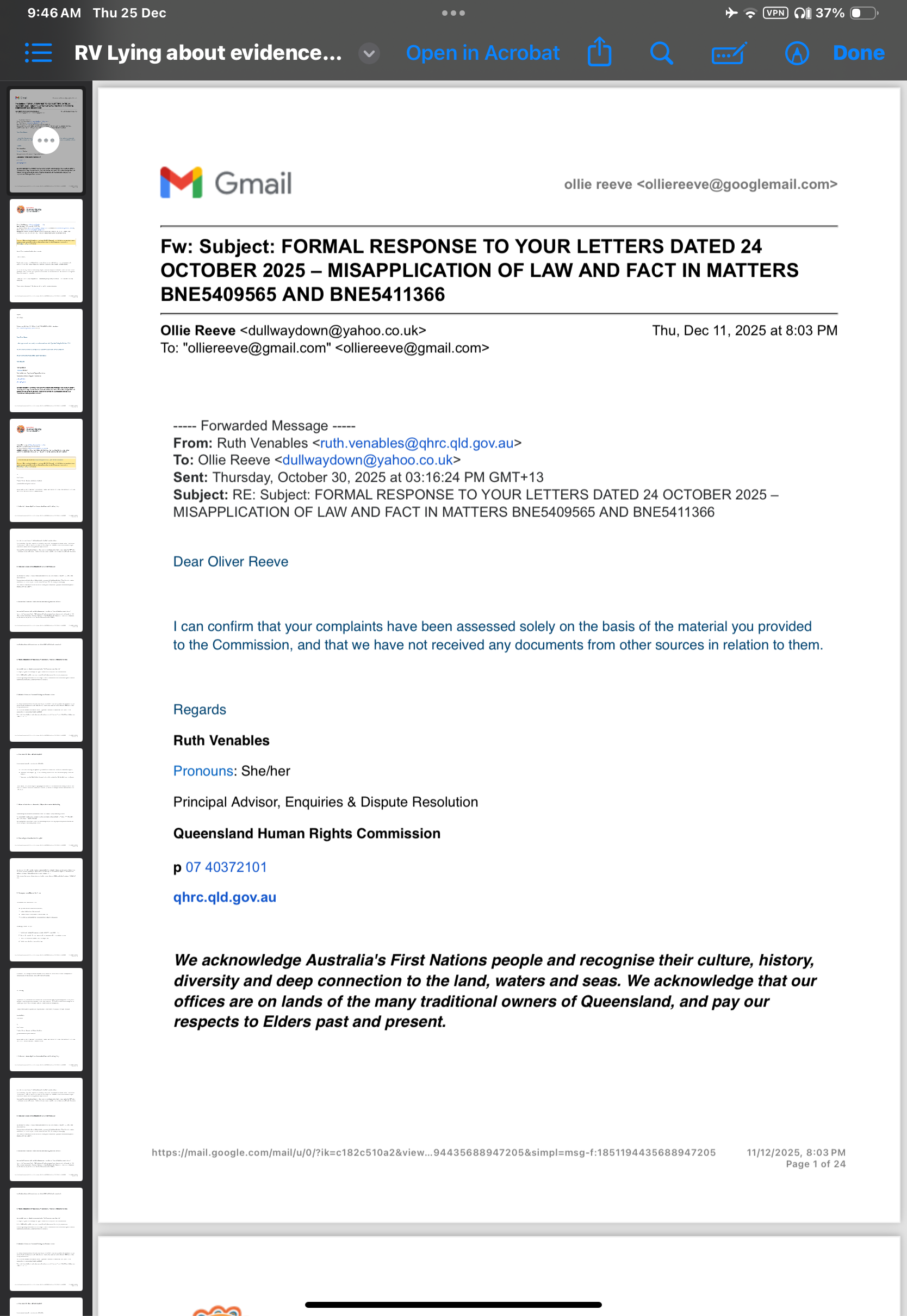
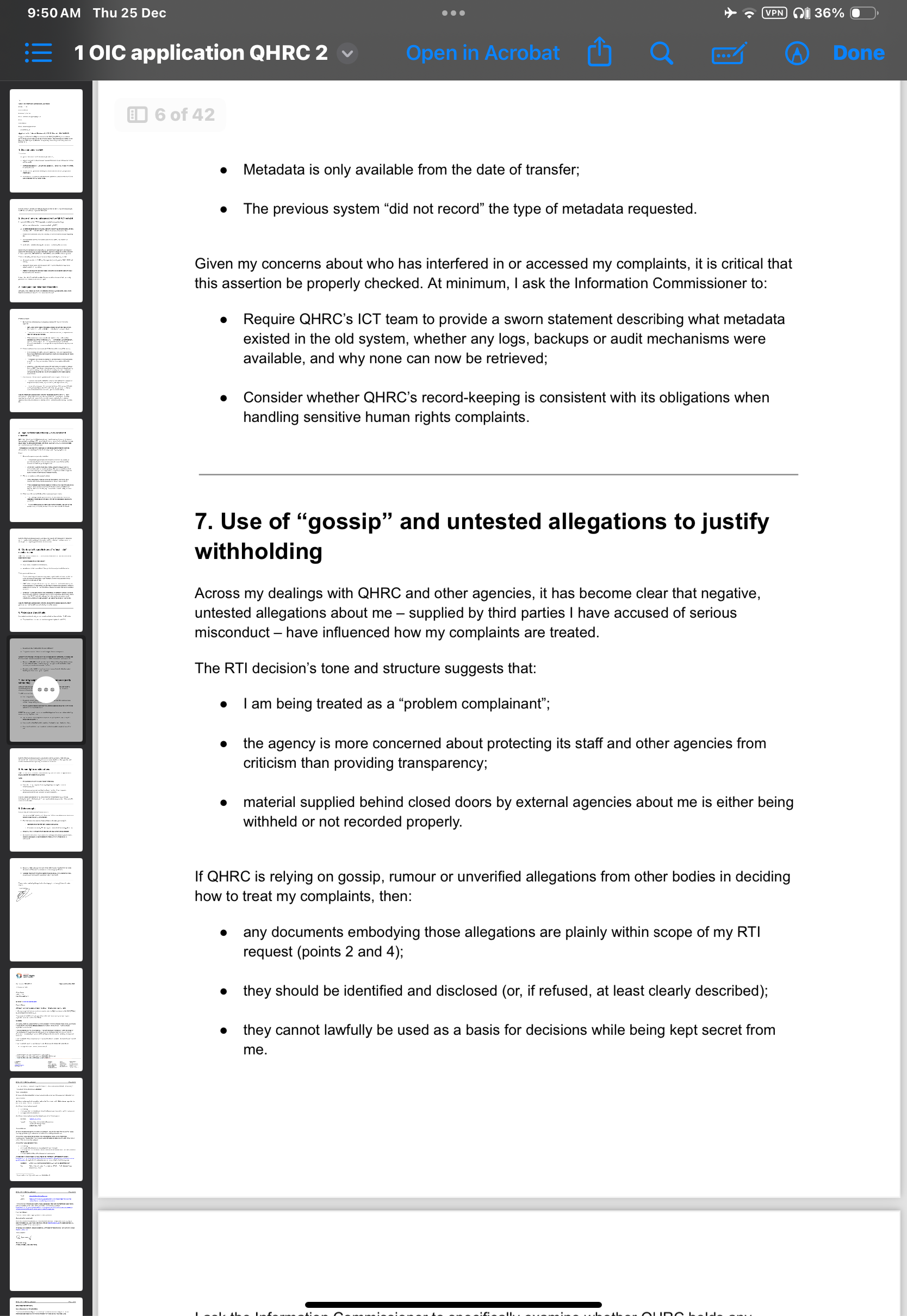
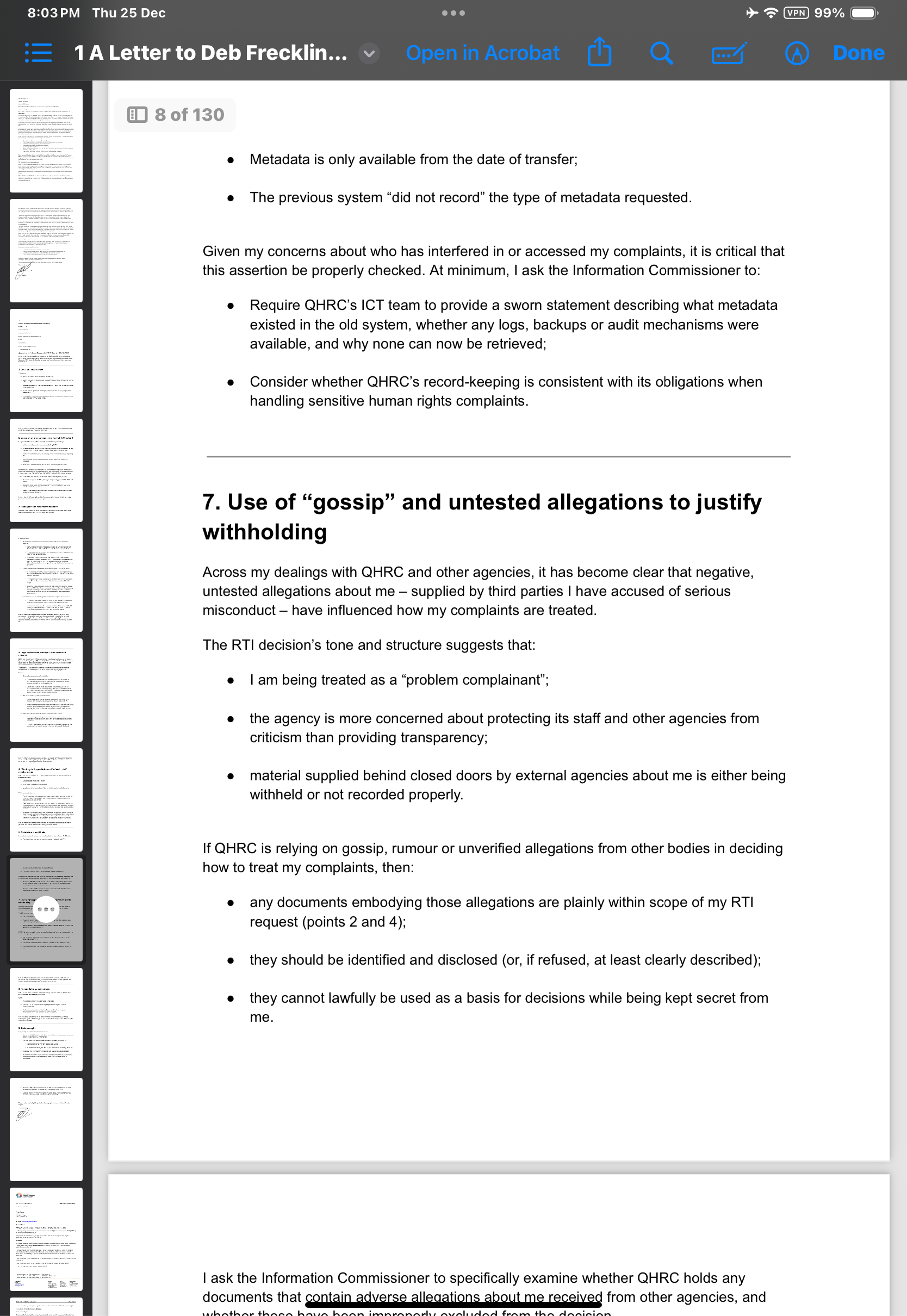
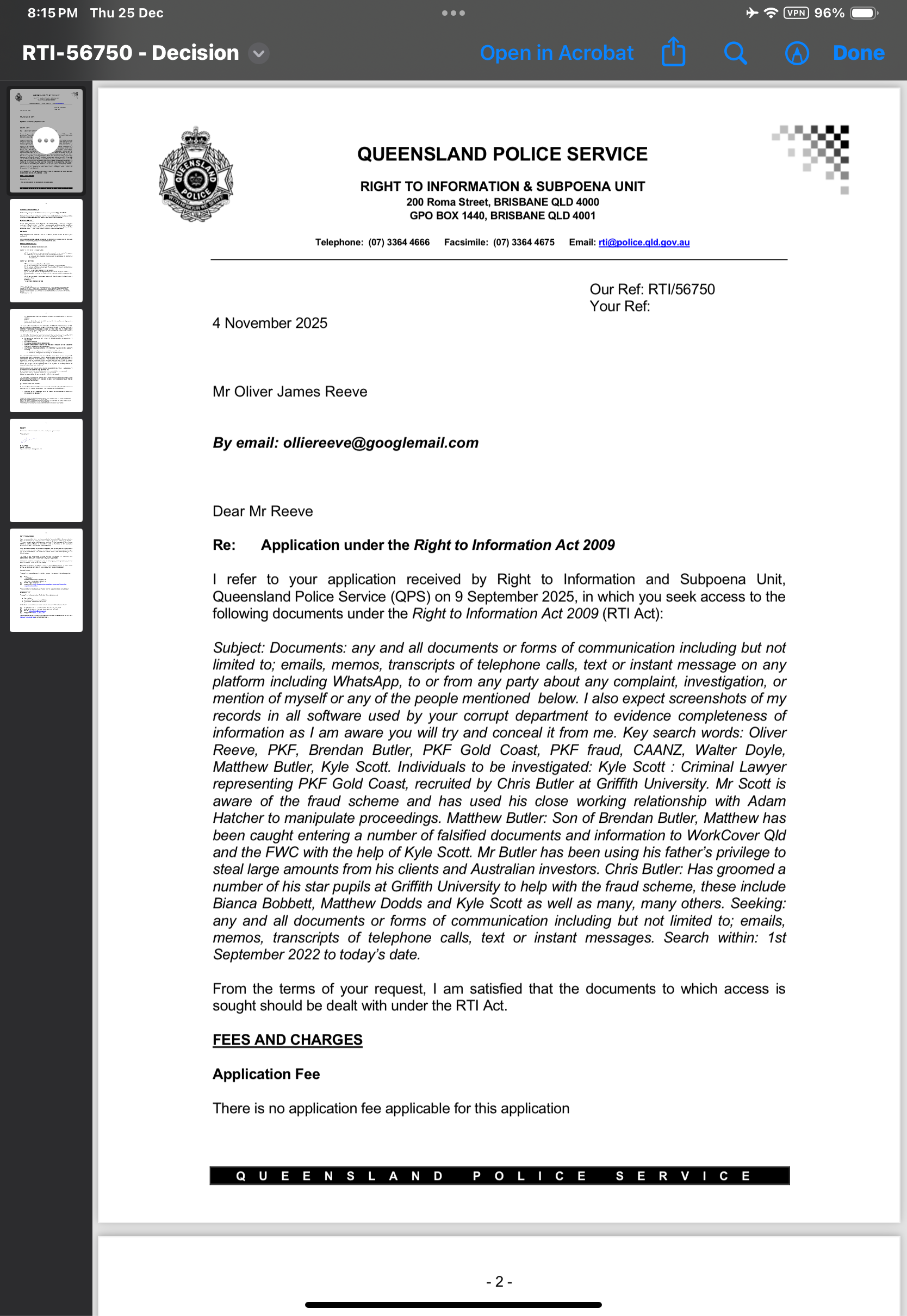
As occurred with other agencies, the QHRC asserted that it had received external information adverse to me, which was relied upon to justify dismissing or limiting the complaint. However:
The alleged external evidence was never disclosed;
No source, author, or provenance was identified;
I was denied any opportunity to see, test, or respond to this material.
This mirrors a recurring tactic used across regulators and tribunals: relying on undisclosed, untested, and allegedly falsified material while excluding first-hand evidence submitted by the complainant.
Admission Followed by Continued Refusal
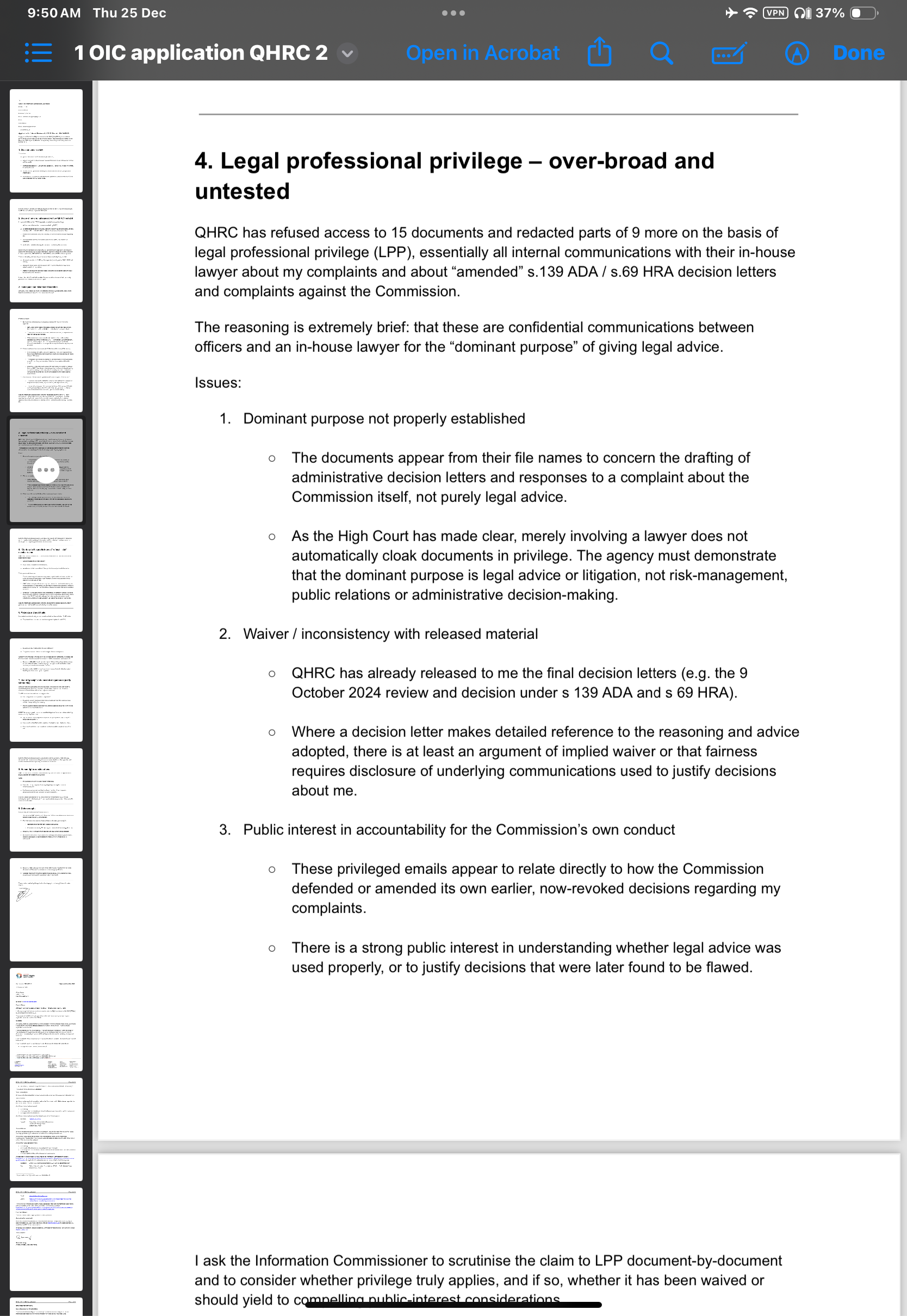
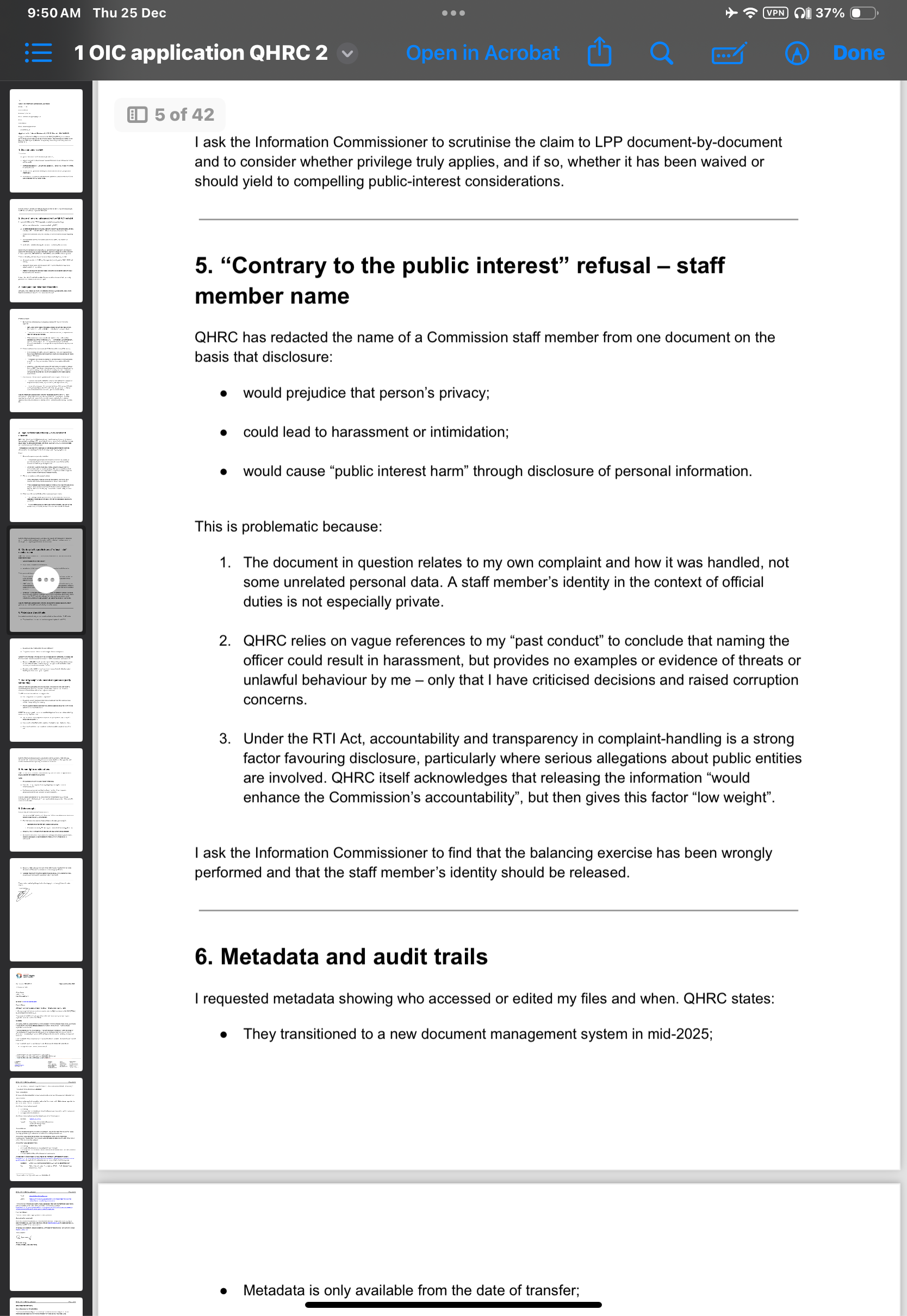
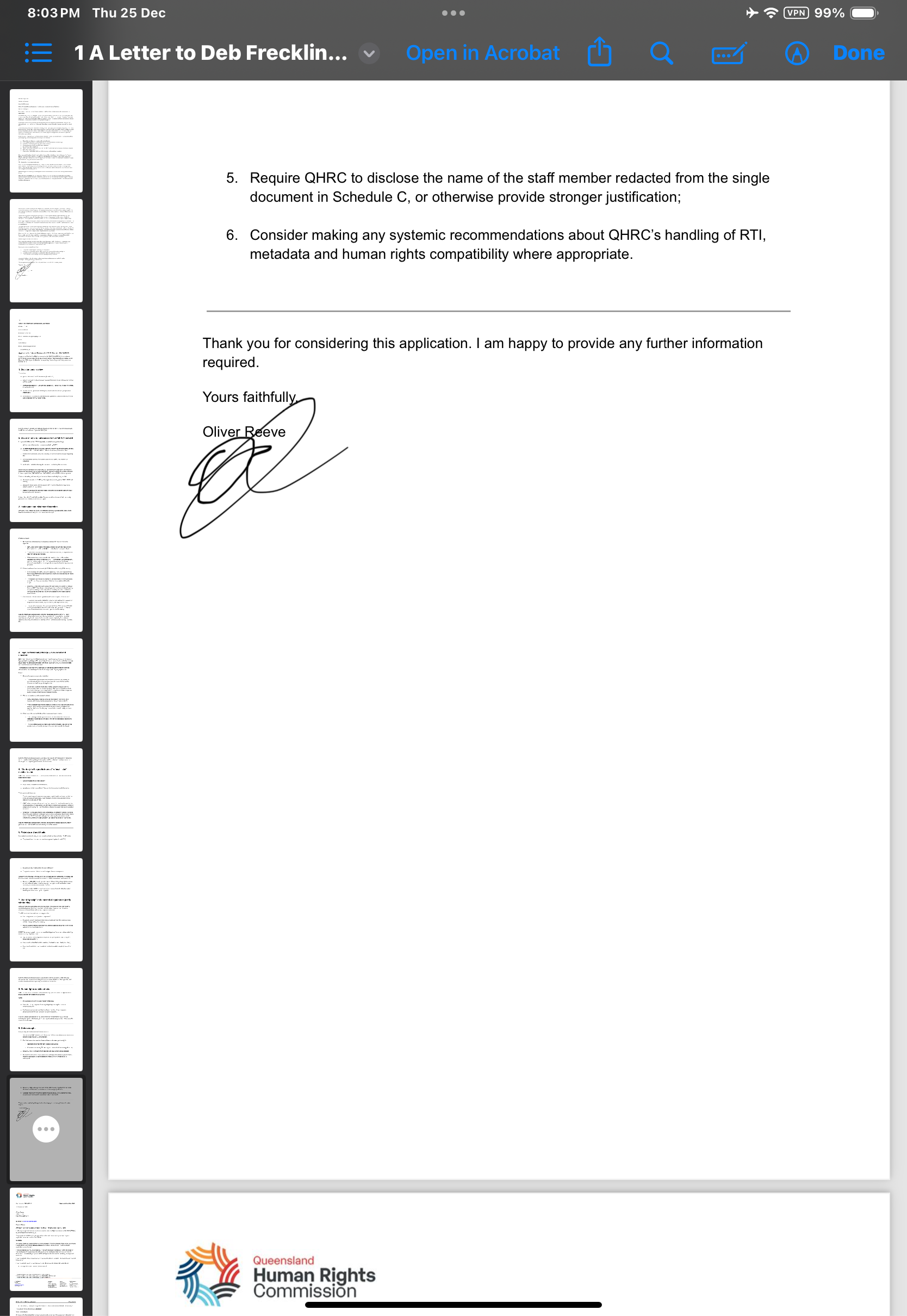
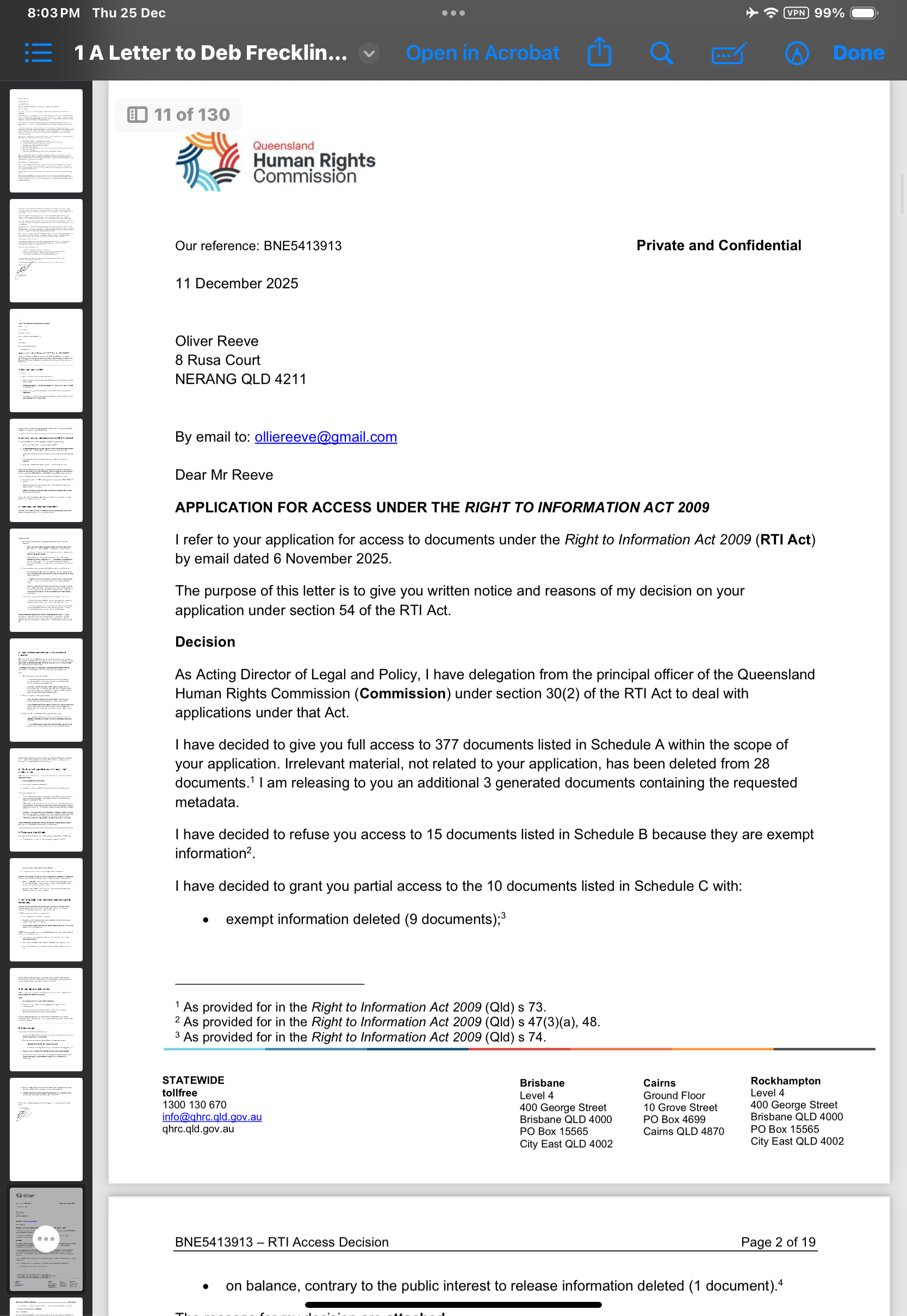
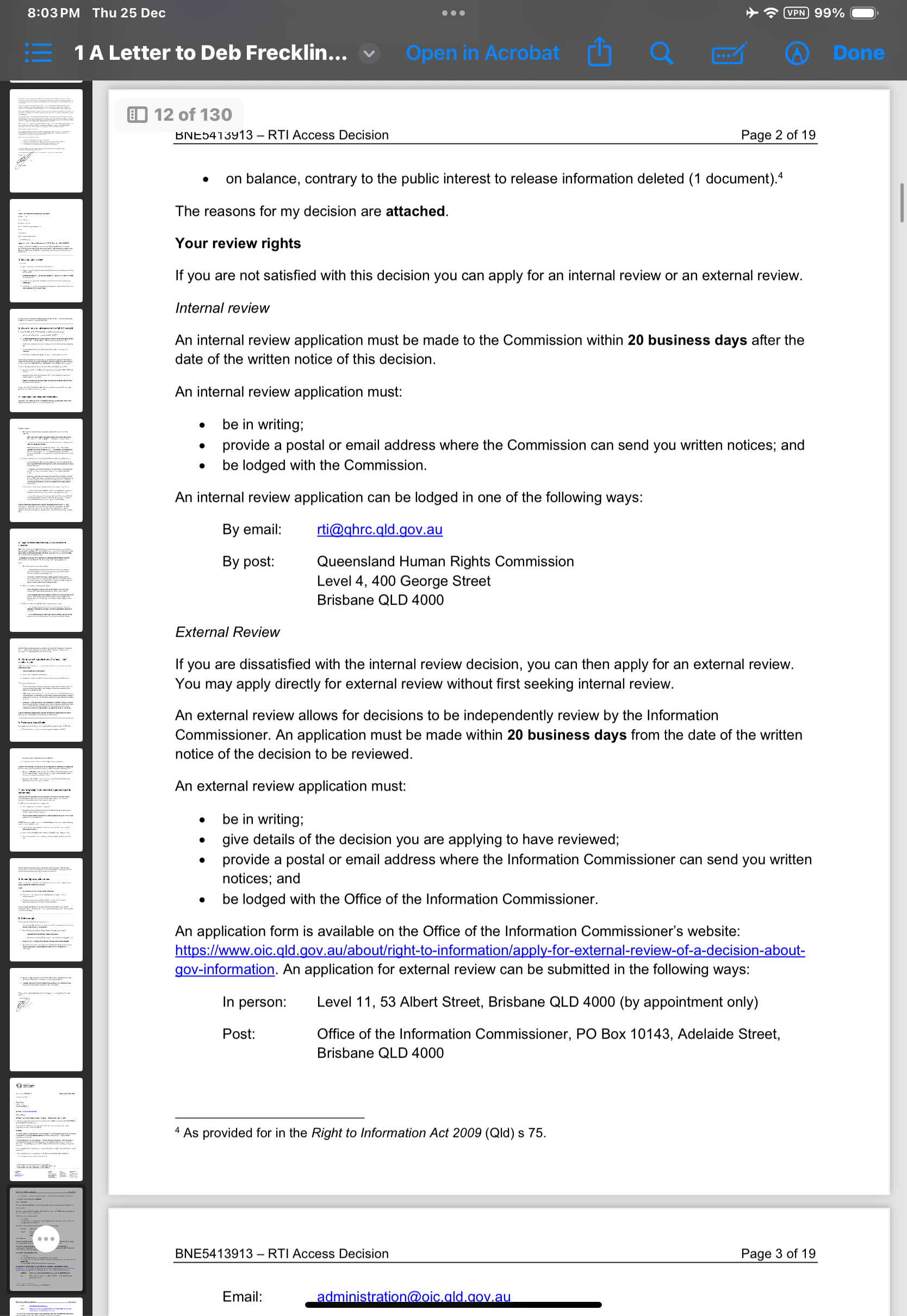
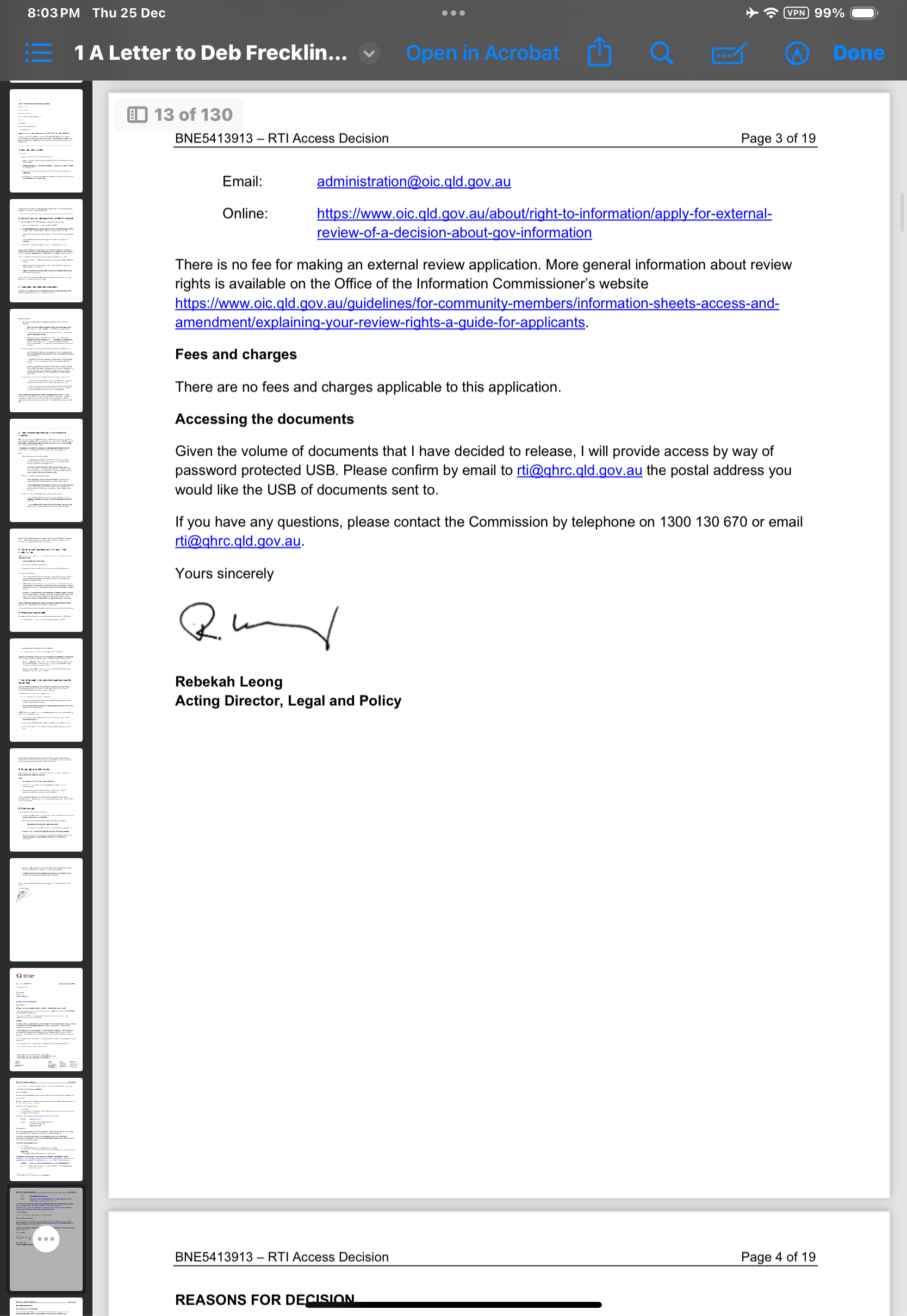
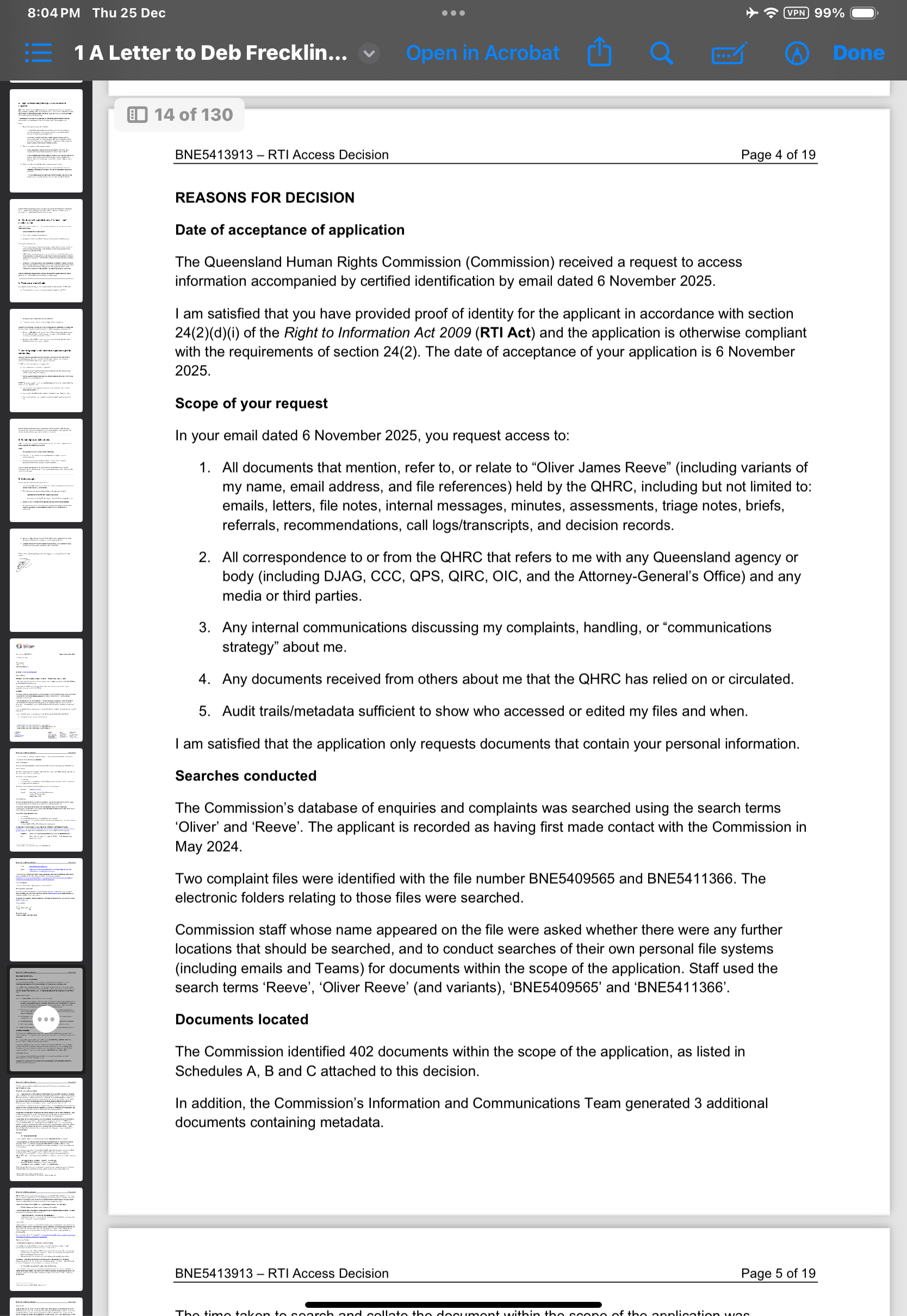
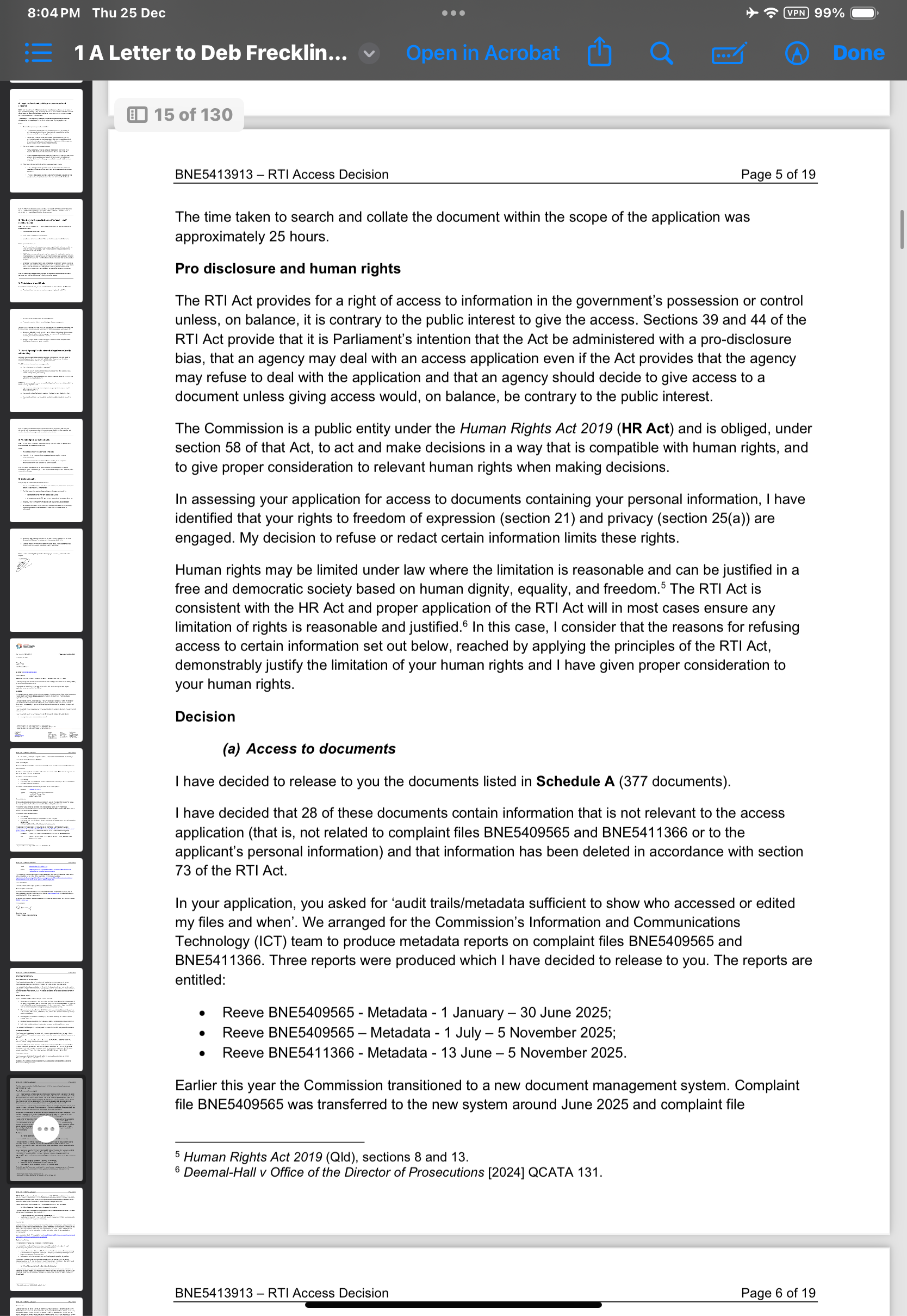
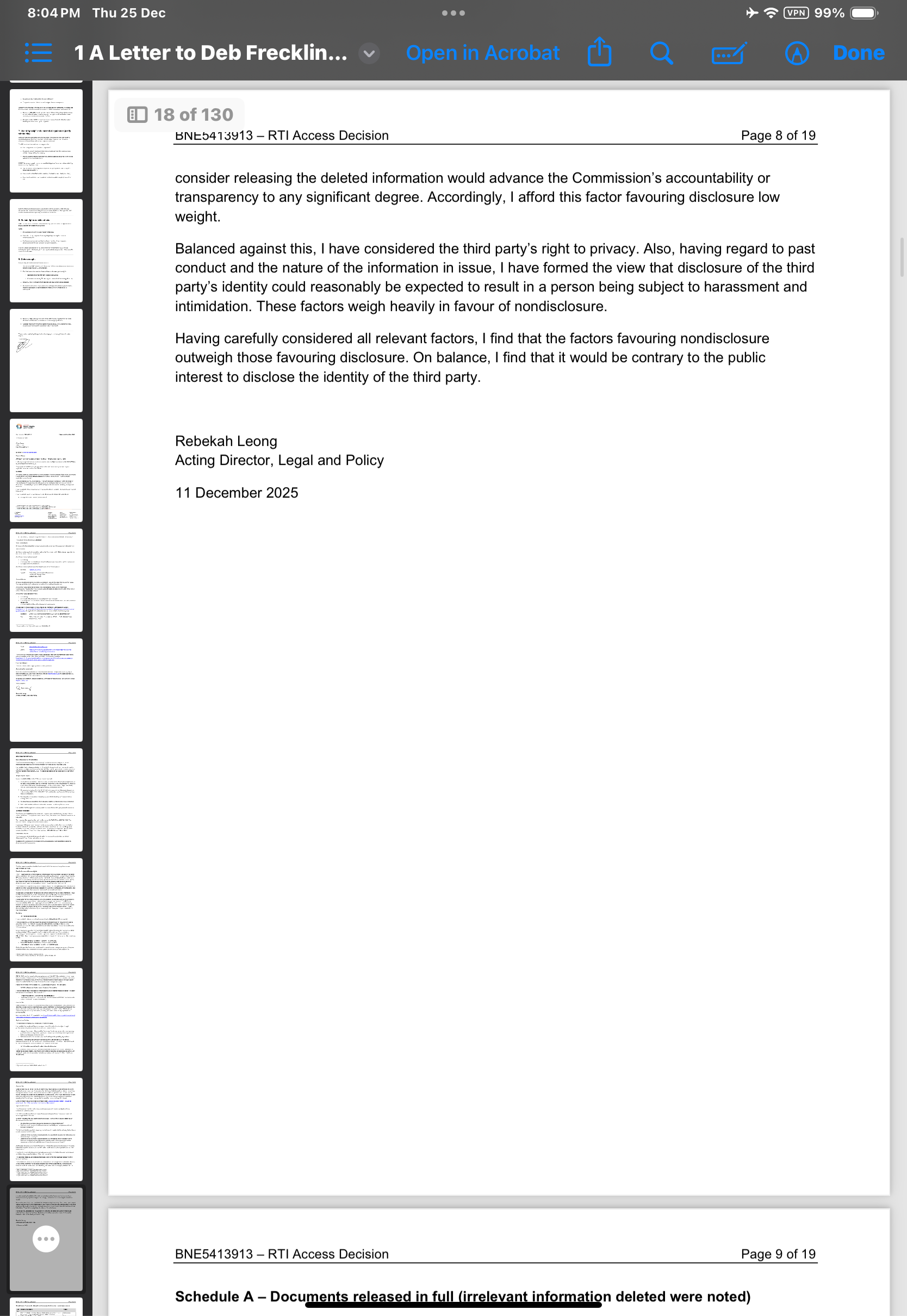
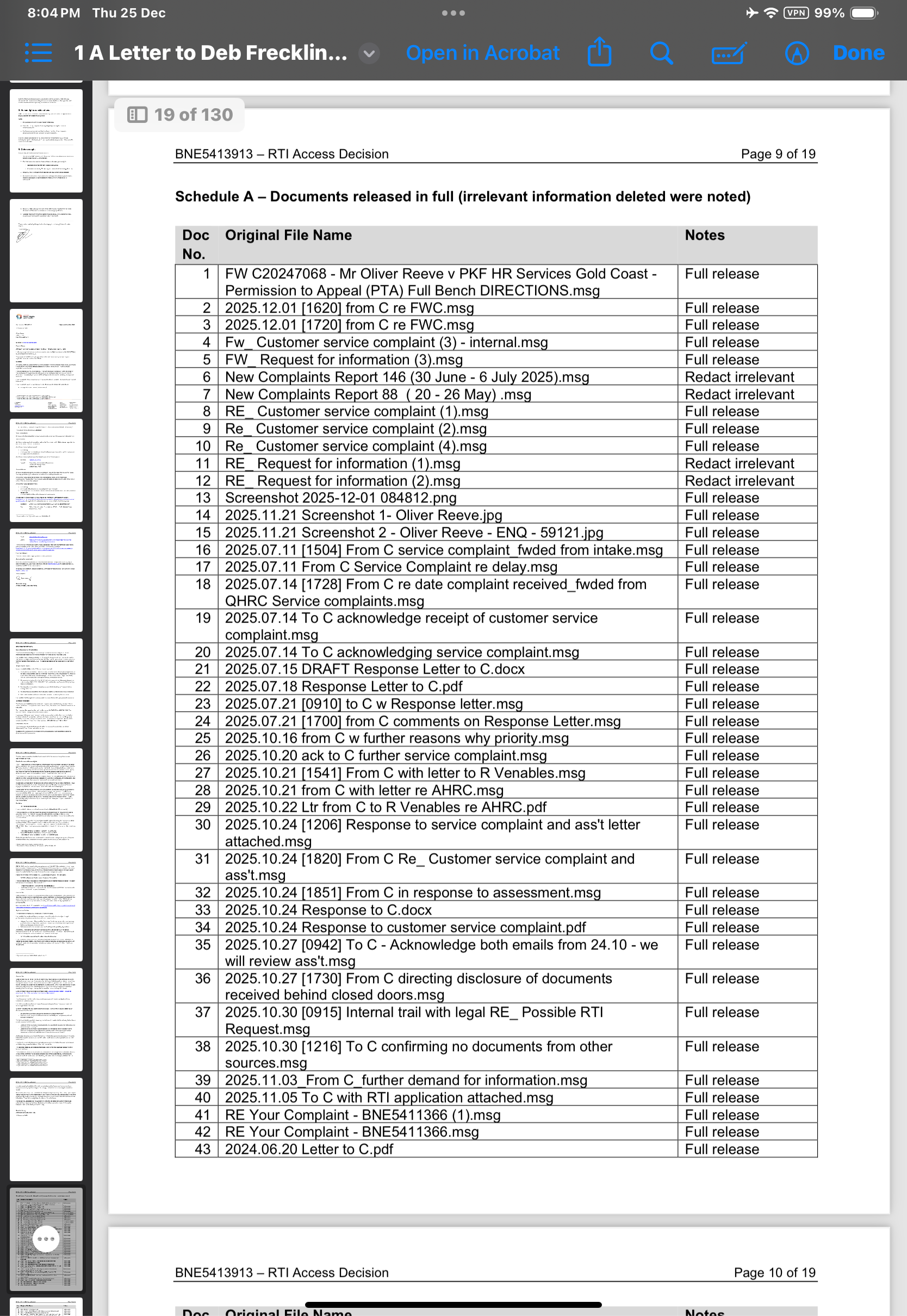
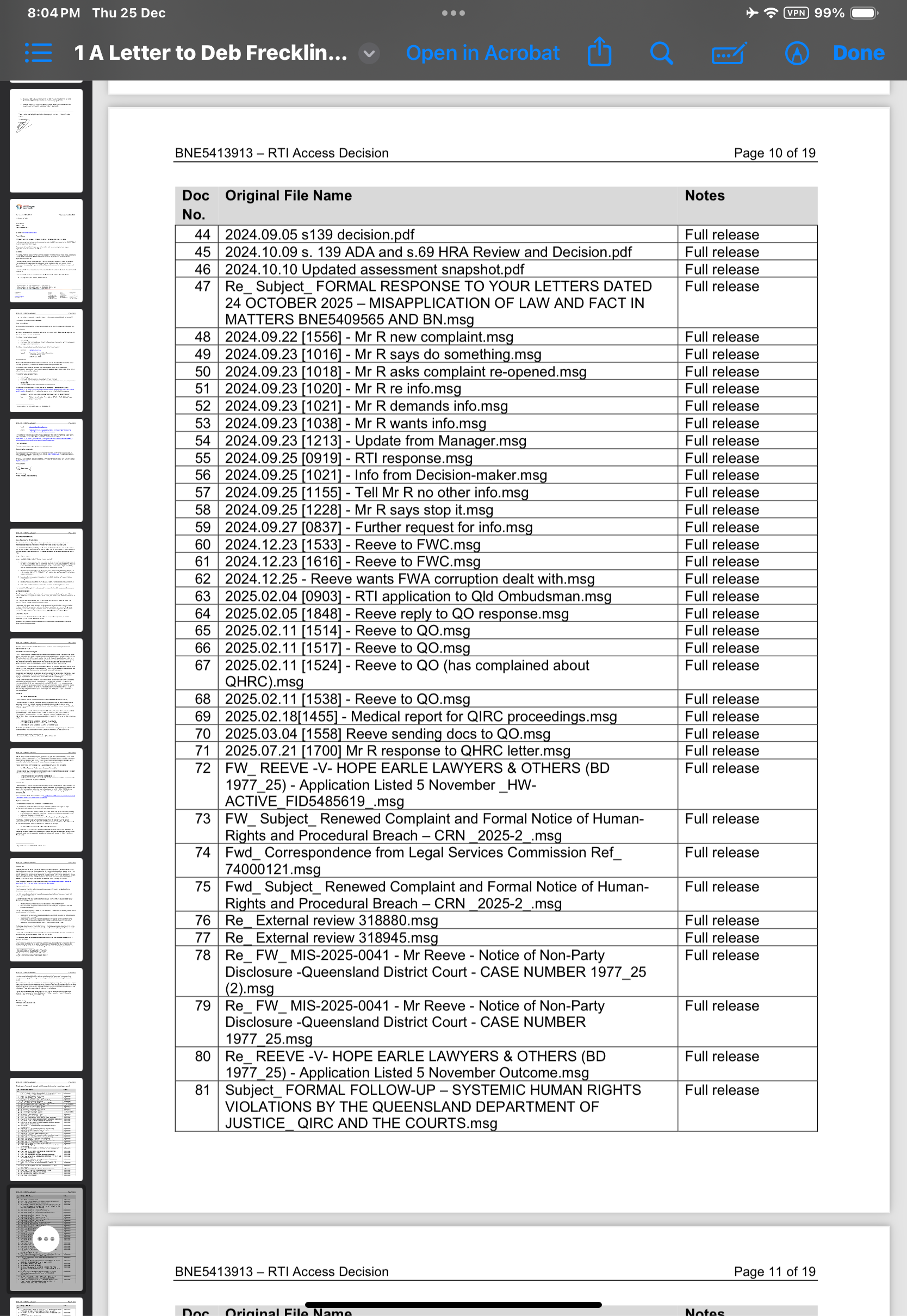
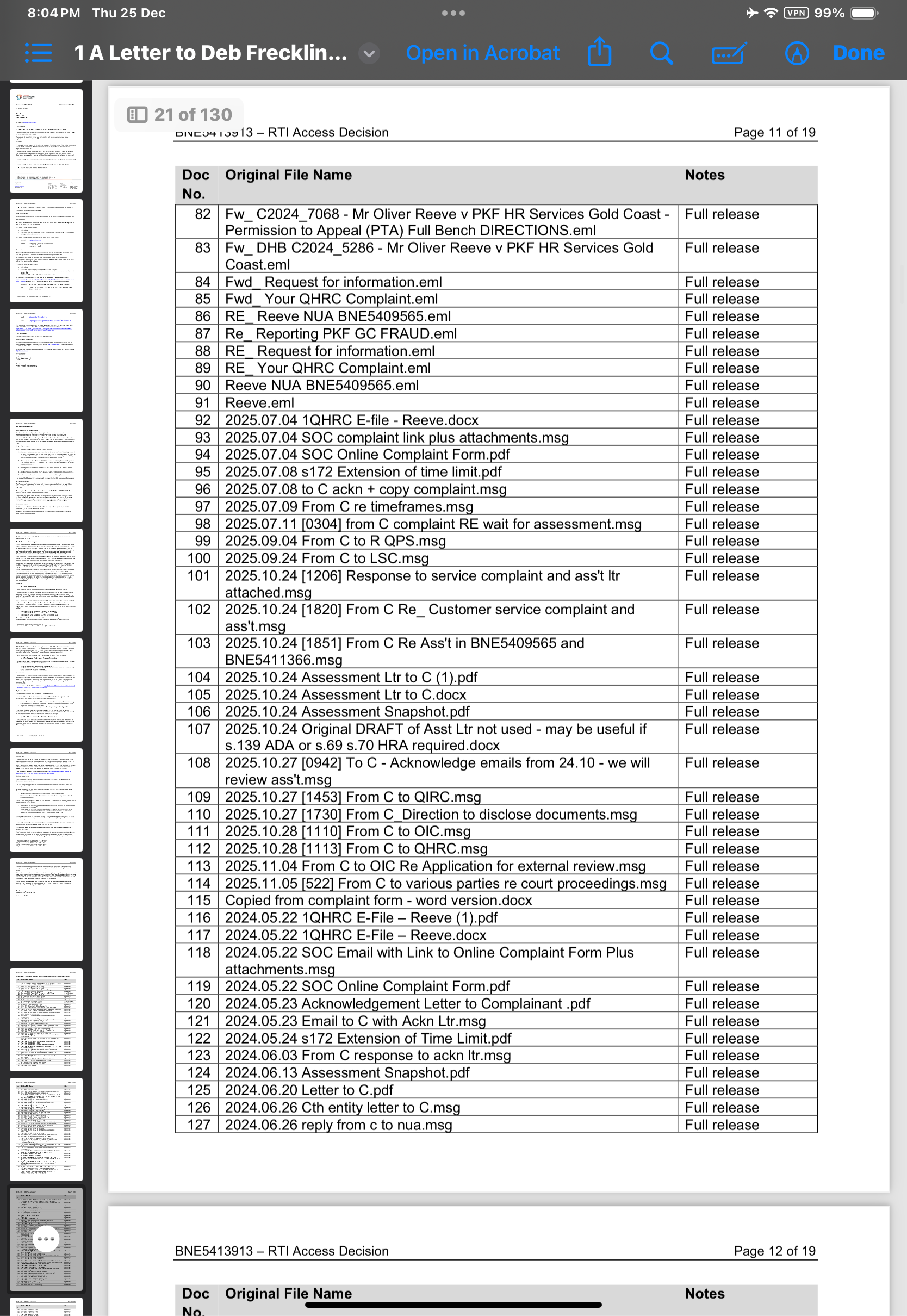
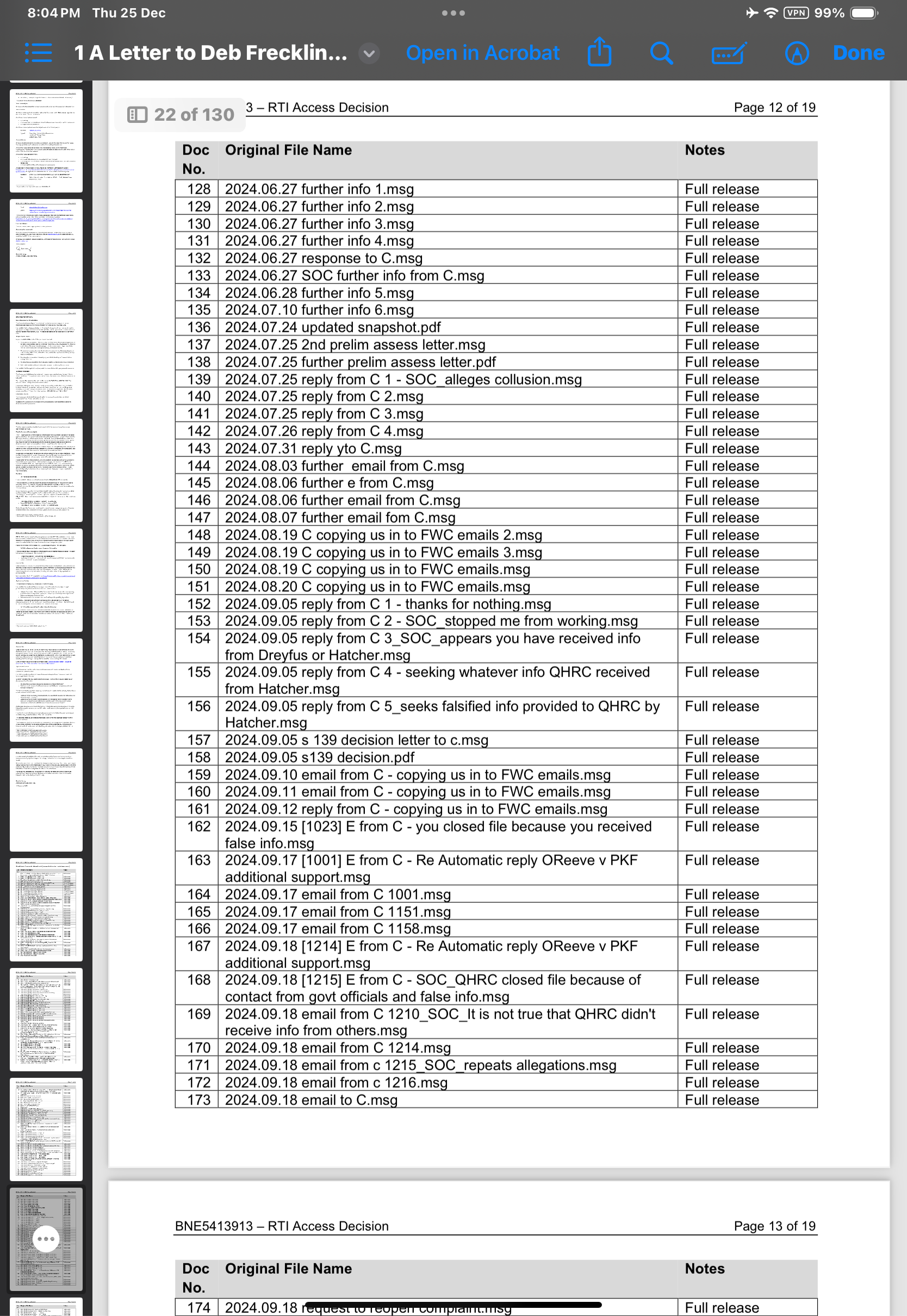
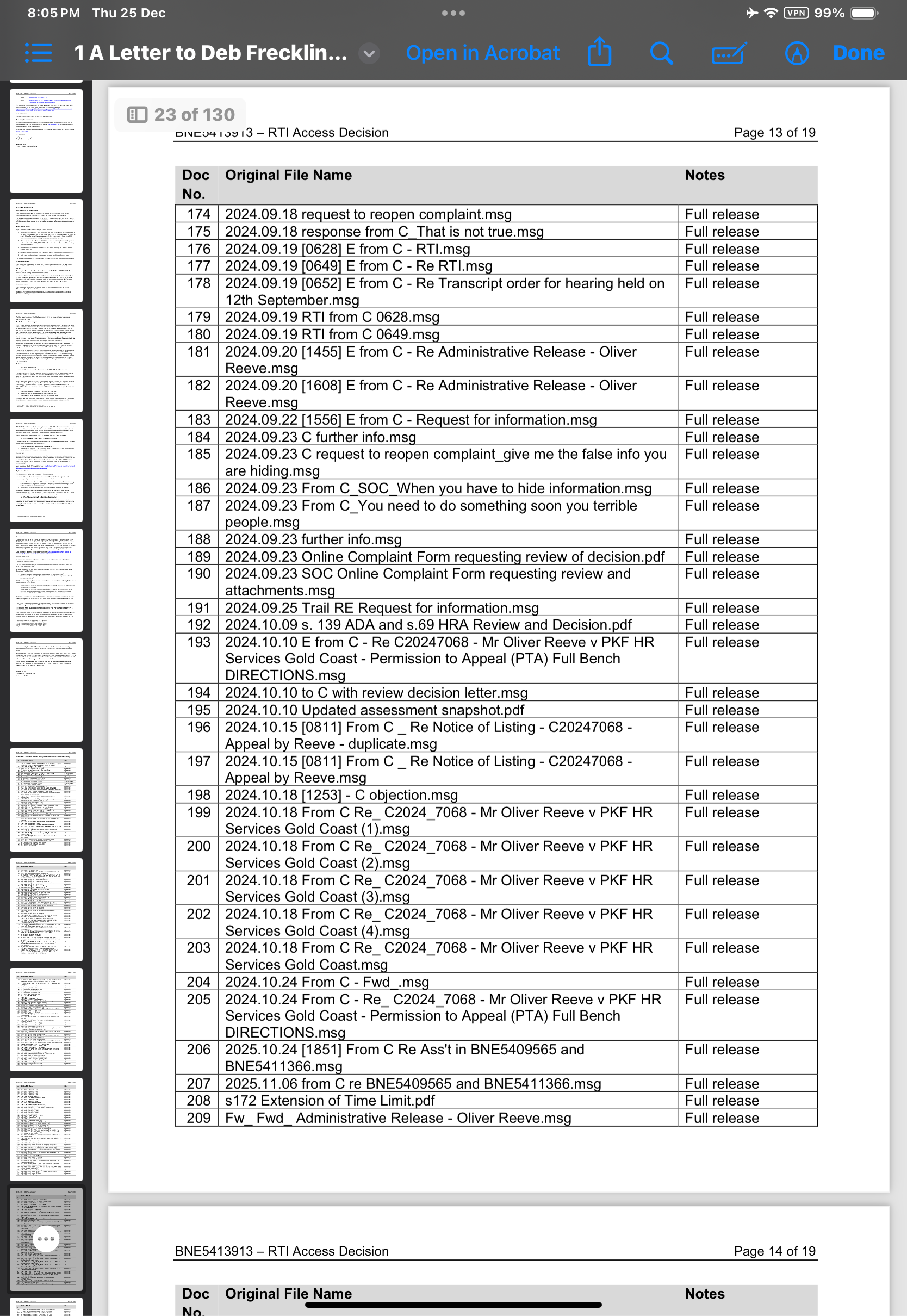
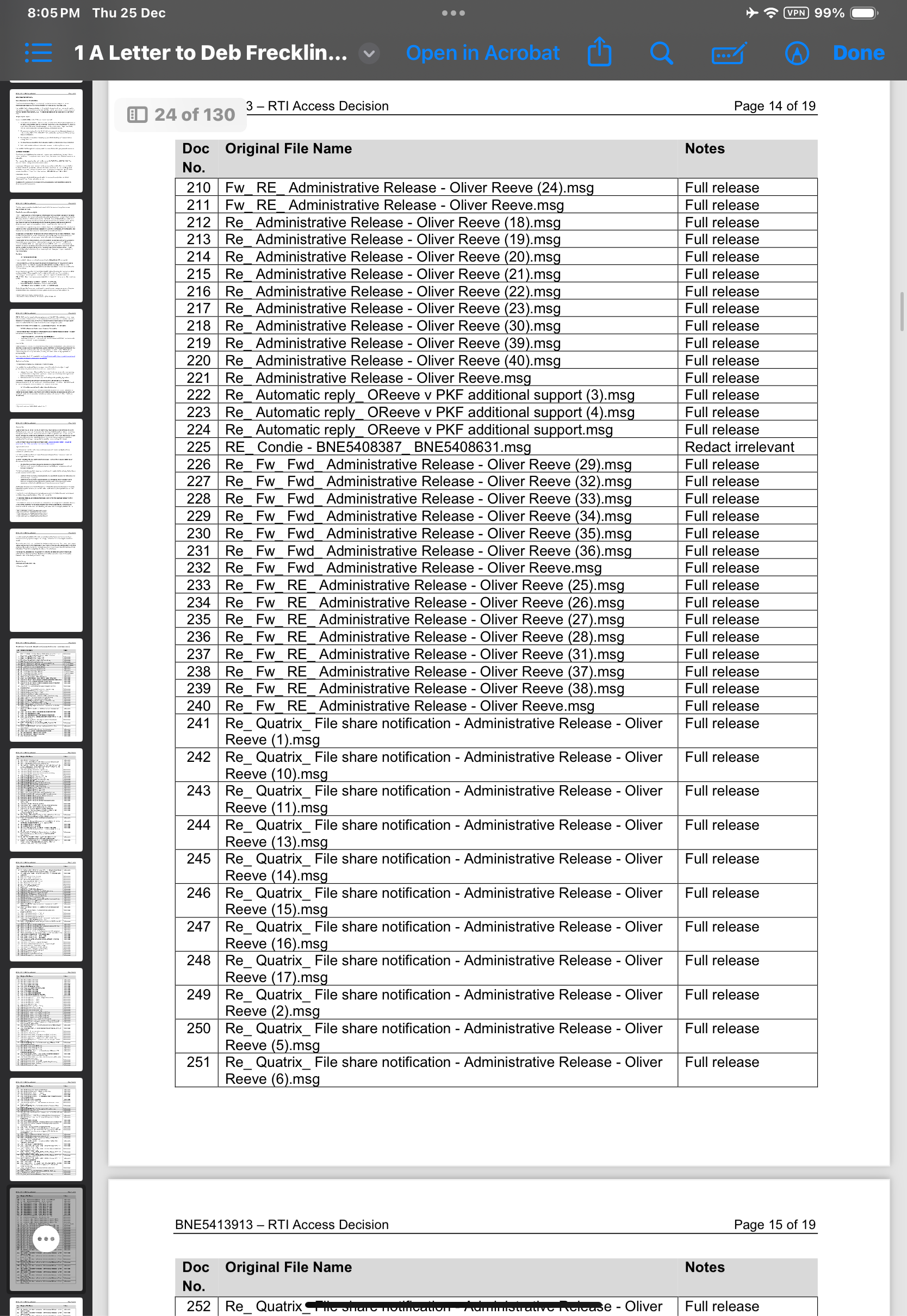
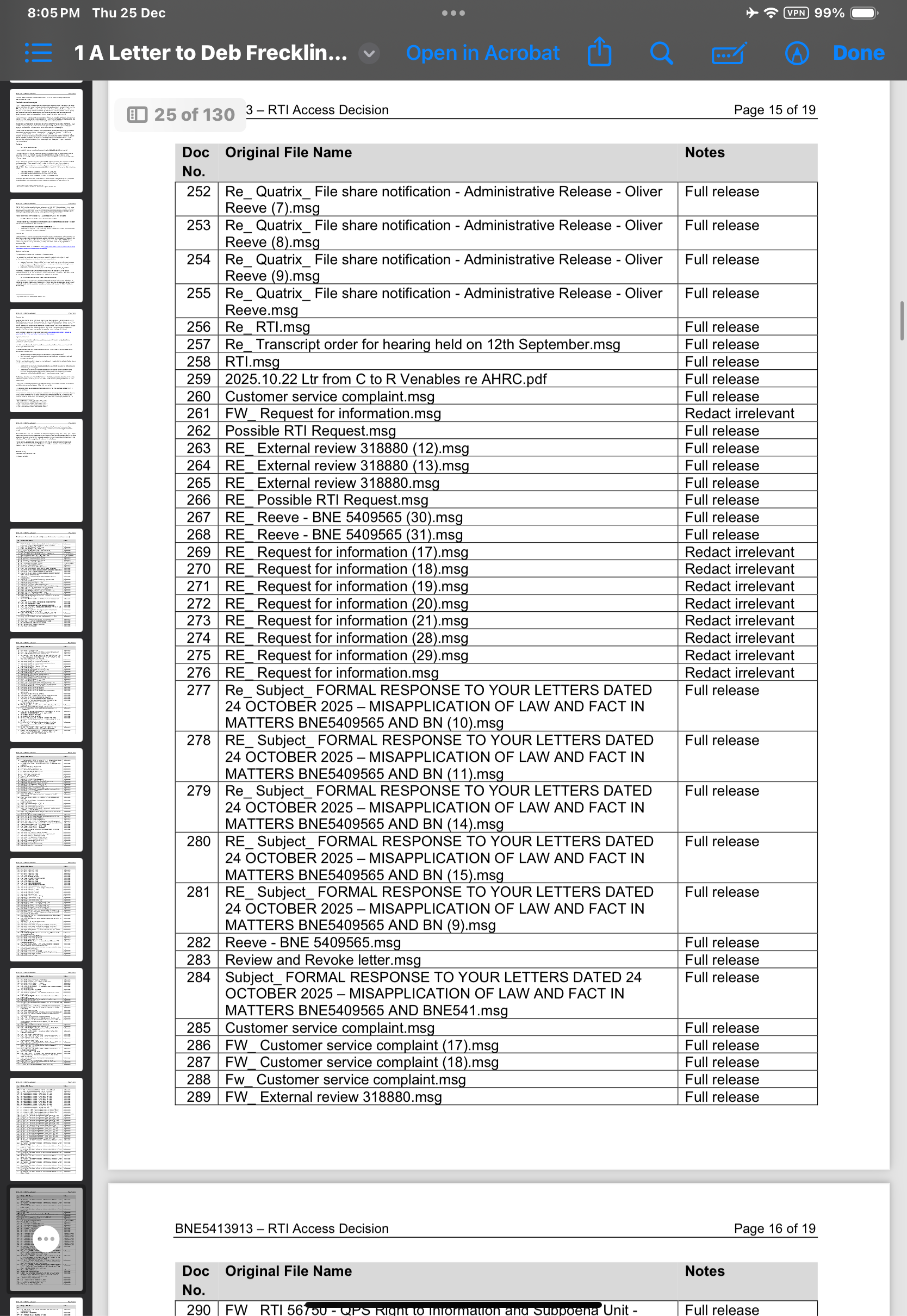
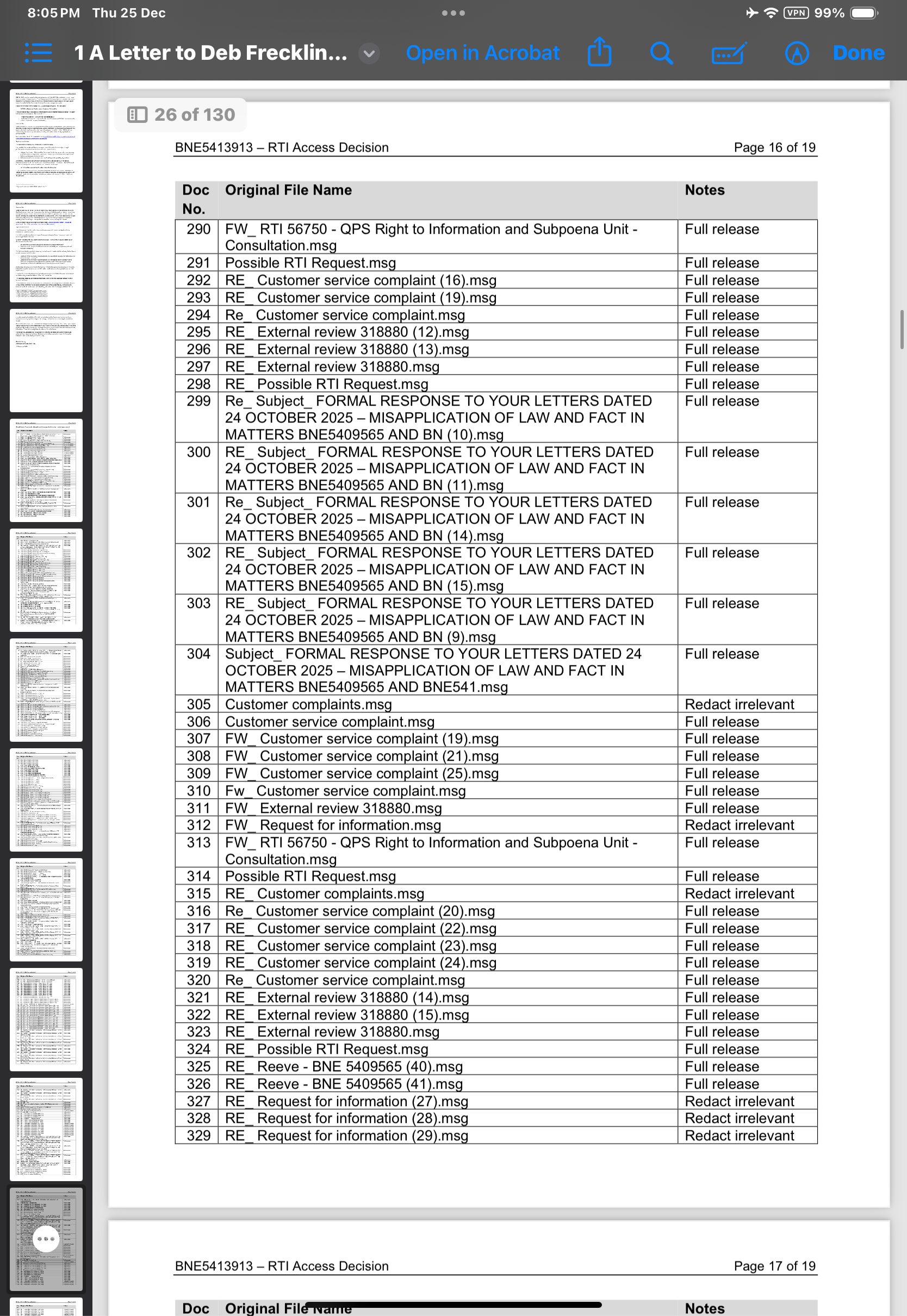
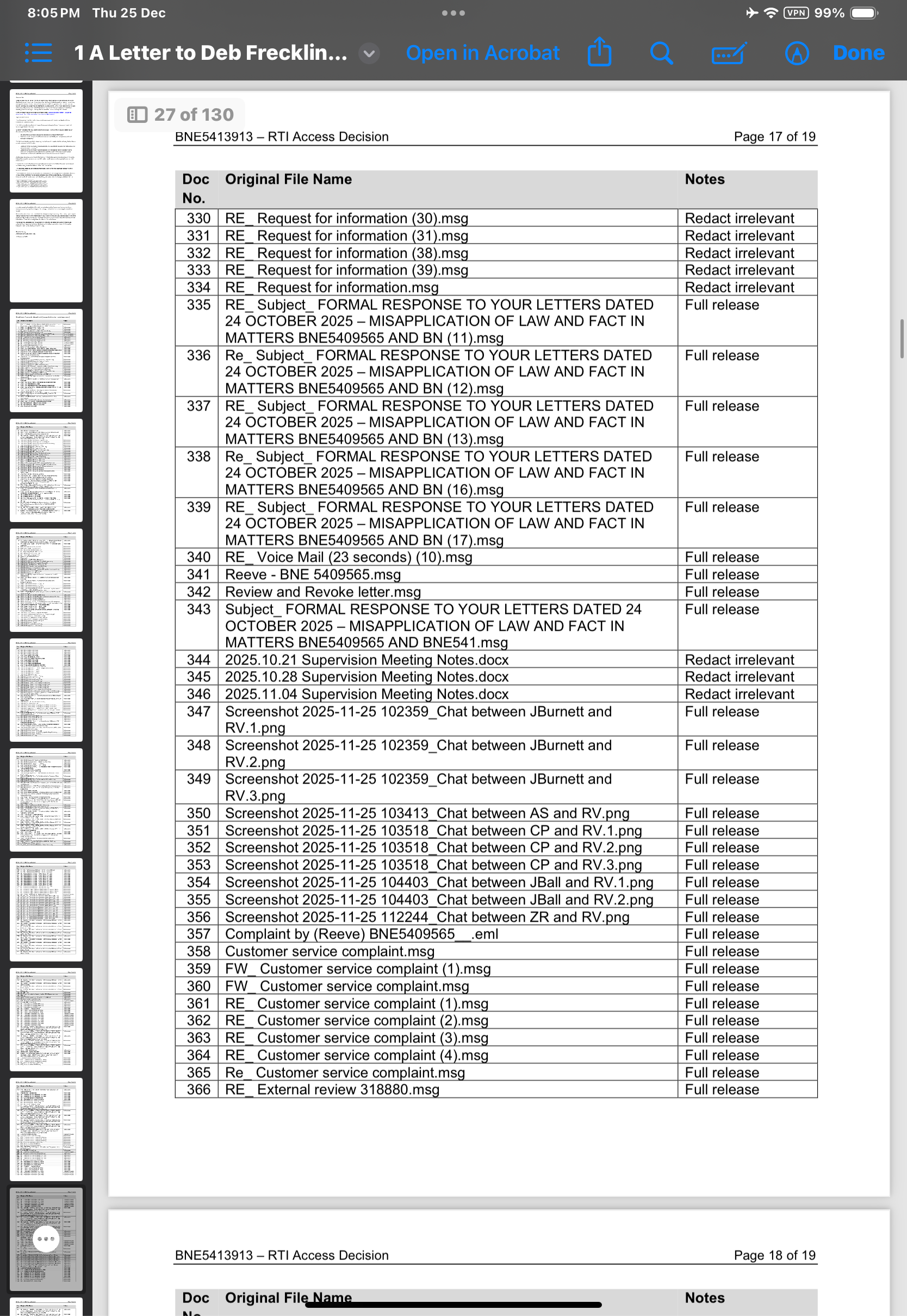
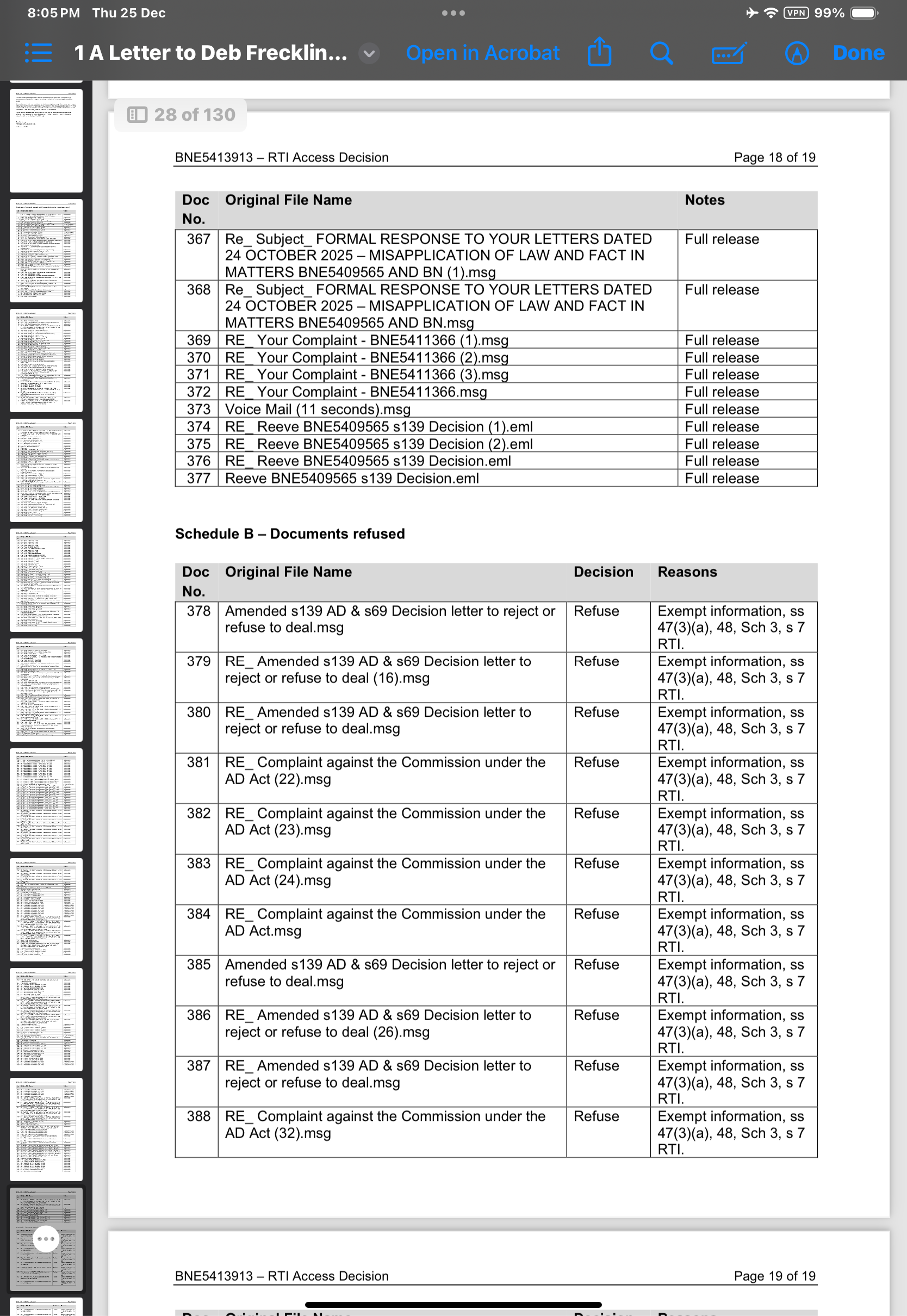
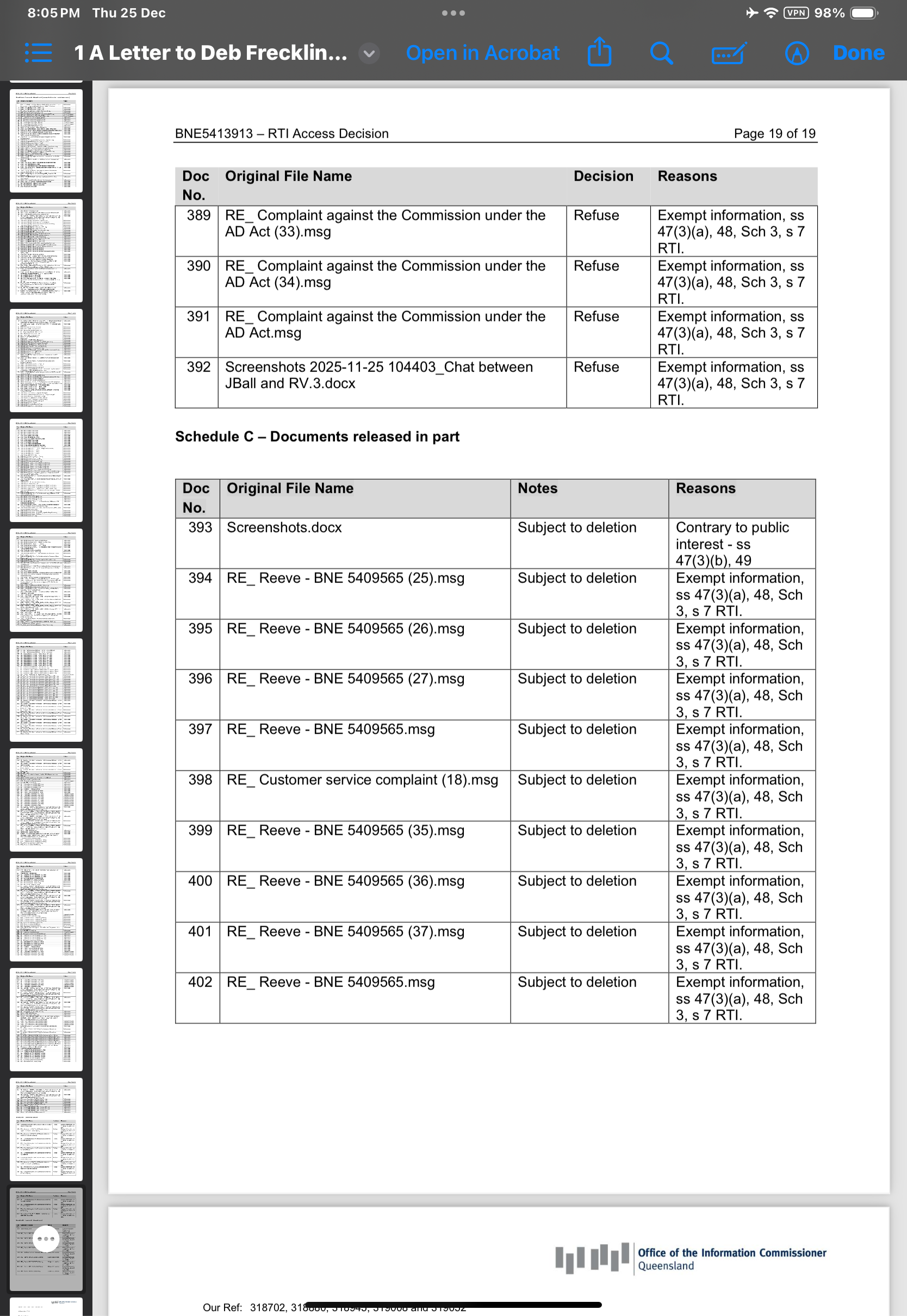
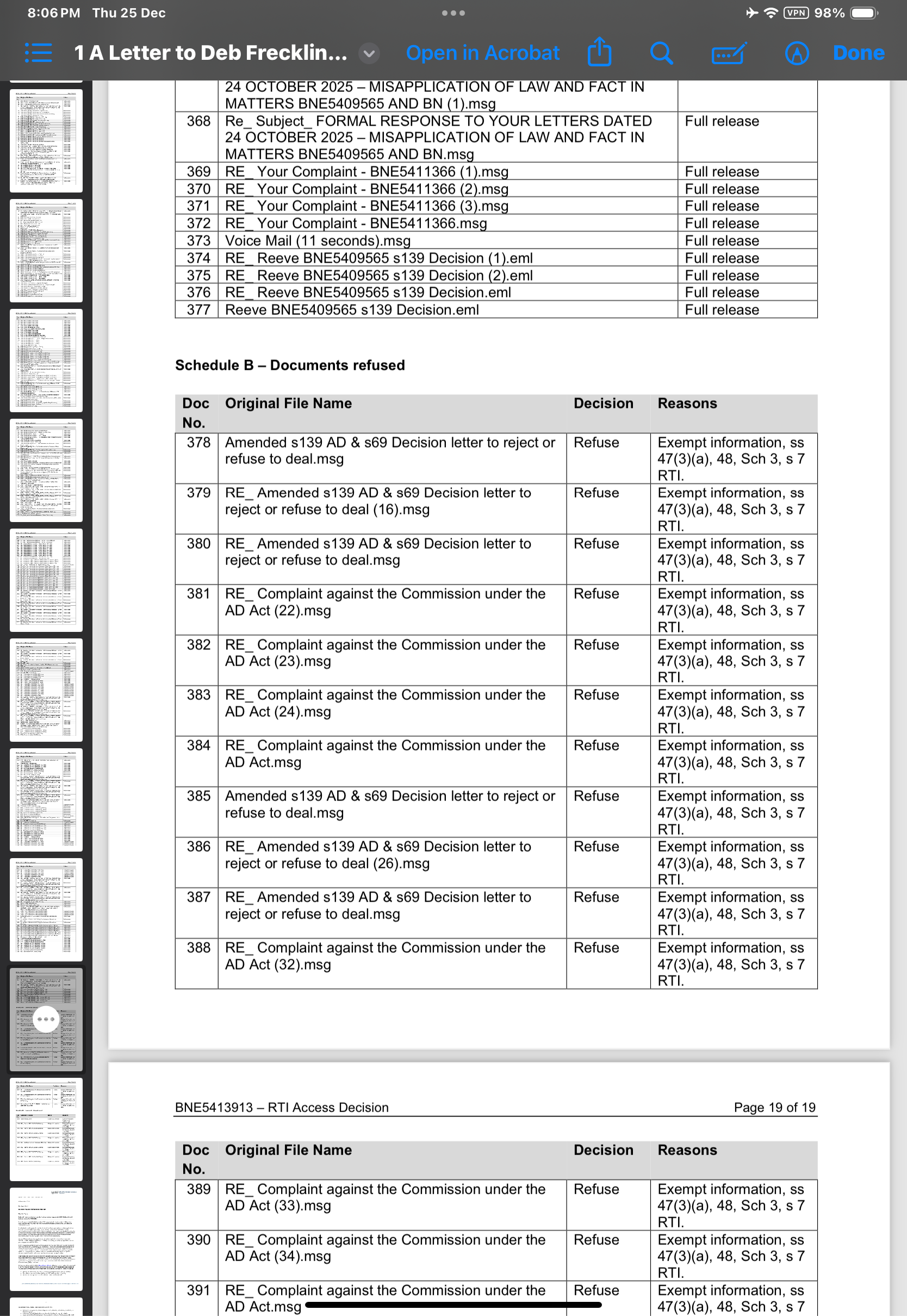
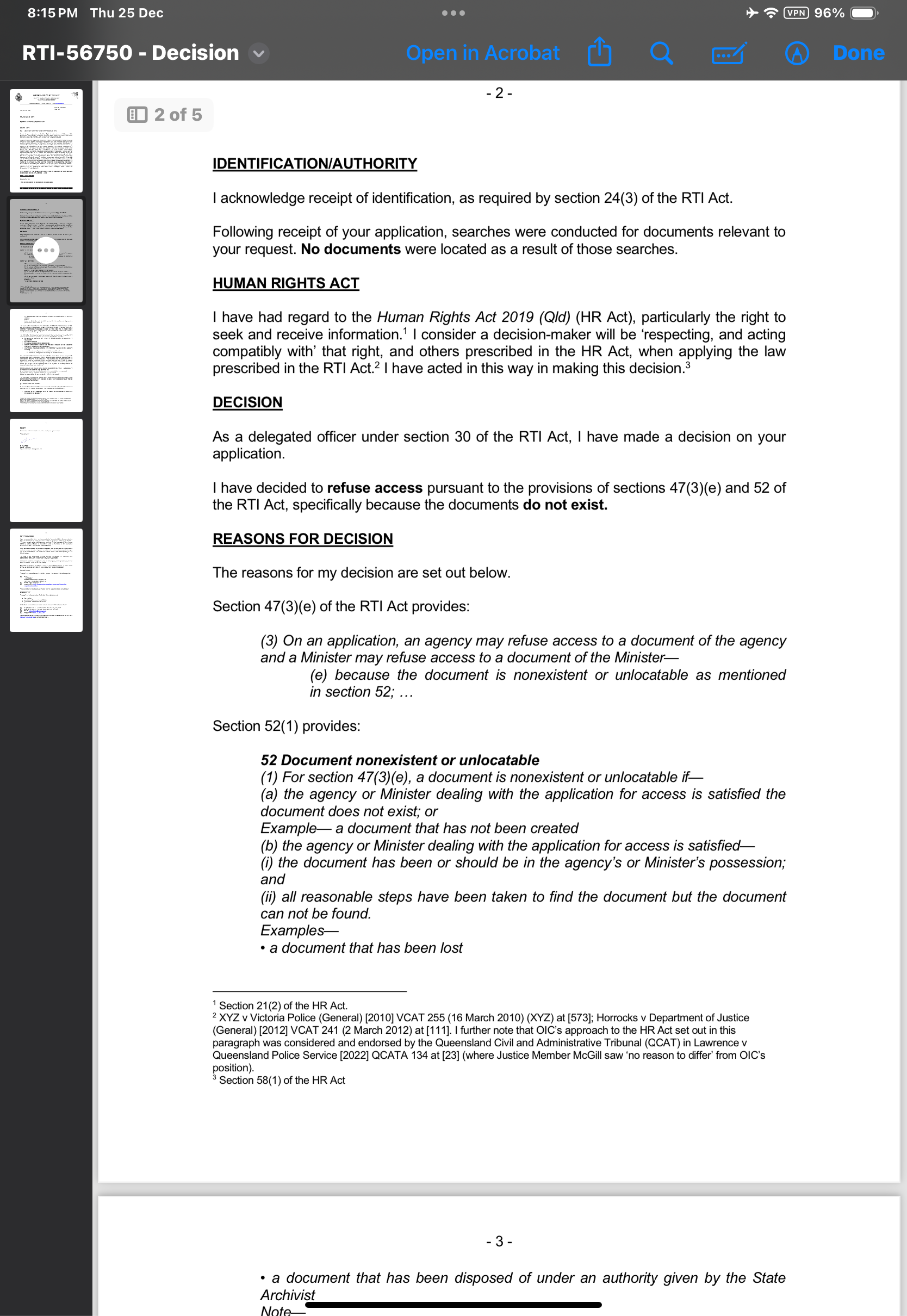
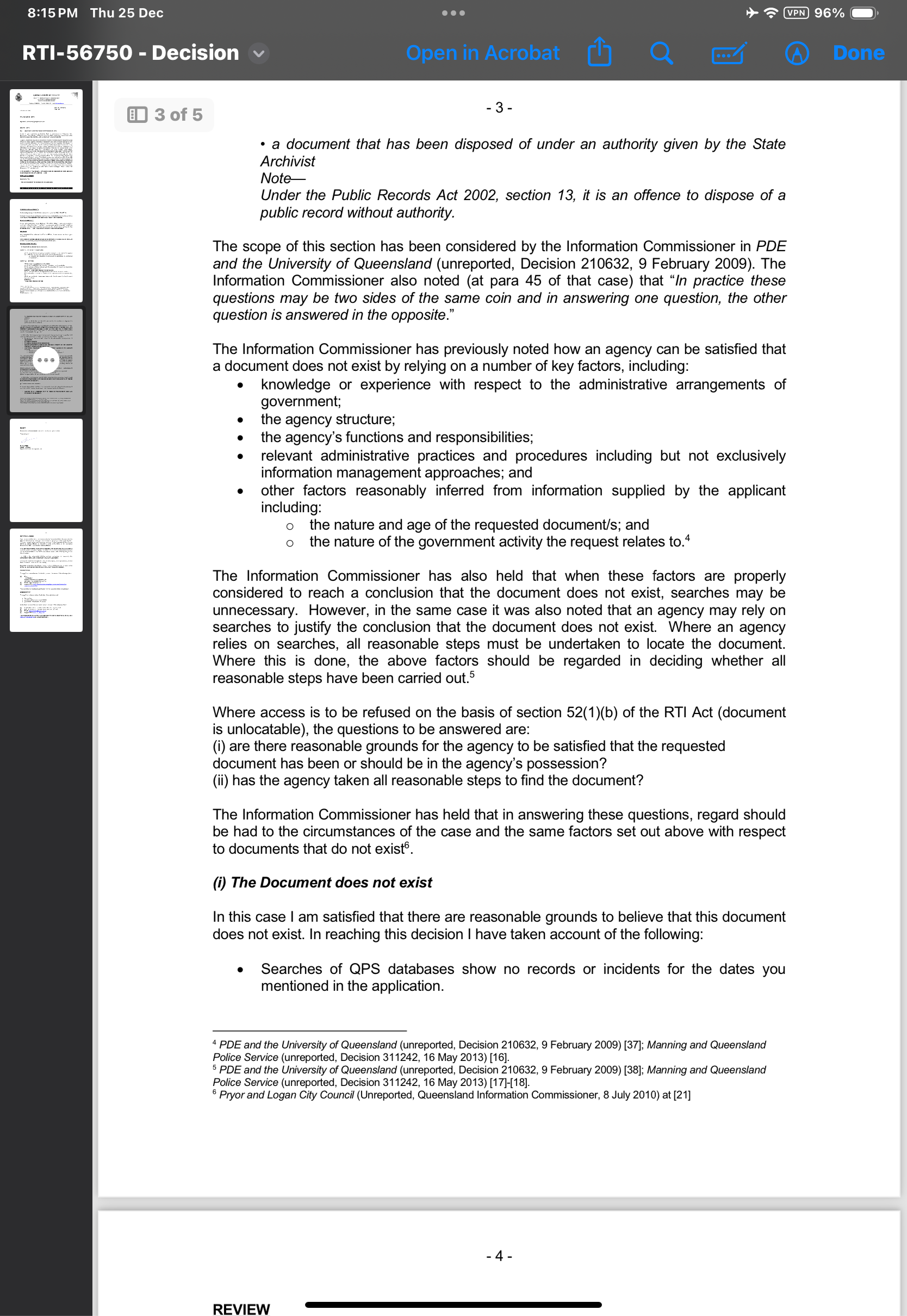
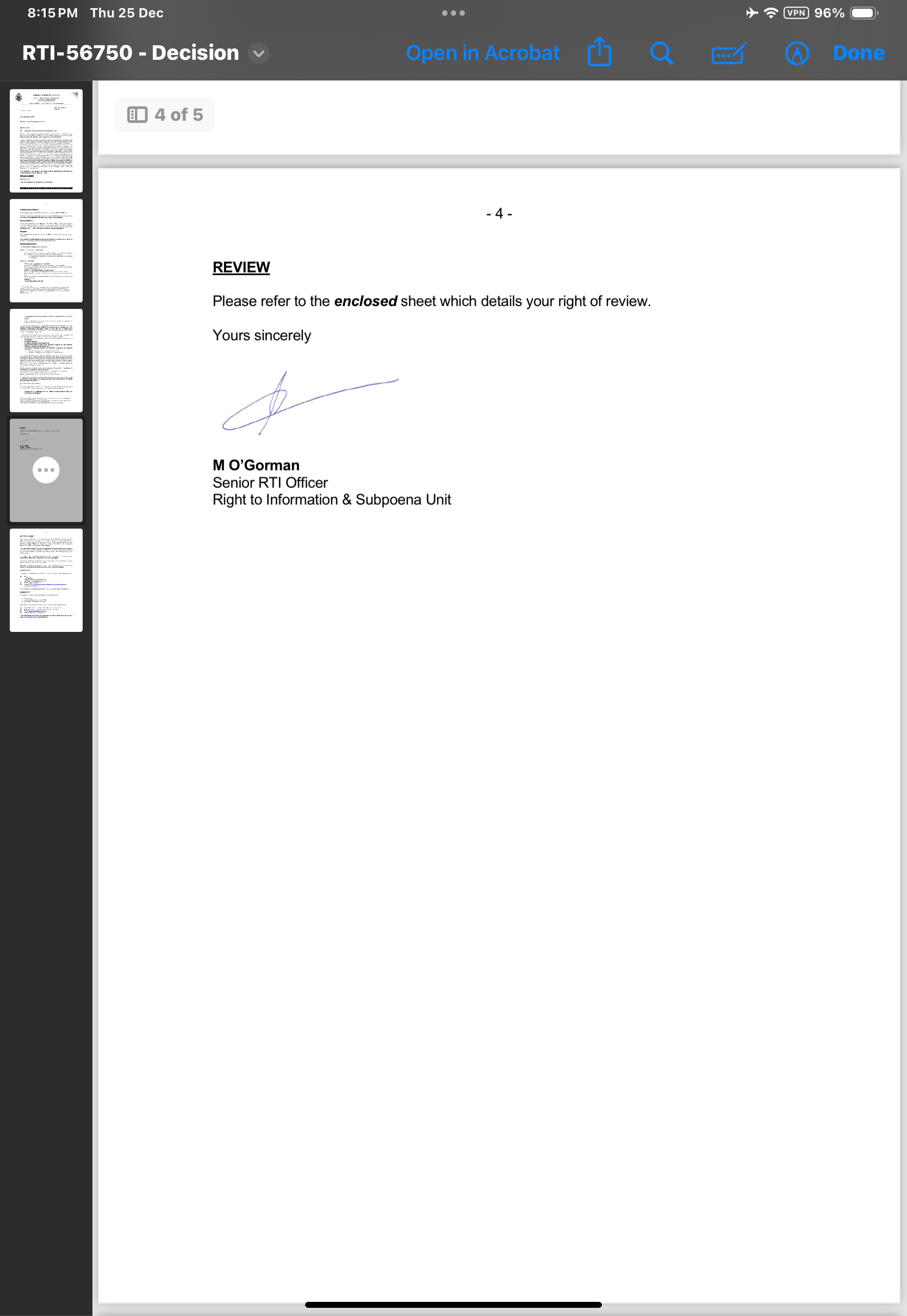
Most significantly, the QHRC later admitted in writing that it did in fact hold the very information it had previously denied possessing. Despite this admission, the Commission has continued to refuse access to that material.
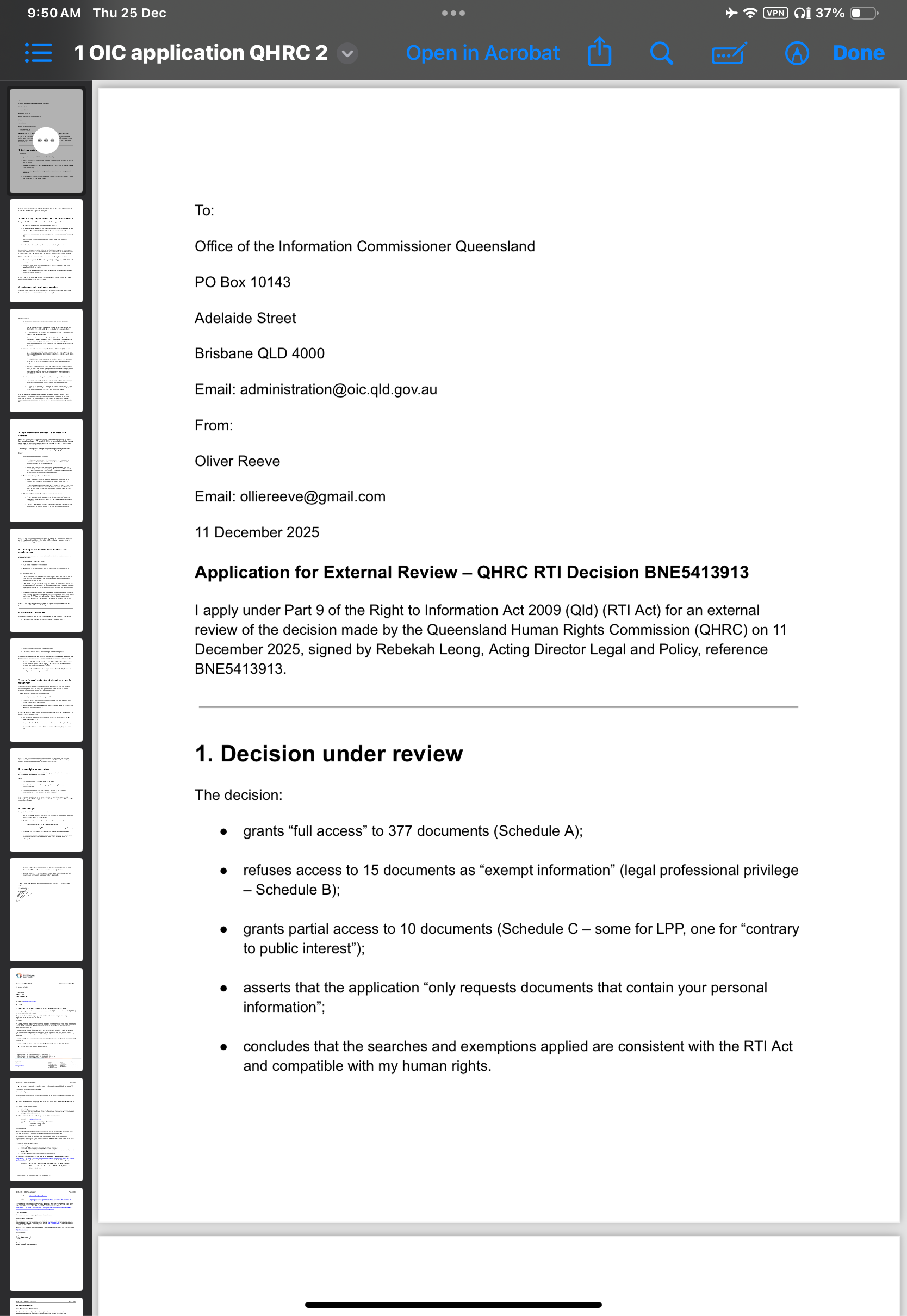
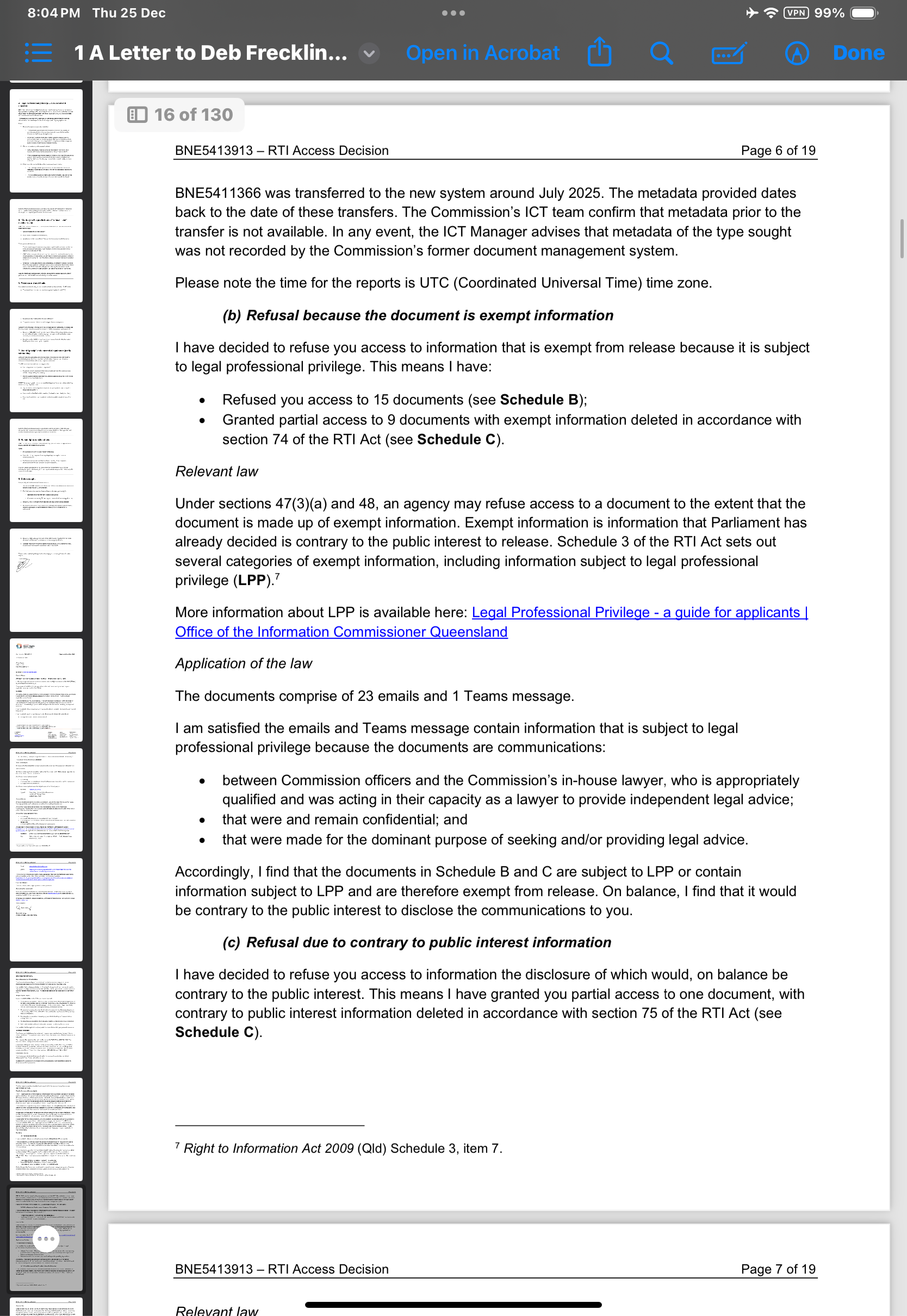
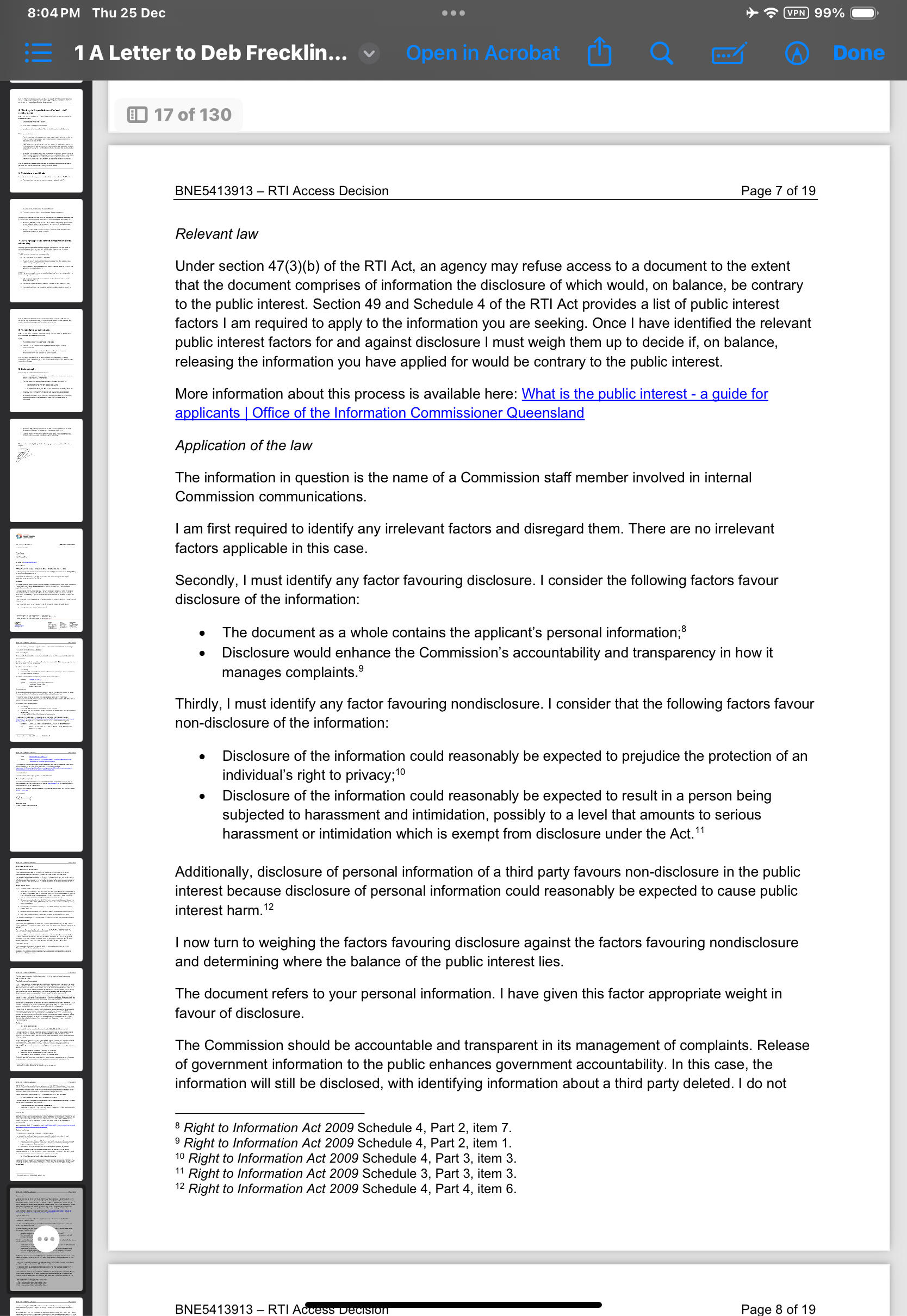
The grounds relied upon for refusal are demonstrably false or misapplied, including:
Misuse of privacy and confidentiality provisions;
Improper reliance on public interest immunity;
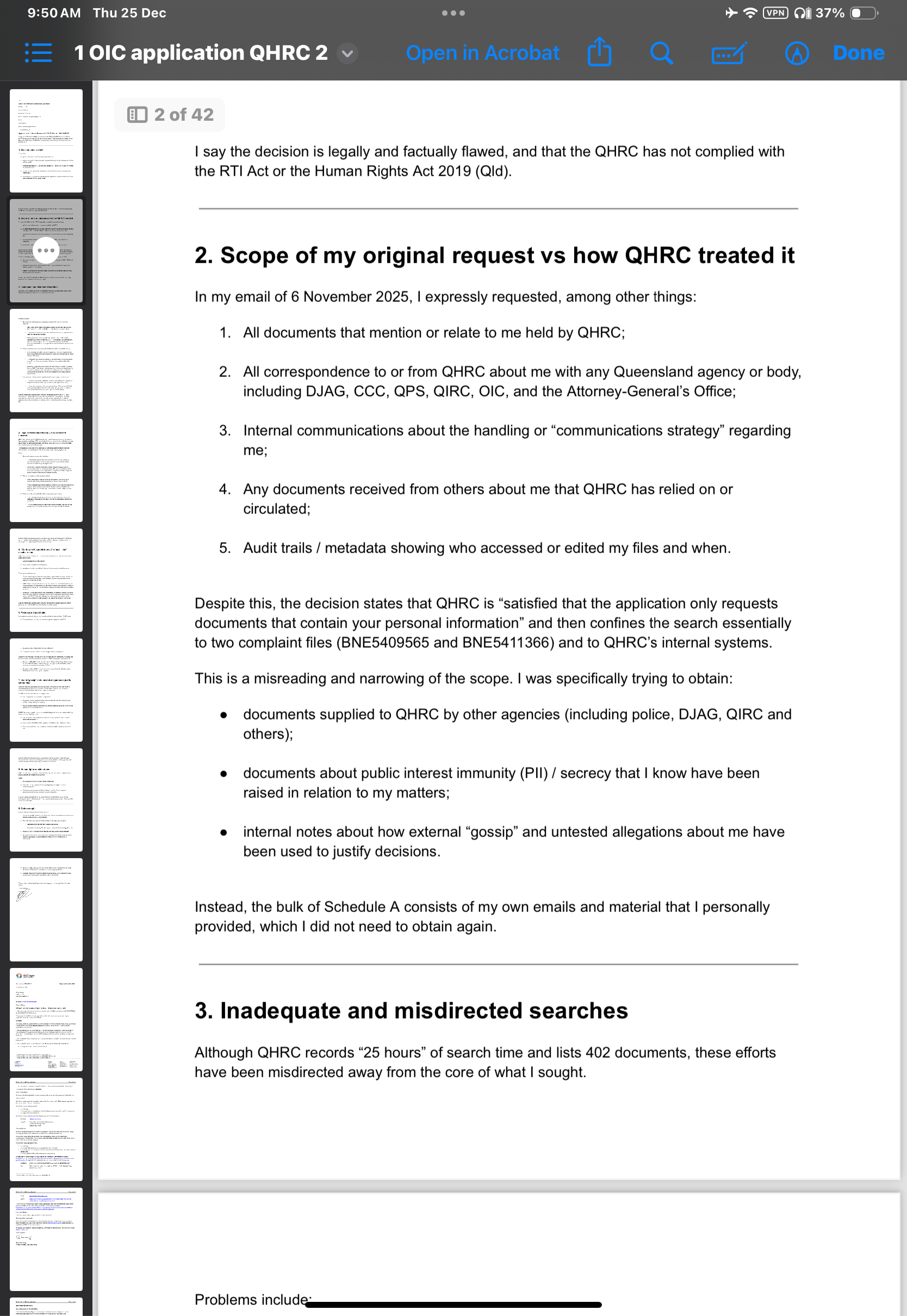
Reframing of access requests to avoid statutory obligations.
This sequence—denial → reliance → admission → continued refusal—is not an administrative error. It is evidence of deliberate obstruction.
Unlawful Withholding of Evidence
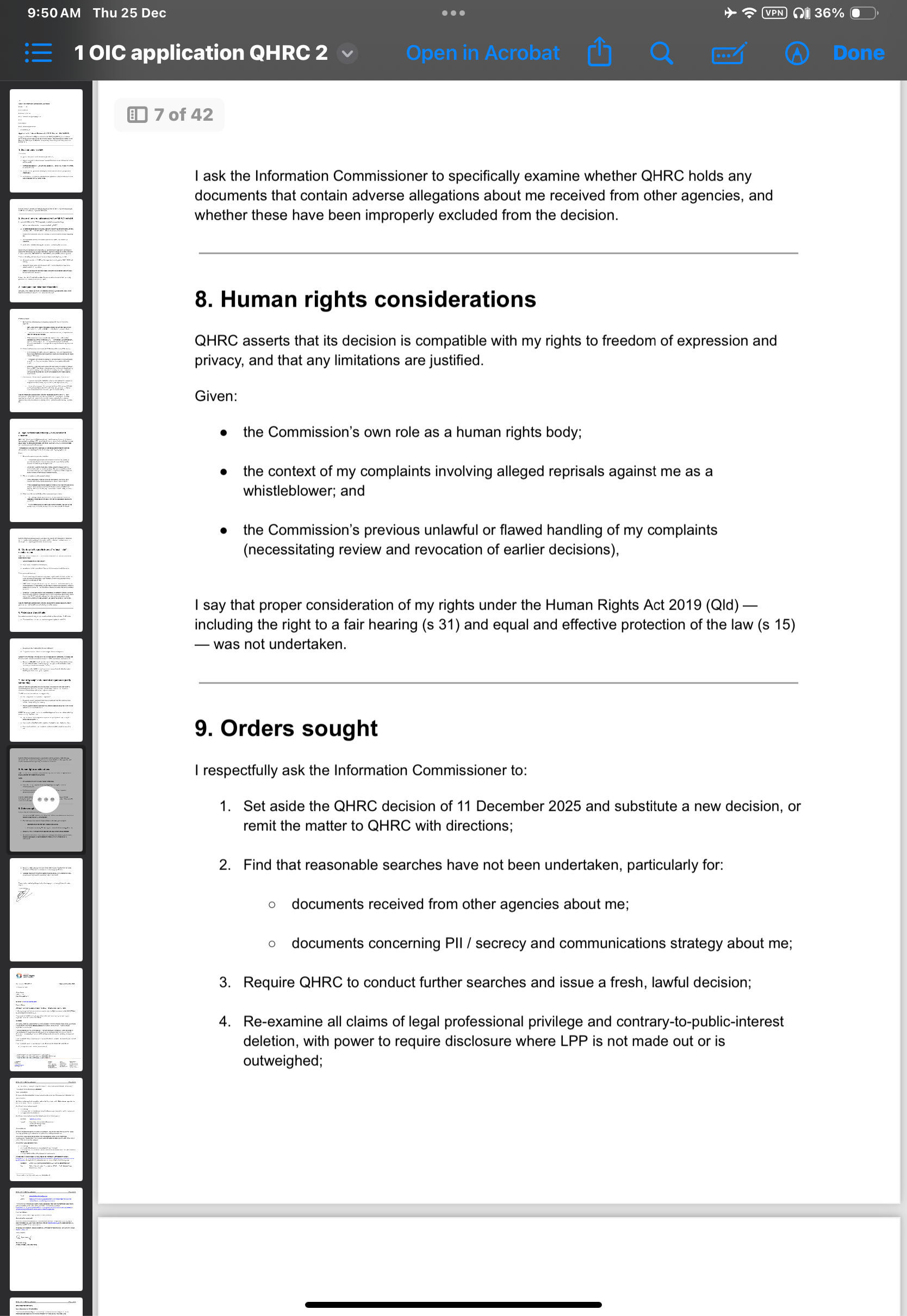
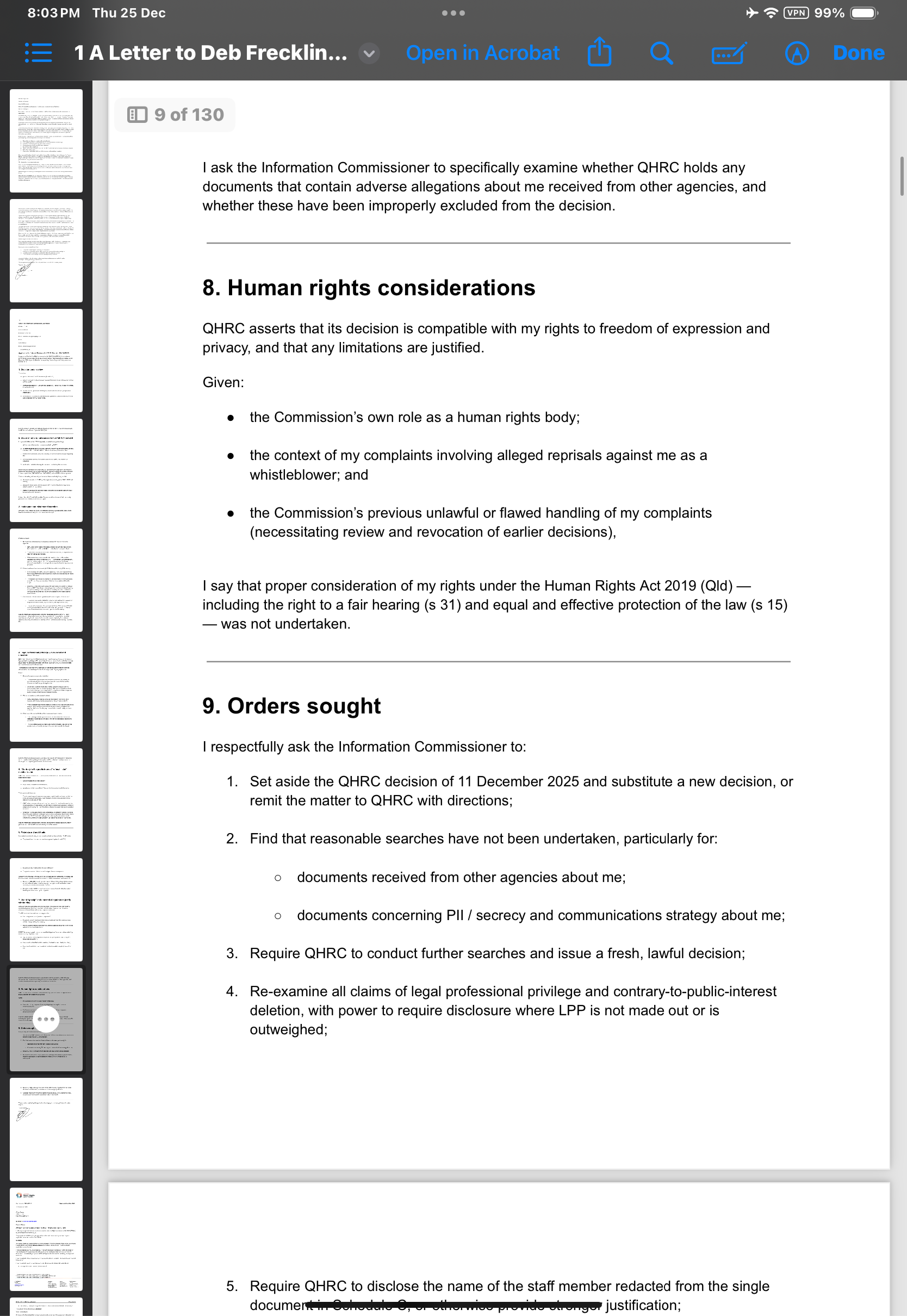
The QHRC has unlawfully withheld:
Internal assessments and investigative notes;
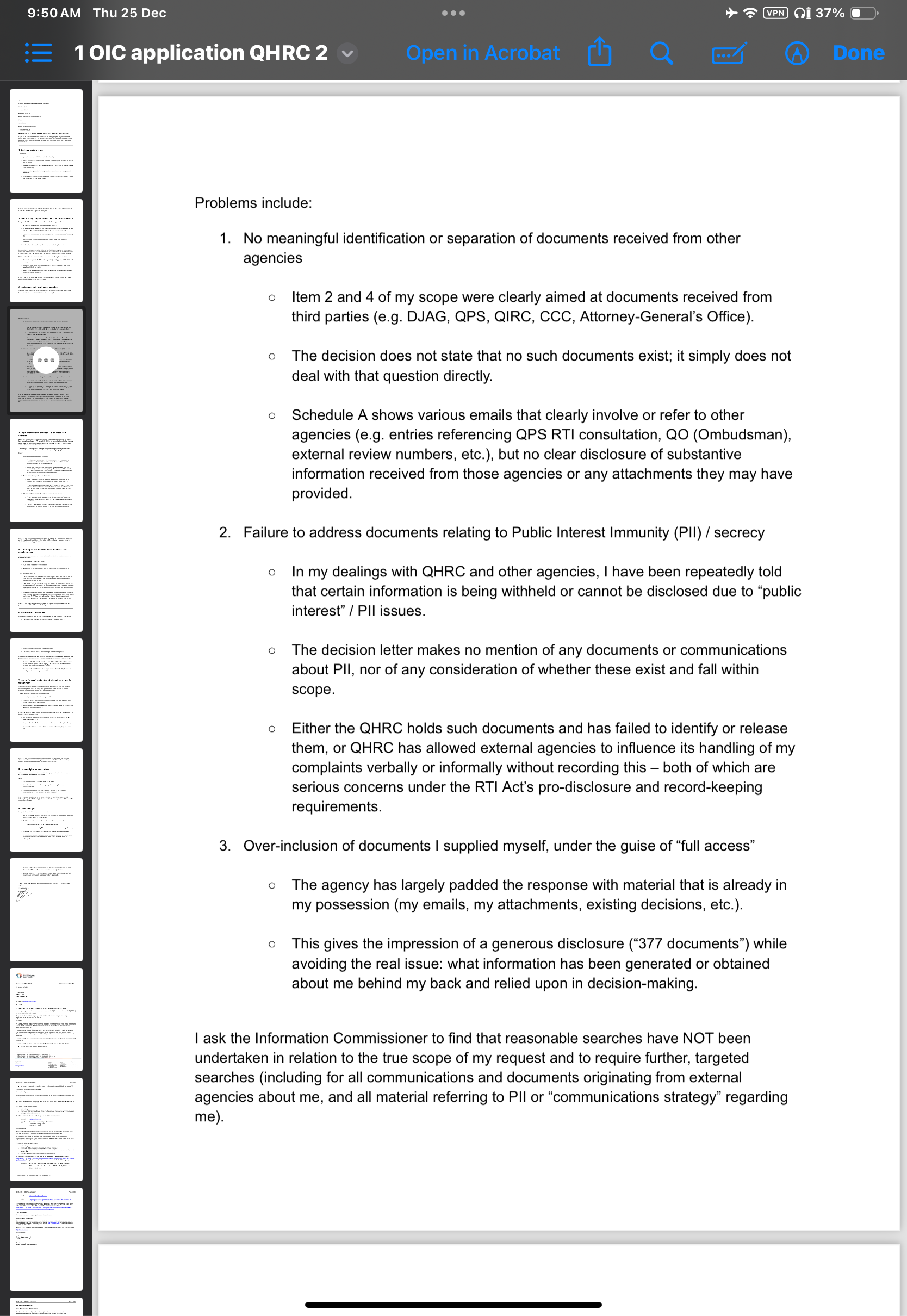
Records of external communications and alleged evidence sources;
Complaint handling documents and decision-making records;
Information relied upon to dismiss or limit my complaint.
By doing so, the Commission has breached fundamental obligations of procedural fairness, transparency, and accountability, and has prevented any meaningful review of its conduct.
Why This Is a Serious Public Concern
The QHRC is often the last avenue of protection for individuals facing institutional abuse. When it:
Ignores first-hand evidence,
Relies on secret and undisclosed material,
Lies about the existence of records, and
Admits possession of evidence while still refusing access,
it ceases to function as a human rights body and instead becomes an enforcer of silence.
This conduct does not merely harm one complainant. It signals to all whistleblowers and victims that human rights protections are illusory when complaints implicate powerful individuals or institutions.
Why This Is Documented Here
The QHRC’s conduct is documented on this website because human rights violations cannot be investigated by bodies that conceal evidence and mislead complainants. Transparency is not optional. It is the foundation of lawful decision-making.
When a human rights commission refuses to act lawfully, the public record must reflect that failure.