Crime and Corruption Commission (CCC) – Obstruction, False Responses, and Institutional Malice
The Crime and Corruption Commission (CCC) is Queensland’s primary integrity body, entrusted with investigating serious corruption, protecting whistleblowers, and ensuring accountability at the highest levels of public office. In my case, the CCC did the opposite. It engaged in a pattern of non-response, false response, misrepresentation, and evidence suppression, effectively neutralising lawful complaints and shielding powerful interests from scrutiny.
False Responses and Non-Responses
Over an extended period, the CCC failed to provide substantive responses to detailed submissions supported by documentary evidence. When responses were eventually provided, they were formulaic, misleading, or internally inconsistent, bearing no relationship to the material submitted.
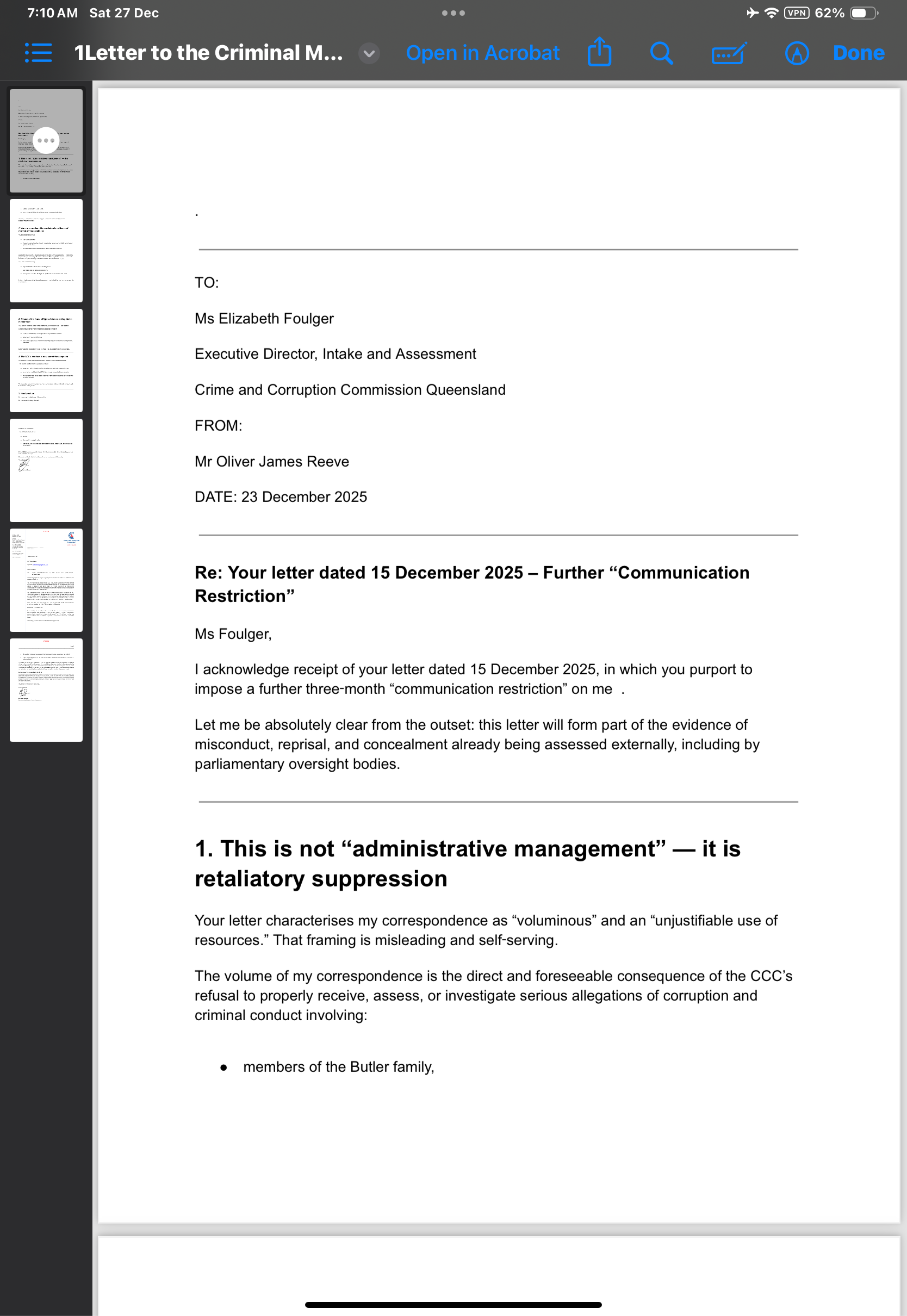
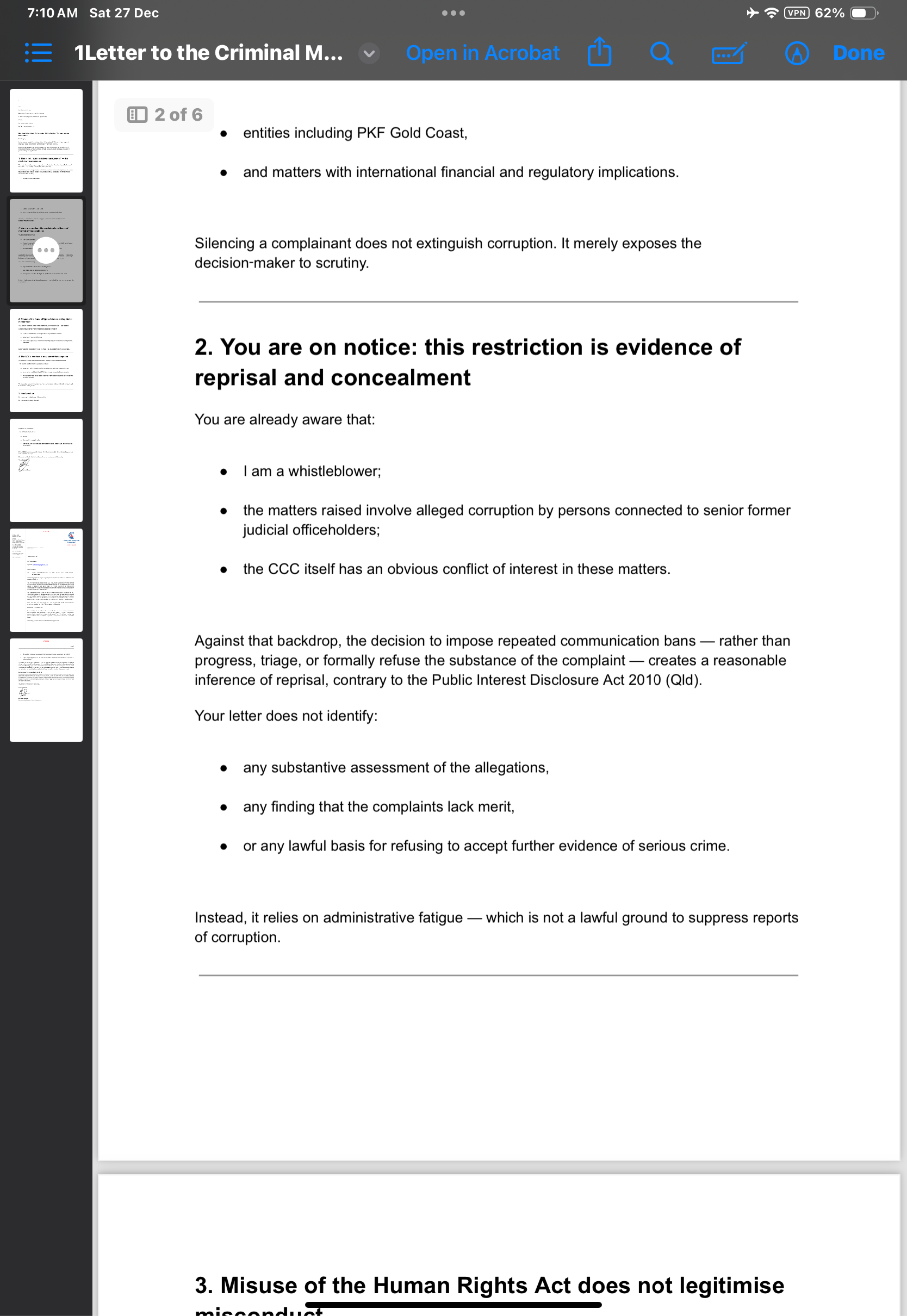
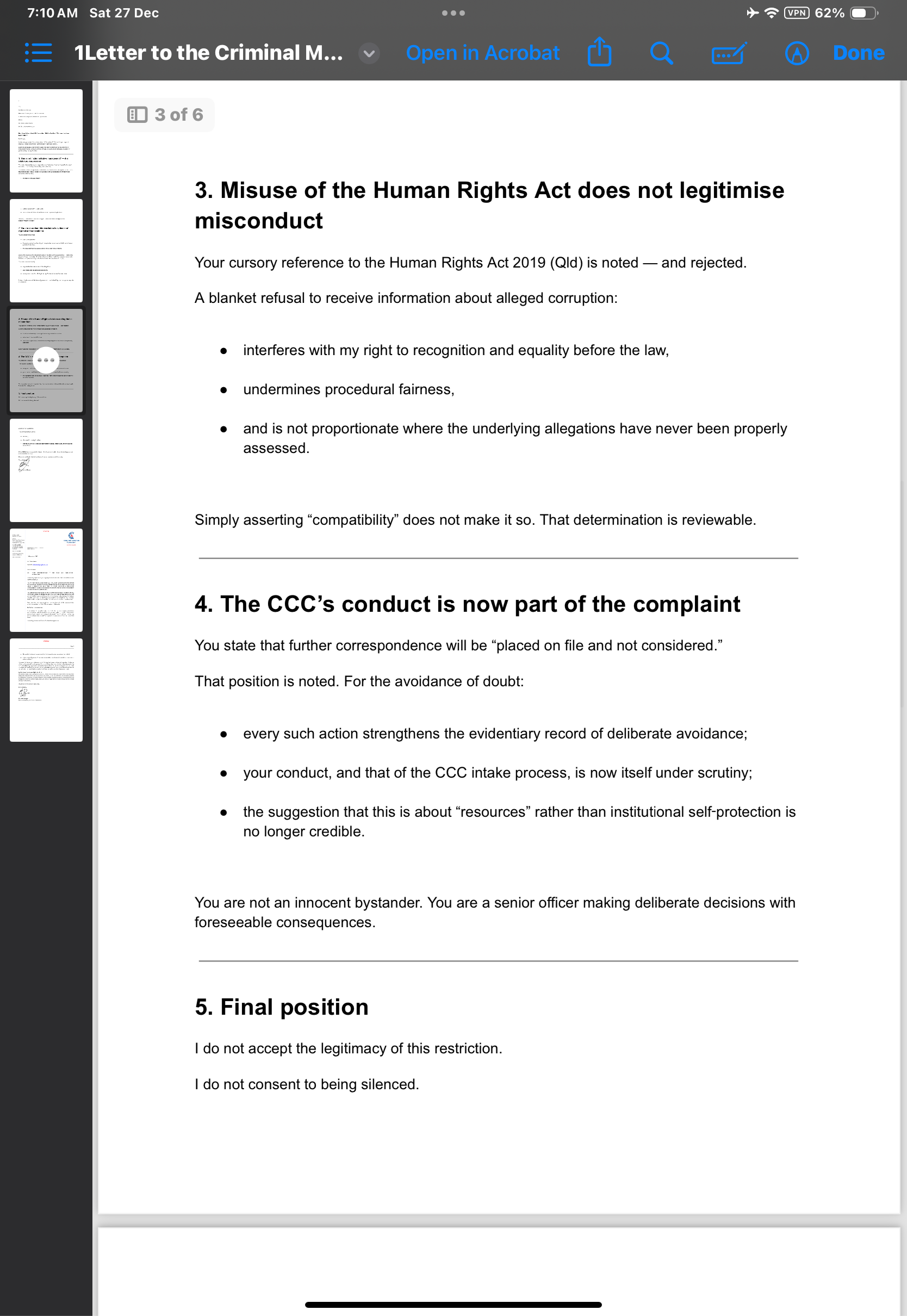
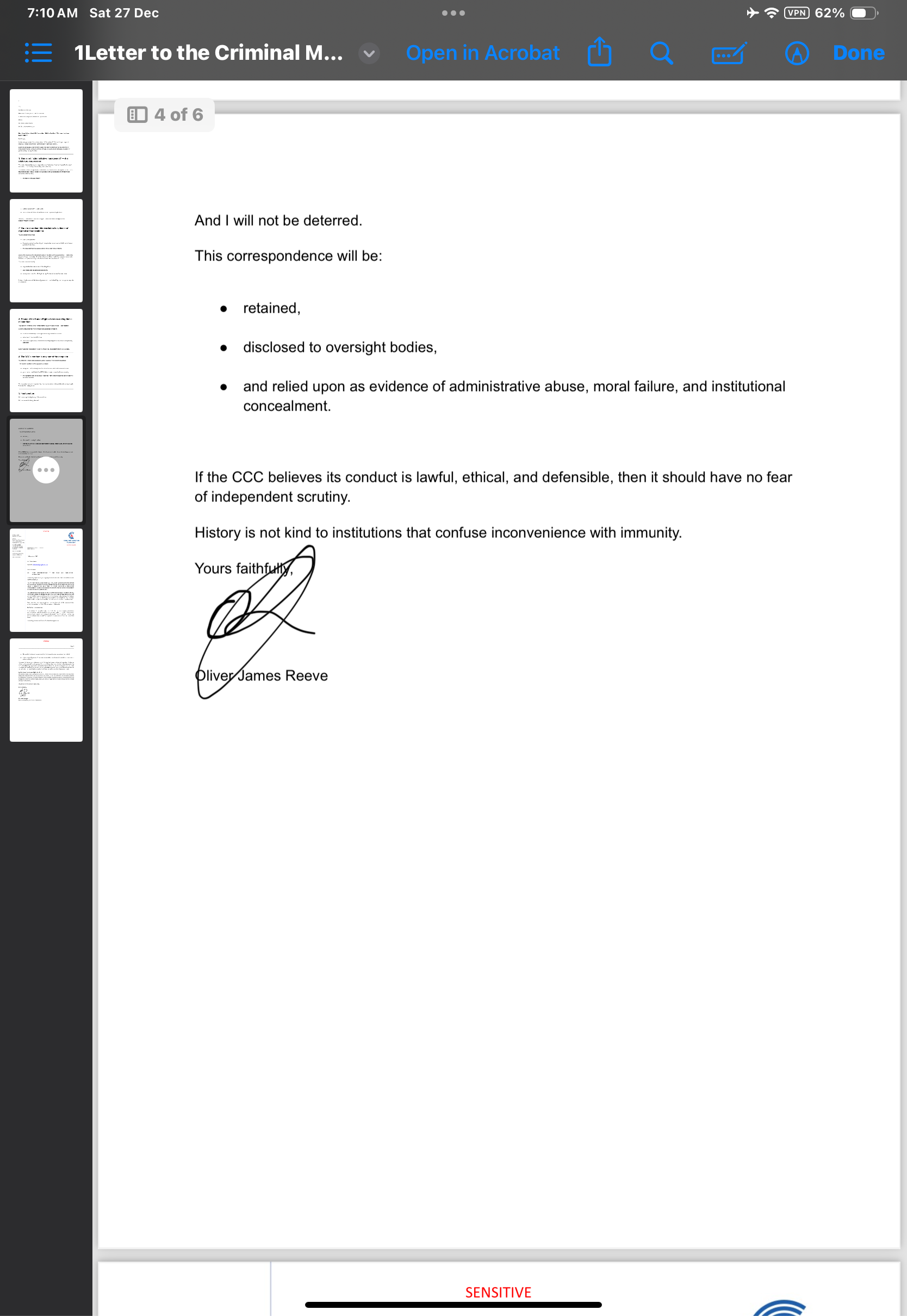
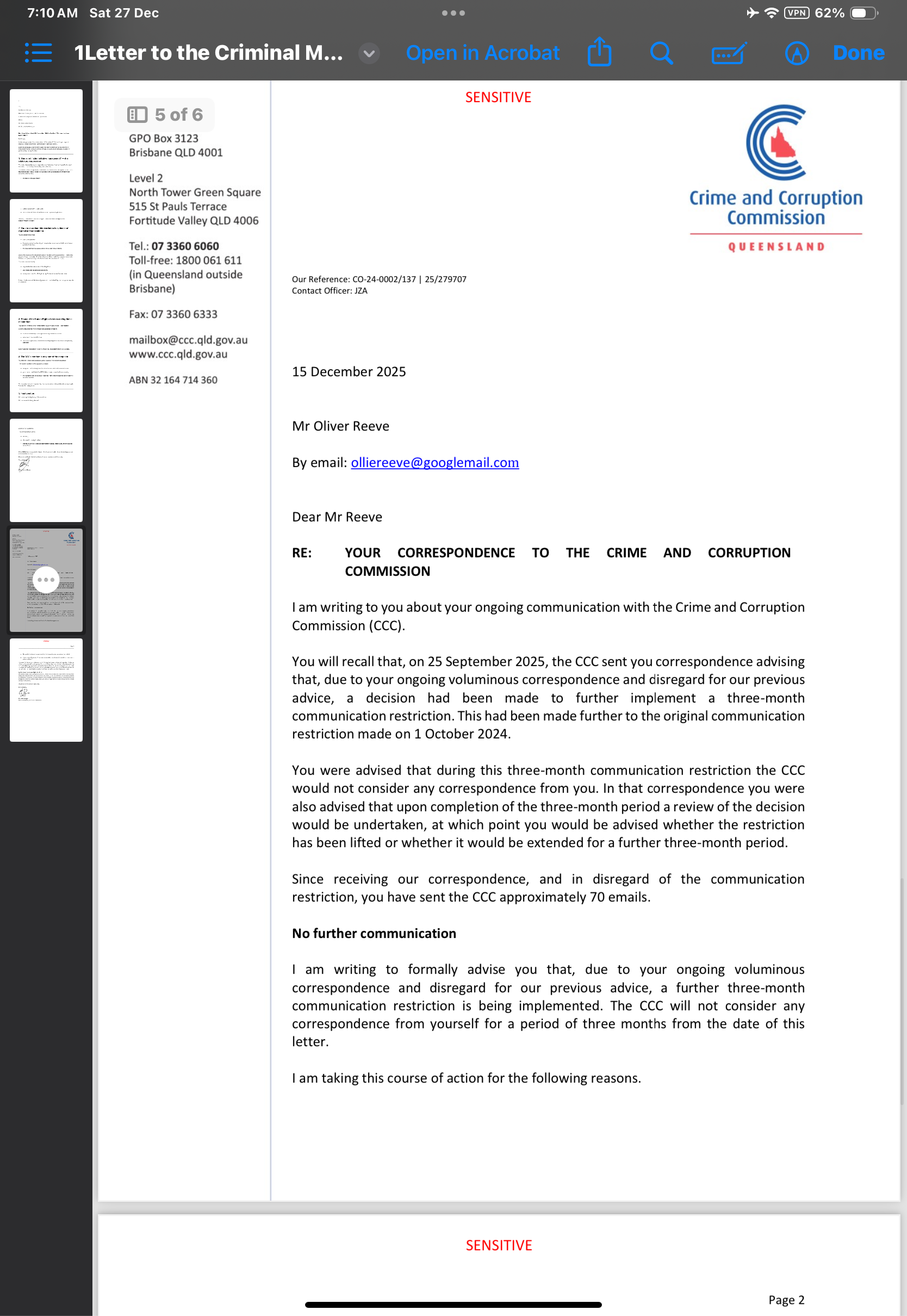
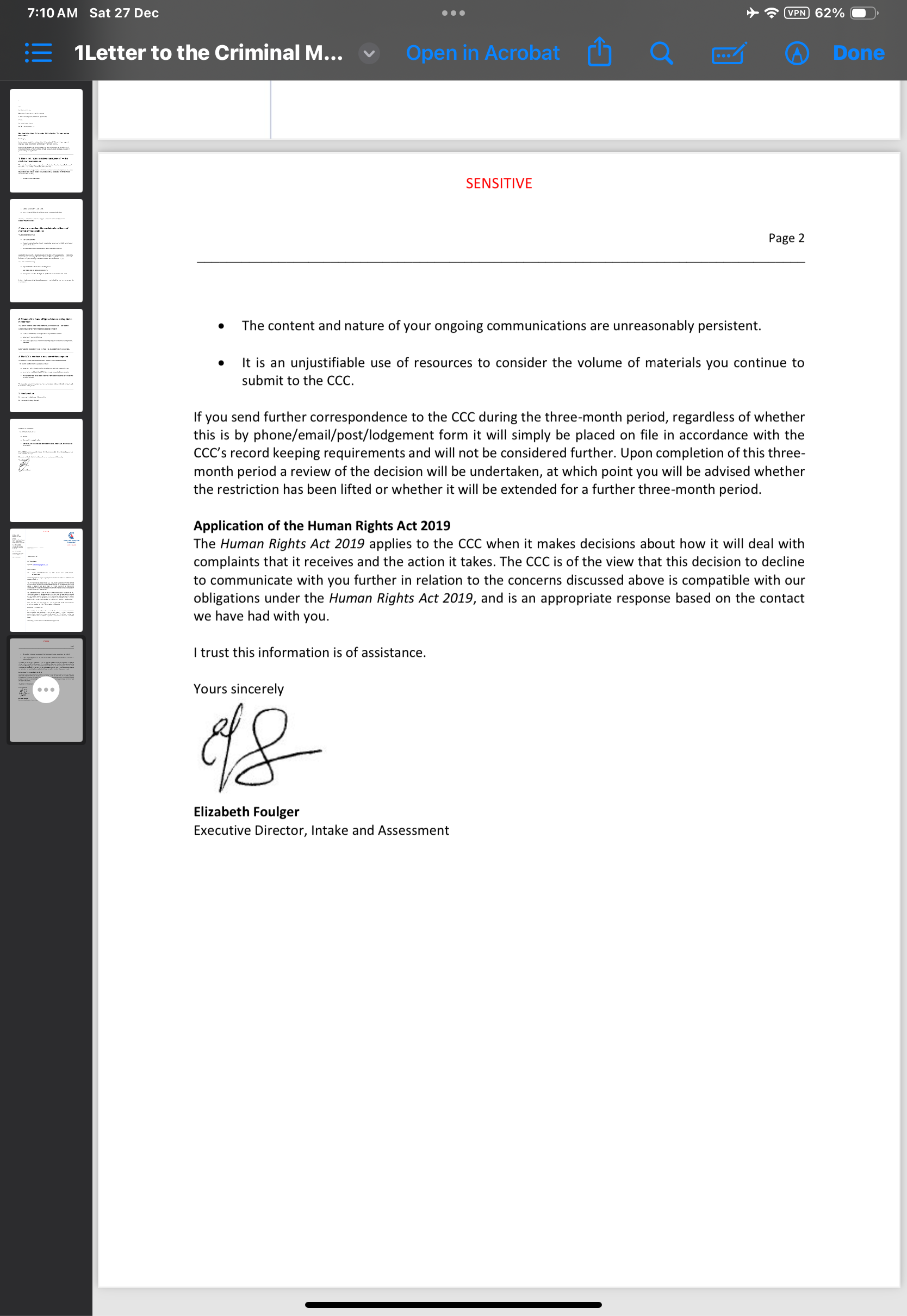
Correspondence from CCC officers, including Elizabeth Fouldger and Jen O’Neil, exhibited the following features:
Failure to engage with evidence: Submissions were dismissed without addressing key documents, timelines, or corroborating material.
Mischaracterisation of complaints: Serious allegations of corruption were reframed as minor administrative issues to avoid jurisdiction.
Silence as a tactic: Long periods of non-response followed by brief, conclusory letters designed to close the matter without investigation.
Inconsistent explanations: Shifting reasons for inaction that changed between letters, undermining credibility and transparency.
This conduct deprived me of procedural fairness and prevented any meaningful review of the CCC’s decisions.
Suppression and Withholding of Evidence
Consistent with the pattern seen across other agencies, the CCC withheld and concealed material evidence, including:
Internal assessments and decision records;
Referral determinations and inter-agency communications;
Information relied upon to dismiss or deflect complaints.
In multiple instances, the CCC denied holding information that was later acknowledged to exist, or refused access on grounds that were misapplied or demonstrably false. This sequence—denial → reliance → refusal—is now a recurring hallmark of institutional obstruction.
Retaliatory Framing and Malice
Rather than treating a whistleblower complaint with neutrality, the CCC’s correspondence adopted a tone and framing that was dismissive and adversarial, implicitly questioning credibility without evidence while refusing to disclose the material allegedly relied upon. This approach mirrors retaliatory patterns elsewhere: discredit the complainant, hide the record, close the file.
Parliamentary Oversight Failure – PCCC
Oversight of the CCC sits with the Parliamentary Crime and Corruption Committee (PCCC). Complaints and correspondence to the PCCC resulted in nonsensical, template acknowledgements that failed to address substance, declined engagement, and offered no pathway for accountability.
The PCCC’s responses:
Avoided scrutiny of CCC conduct;
Deferred responsibility back to the CCC;
Refused meaningful engagement or review;
Provided no reasons capable of independent assessment.
This rendered parliamentary oversight illusory.
Why This Is a Serious Public Concern
When the state’s anti-corruption body:
Refuses to investigate credible complaints,
Issues false or misleading responses,
Conceals evidence, and
Is insulated from oversight by a compliant parliamentary committee,
corruption is not merely unchecked—it is institutionally protected.
The harm is not limited to one complainant. It signals to all public servants, professionals, and citizens that reporting corruption is futile when the subject implicates entrenched power.
Why This Is Documented Here
This website records the CCC’s conduct because integrity bodies must themselves be subject to integrity. When the CCC and its parliamentary overseer refuse transparency, the public record must reflect that failure.
Accountability cannot exist where evidence is hidden and oversight is performative.